



Editor’s Note: After the recent resignation of Ward 2 Councilwoman Helen Anthony, a special election is scheduled for Tuesday, December 2. Primary elections will take place on November 4. In the coming weeks, the Eye will publish op-eds from candidates in the race. This is the first.
For weeks, as I’ve knocked on doors as a candidate in the special election for Providence City Council in Ward 2, one question has come up again and again: what’s going to happen when Providence schools return to local control?
The likely return of our schools next year isn’t just another education story. It is the single most important inflection point Providence will face in the next decade.
To understand why this matters, we have to remember how we got here. In 2019, the Johns Hopkins Institute for Education Policy published a devastating report on Providence schools. It revealed classrooms where students weren’t being taught, hallways where kids didn’t feel safe, and a governance structure so fragmented that no one seemed to be in charge. Teachers felt unsupported. Parents felt ignored. Students were being failed by a broken system. The report made national headlines, and The Wall Street Journal dubbed Providence an “education horror show.” Soon after, the state Department of Education took over, with the commissioner given sweeping authority over budgets, staffing, contracts, and curriculum. The takeover was meant to hit reset, bring order, and deliver the transformation local leadership had failed to achieve.
More than five years later, what do we have to show for it? There has certainly been some progress. Long-overdue investments are modernizing neglected facilities, with $1 billion in capital investments secured to modernize school buildings over the coming years. Attendance has improved in some schools. Test scores are inching upward. But the larger promise of the takeover, a full-scale transformation of Providence schools, has not been realized. Families still feel shut out of decisions. Teachers still feel instability and are looking for alternatives elsewhere. Entire schools have closed with little or no community input. Parents tell me they don’t even know where their children will be headed to school year to year. The air of instability has seeped into everything. The state takeover bought us time, but it did not solve the problem.
That is why the return to local control matters so deeply. It isn’t just about governance mechanics or who sits in what office. It’s about whether Providence is ready to take ownership of its own future. Local control means accountability: families will finally know who to hold responsible when problems persist. It means having a voice, ensuring decisions about curriculum, staffing, or support for multilingual learners reflect the realities of our diverse city. And it means ownership, because strong public schools are the foundation of neighborhoods where families want to live and put down roots, where businesses thrive and can attract a workforce, and where opportunity grows.
But we must also be clear-eyed about the realities of local control. If we simply drift back to the same dysfunction that led to the takeover in the first place, we will squander this moment. One of the central findings of the Johns Hopkins report was that Providence leadership was paralyzed by fragmentation. The mayor, City Council, and school board all had roles, but no one had clear responsibility. Everyone pointed fingers and no one was accountable. That cannot happen again.
This time, Providence must codify a governance structure that makes responsibilities clear, fully funds our schools, and ties those dollars to student outcomes. But those principles alone aren’t enough — they have to be backed up with action. That means codifying a governance charter that clearly delineates the roles of the mayor, council, and school board so accountability can’t be ducked. It means a budget process that is transparent, with clear metrics to track progress on instruction, support for multilingual learners, and continuing to close the achievement gap. And it means rebuilding trust by requiring meaningful community engagement before decisions are finalized, not after the fact. Parents and teachers shouldn’t be learning about school closures or staffing changes in the newspaper — they should be shaping those choices at the table.
For me, this fight is personal. My husband teaches second grade at Pleasant View Elementary, in the Mount Pleasant neighborhood, and we chose this city as our home because we believe in the promise of Providence and its public schools. We want to raise our family here and send our children into classrooms that nurture their potential, reflect their community, and prepare them to thrive. That promise is what’s on the line as we face this transition.
Strong public schools aren’t just about student outcomes. They are about the future of our city. We cannot expect to attract new businesses, retain talent, or grow our economy if families are forced to choose between struggling schools, paying enormous sums for private education, or moving out of the city for better options. The message that sends is clear: invest elsewhere. Just look at Hasbro’s move to Boston, where Governor Maura Healey made education her top selling point, boasting that Massachusetts is number one in the country. If Providence wants to compete, it must start with schools that give families confidence and make businesses want to invest here.
Providence is at a crossroads. Get this right and our city can become a model for urban education, with strong schools that attract families, strengthen neighborhoods, and prepare the next generation to lead. Get it wrong and we risk another lost decade, with consequences our students and our city cannot afford.
This moment demands leaders in City Hall who are ready to take this on, leaders who will stop treating our schools as the third rail of local politics and instead make them the priority they must be. We need council members who will work collaboratively, with the mayor and school board, to get things done. Providence’s future depends on it.
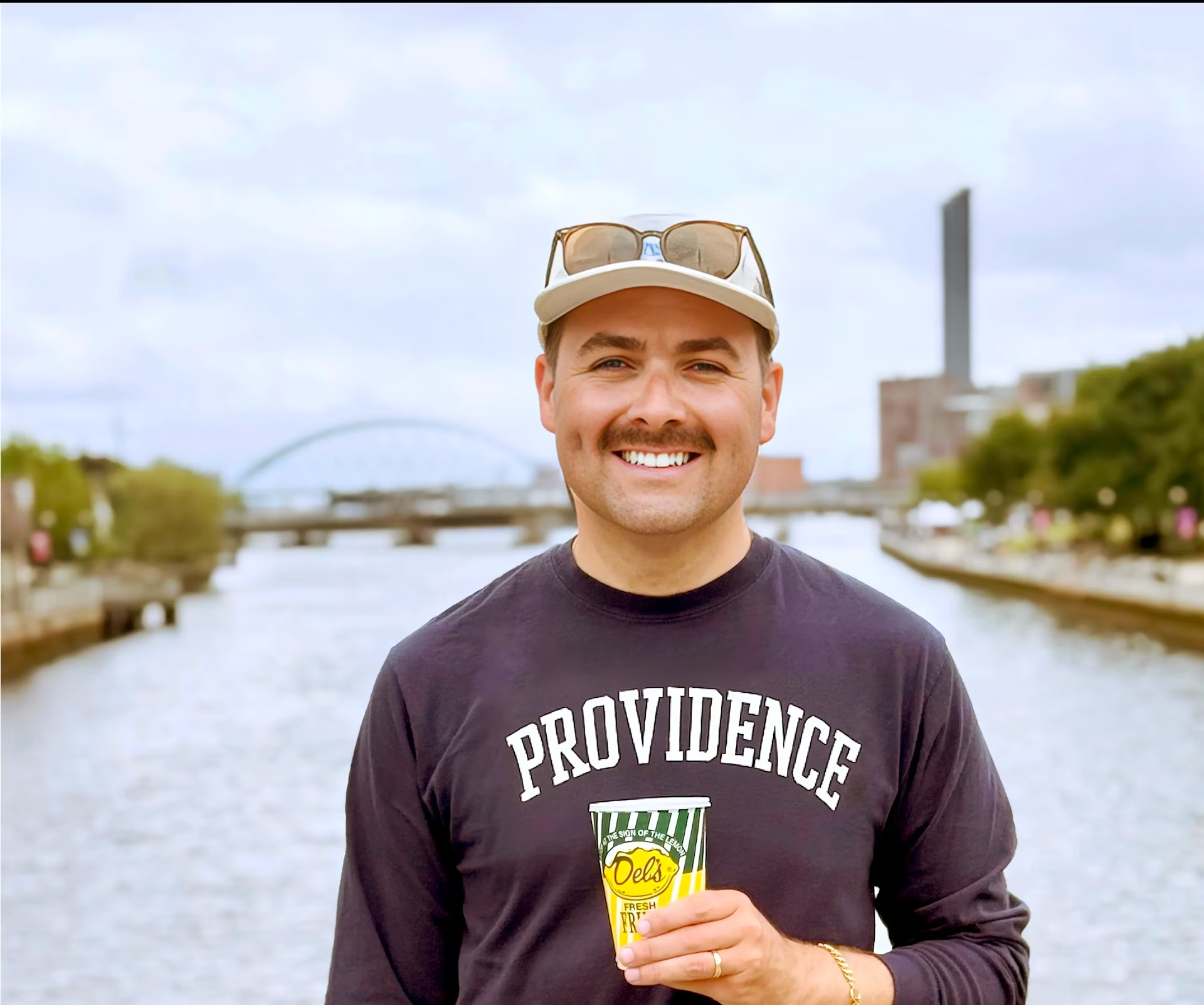
Matt McDermott is a Democratic candidate in the Ward 2 special election for Providence City Council, representing Blackstone, Wayland, and College Hill. He is a communications strategist, national LGBTQ+ leader, and the husband of a Providence public school teacher.


Want to comment? Click!