




In late May, the White House spent most of a day teasing a big announcement about extraterrestrials. There was a countdown on Instagram with crop circle memes and AI-generated abduction videos on TikTok. People online wondered if the government was about to disclose something about UFOs. Then came the reveal: a website at whitehouse.gov/aliens that compares immigrants to creatures from outer space and asks Americans to report “suspicious aliens” to ICE.
The tagline of the site was four words: “They walk among us.”
I grew up surrounded by and raised by immigrants and Latinos. I have spent my career in housing, policy, and advocacy, working alongside Latino families in Providence and throughout Rhode Island. Over the years, I have heard plenty of ugly things said about us. This landed differently. The federal government had built a slick, taxpayer-funded campaign to convince the public that their neighbors are not human.
So let me talk about that word: “alien.”
In a legal code, “alien” is a dry term for immigration status. Out in the world, where people actually live, it means something that doesn’t belong here, something foreign and strange and possibly dangerous. The White House knows the difference. The administration picked the latter version with the spaceship, the abduction joke, and the line about returning the creature “safely to its place of origin.” Nobody writes that by accident.
No matter how you vote, this should frighten you.
Before a government can do something terrible to a group of people, it usually spends a while convincing everyone else that those people are not really people. The Nazis called Jews vermin. In the Rwandan genocide of the 1990s, the radio called Tutsis cockroaches for months before the machetes came out. Here on our own soil, during World War II, the U.S. locked up Japanese Americans after deciding they were enemies first and citizens second. The pattern is old and it is consistent, and it always starts with language. Strip away someone’s humanity in words, and the rest gets easier.
This is not about immigration policy.
Reasonable people can disagree about borders, visas, enforcement – all of it – and those are real arguments worth having. But there is no argument on the White House’s “Aliens” site. There are only labels. It calls people an “invasion.” It calls them “illegals,” as if a person can be illegal. It takes your coworker, your kid’s classmate, the woman who has run the corner store for fifteen years, and turns them into something to be hunted and reported.
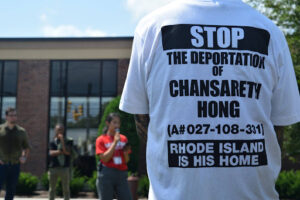
When I see this White House site, I think about my own family and the families I talk to every week at the state house testifying on legislation or out in the community for advocacy events. A mother on the South Side who keeps her kids home from a doctor’s appointment because word went around that ICE was in the neighborhood. A man who has paid taxes in Providence for twenty years and still feels his stomach drop when a police car slows down behind him. Parents who sit their children down and rehearse, calmly, what to do if someone knocks and asks questions.
There is nothing paranoid or hypothetical about that fear. In January, federal immigration agents walked into Providence’s Garrahy courthouse, bypassing security. It is happening here.
The White House’s new site did not come from nowhere. It builds on language the president has used in recent years. “Rapists and drug dealers.” “Animals.” “Invasion.” “Vermin.” Each phrase does the same quiet work. It makes cruelty sound like good sense. It hands a permission slip to the landlord who turns someone away, the official who looks the other way, and the rare person with a grievance and a gun who decides he is not committing a crime but performing a service. When that permission comes from the most powerful office in the world, a lot of people take it.
Plenty of people will tell me to relax. “It’s a troll,” they’ll say – a stunt built to bait people like me into writing columns like this.
Maybe.
But the cartoon spaceship and the abduction gag are not softening the message here. They are doing the dirtiest part of the work. They let someone laugh at the idea of human beings getting scooped up and dumped over a wall.
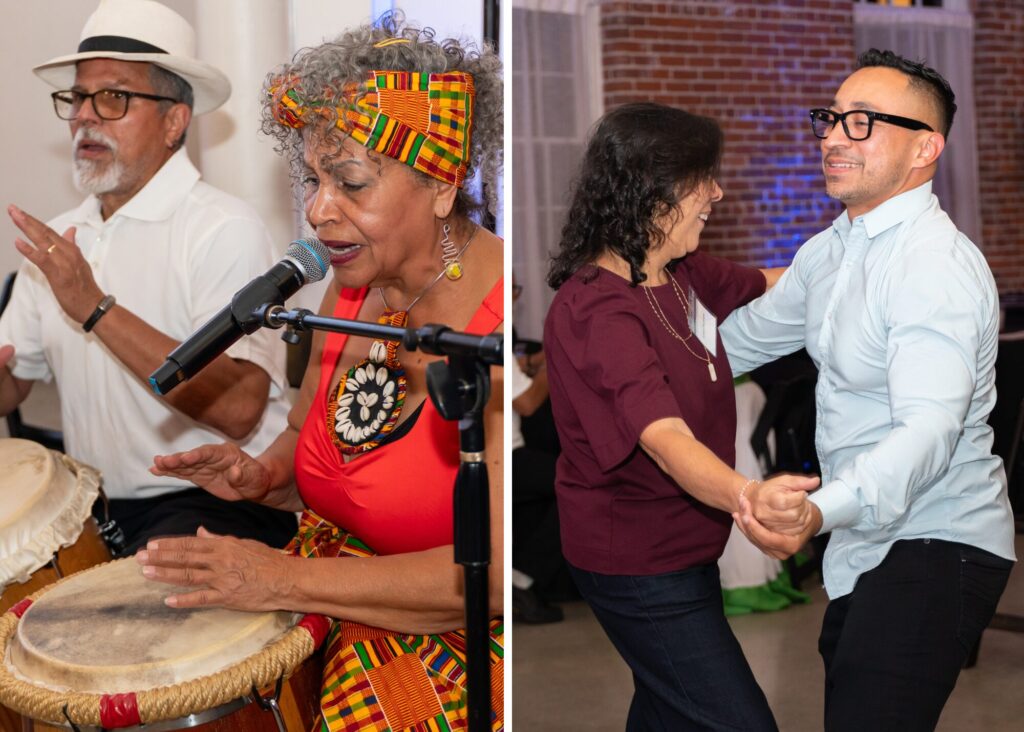
In Rhode Island, Latinos are not just numbers on somebody’s map. In Providence, we are close to half the city, about 86,000 people. We teach in the schools, staff the hospitals, lead at every level of government, build the houses, run the restaurants, vote in the elections, and pay into the same system as everyone else. We have been here a long time. We are staying.
Washington is not where this will be decided. Rhode Island is. So I’m asking the people who actually run this state to do something specific.
Governor McKee and our mayors: say plainly, in public, that the people being described as “aliens” are your constituents and your neighbors, and that this kind of language has no place coming from any level of government.
School superintendents: tell immigrant families, in writing, that their kids are safe in your buildings.
Business owners who depend on immigrant workers: acknowledge that dependence out loud, with your name attached.
And to this publication and its readers: don’t call this stunt from the White House a “website.” Instead, call it what it is: a government campaign to make my neighbors disappear.
You can wait and see how bad it gets. Or you can make noise now, while your voice still changes the outcome.
Marcela Betancur is the Executive Director of the Latino Policy Institute, a Providence-based nonpartisan research and policy organization dedicated to advancing equity and opportunity for Latino communities in Rhode Island. LPI produces data-driven research, shapes state and local policy, and builds the power of Latino communities to advocate for themselves.
Want to comment? Click!