






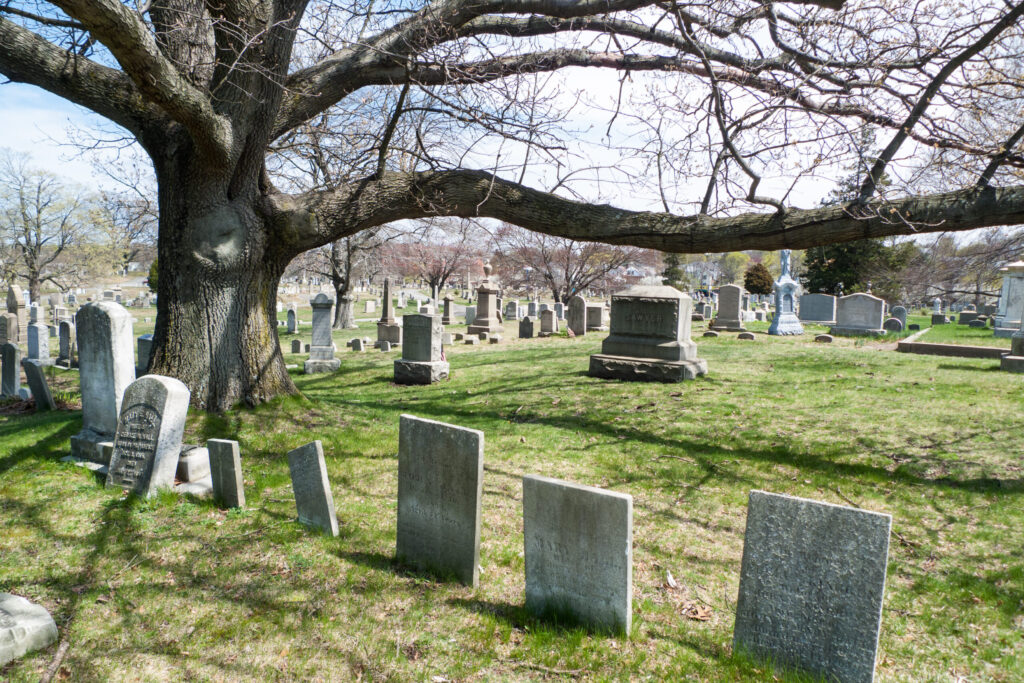
The cost of living in the United States is as relevant as ever, with people citing higher prices at the grocery store and on their utility bills. While the conversation around affordability is had by the living, unfortunately, expenses continue after death.
The cost of dying in the U.S. varies by state with the latest national average estimated at $7,028. Rhode Island is neither the most expensive nor least expensive state to die in, sitting $762 above the national average at $7,790. However, with roughly 20% of Providence living in poverty, even the average is out of reach for thousands of people living in the capital city.
Many states offer financial assistance to individuals and families who do not have the means to cover funeral expenses, including Rhode Island. The Rhode Island Department of Human Services provides financial assistance to low-income individuals who were Rhode Island residents at the time of their death. To obtain the $900 in state assistance from RI DHS, an application for Financial Assistance with Burial Expenses must be completed via the RI DHS website, and all required documentation must be submitted to determine eligibility and procure funds. Eligibility is determined by a monthly income less than $327, and total assets amounting to less than $400.
Once funding has been secured, arrangements can be made from a limited list of participating funeral providers. Many funeral homes in Providence choose not to provide state-funded burial services because they come at a financial loss to businesses.
“There’s just as much work and no money,” said James Melia, managing director and registered embalmer at Skeffington Funeral Home and Cremations, a participating business in state-funded burials that has operated out of Providence’s Mount Pleasant neighborhood since 1907.
The estimated $7,028 cost of death is based on the blended average cost of burials and cremation services nationwide, as reported by the National Funeral Director’s Association. The largest portion of the cost of burial is for the casket, with the average cost estimated at $2,500. Even without a traditional service, additional costs begin to add up for things like embalming, and transport of the body from the funeral home to the burial site. The $900 of state-assisted burial funds rarely covers all costs involved.
In some cases, additional funding can be procured for family members of the deceased from Social Security, Veterans Affairs, FEMA, or other charitable organizations. Social Security provides an additional $250 in funding for a spouse of the deceased. However, the odds that the funeral home fills out the application in lieu of family are about 50/50.
“When somebody dies in a nursing home and there are no known relatives, the state has to advertise the death to see if anyone comes forward,” said John M. Skeffington, owner and fourth generation funeral professional at Skeffington Funeral Home and Cremations. The Rhode Island Department of Health lists vital records, which are also published in the Providence Journal. Additional information can sometimes be pieced together from biographical information obtained by nursing homes, including pictures and any known family history.
In the event that relatives do not come forward, Skeffington provides a burial at Saint Joseph’s, a Catholic cemetery in West Greenwich. A burial is the only option without familial consent because the decision between cremation and burial is often deeply personal and can have religious significance. Skeffington prefers not to take the chance that a descendent will come forward at some point and take issue with a cremation, which would be the cheapest option.
The price of a tombstone starts at $1,200, and without remaining funds, bodies are buried in a mass grave of about 20 people without markers to identify the deceased. However, Skeffington provides the additional service of publishing their names in the obituaries section of their website.
“No matter who they are, somebody loved that person at one time, and they deserve the same dignity as everybody else,” said Melia.
Skeffington performed 63 state-funded funerals last year, and Melia says that the number of people needing these services is increasing with longevity — the longer people live, the more likely they are to outlive their family. While he is acutely aware of the cost to the business, he is also resolute in the reason behind why continuing the service holds value.
“It’s not a job, it’s a calling,” he said.
Andrea Gutierrez is originally from California and she traversed much of the country before finding home in Providence. She worked in hospitality for 20 years, and finds joy in dining al fresco on a perfect summer evening. She is interested in places where food, art, history, and the natural world intersect to create an aesthetically rich environment, which makes the Creative Capital a perfect fit. She’s eager to shine a light on the city’s greatness, and to be a community builder that contributes to what makes the city great.
¿Quieres dejar un comentario? ¡Haz clic!