



Editor’s Note: Providence Counts is a feature of our weekly publication that tells a story through numbers, listing facts and figures from local data sets or organizations.
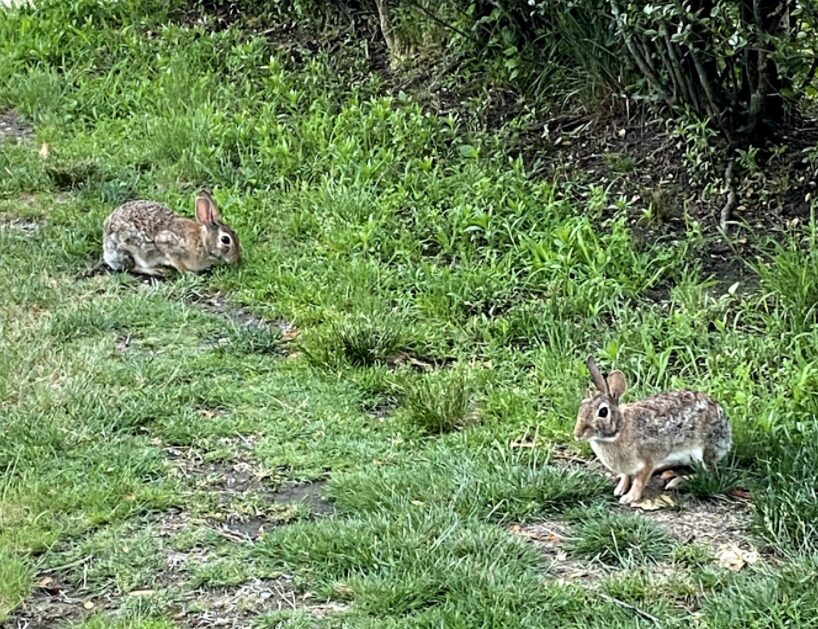
In the 20th century, the population of the New England Cottontail Rabbit began to decline for a multitude of reasons, including habitat loss and competition with other animals. It is the only rabbit species native to New England, and in 2006 officially became a candidate for a spot under the Endangered Species Act. However, after efforts from across the northeast to improve population rates, it was determined by the U.S. Fish and WIldlife Services that the rabbits did not need a federal endangered listing.
In 2010, Providence’s very own Roger Williams Park Zoo began to dedicate resources to a zoo initiative—the New England Cottontail Rabbit Repopulation Project. The project has a homebase at the zoo and works alongside many partners, including the University of Rhode Island.
Here are some statistics on the zoo’s repopulation project:
4 — number of honors and awards Roger Williams Park Zoo has received for the project
14 — number of partners for the conservation project, including RI Zoological Society and RI Department of Environmental management
2010 — RWPZ begins to dedicate resources for the breeding program
November 2011 — the first offspring were released at Ninigret National Wildlife Refuge in Charlestown, Rhode Island
March 2012 — offspring were released into the wild in Narragansett Bay
Between 2013 and 2014 — young rabbits were released in Rhode Island and New Hampshire. The program grew significantly, doubling numbers achieved in previous years.
$15,000 — Initial funding provided for the program from the RI Foundation. The program has received continued federal funding though the Pittman-Robertson Federal Aid WIldlife Restoration Program
2022 — more than 3240 rabbits have been introduced to the wild through the work of the program in Rhode Island, New Hampshire, and Maine.
Sources
RWPZ New England Cottontail Rabbit Repopulation Project
U.S. Fish and Wildlife Service
Daneisha Rodriguez is a Brown University SPRINT Fellow at The Providence Eye. She studies English, specializing in Nonfiction Writing and Data Science Fluency. She is the co-editor in Chief of SOMOS Latinx Literary Magazine.


Want to comment? Click!