


Most days, Kennedy Plaza in downtown Providence is a bustling transportation hub, packed with commuters waiting at designated stops around the perimeter of the square to catch their bus out of the vehicular commotion, but at PVD Fest it transformed into a strictly pedestrian affair. Vendors selling food, drinks, and art — as well as performers onstage providing back-to-back entertainment — fill the streets for an annual two-day event that celebrates the vibrant creativity unique to the little city in the littlest state.
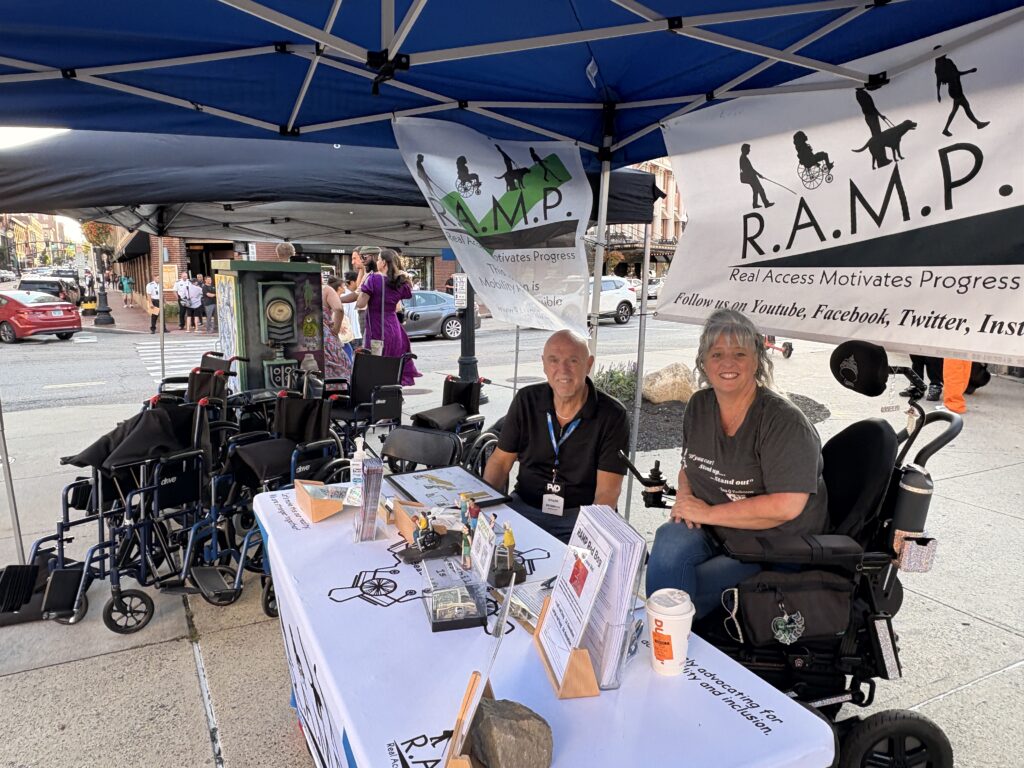
Under a tent across from the City Hall stage, a fleet of wheelchairs wait for their riders. A friendly face sits under a banner next to them that reads, “RAMP,” an acronym for Real Access Motivates Progress. RAMP is a non-profit organization founded by Tina Guenette, the welcoming face who eagerly awaits for the crowd to descend. There are seven wheelchairs beside her ready to fulfill RAMP’s mission to “break barriers, champion accessibility, and promote equal opportunities through innovation, advocacy, and education, fostering a more equitable future.”
Guenette uses a wheelchair herself—which she has bedazzled with crystals that spell out, “Queen,” on the head rest, and have angel wings on the back—but her chair is a relatively recent accessory.
“Everyone will be a part of the disability community at some point in their lives,” she says. “It’s just a matter of when.”
A sobering sentiment with significance, especially considering her story. A spinal stroke in 2014 left her paralyzed from the waist down, when she began using a wheelchair after living 42 years of her life without one.
It’s a life event that turned disability into a priority, rather than an afterthought. In fact, Guenette puts a great deal of thought into it when she does her “roll throughs” of the festival before it starts to make sure that the curb cuts stay clear, that there are accessible bathrooms, that vendors are spaced far enough apart for wheelchair users to easily pass through to shop and pay for their purchases — and of course, that the chairs themselves are available.
“Last year we loaned out chairs to 113 people,” said Guenette. “People are so grateful. They wouldn’t be able to get their mothers, their fathers, their brothers, whomever, around without them.” She described a woman at the RAMP tent just moments before who was pretty much on her knees thanking her for being there. If they had a larger fleet of wheelchair loaners, Guenette says they would probably be busier; however, as a non-profit organization, funds are limited.
PVD Fest’s footprint spans nine city blocks east to west, and four city blocks north to south. Festival organizers have worked in partnership with RAMP for the last seven of the 10 years of the fest’s existence. On the event’s website, there is a dedicated page for accessibility information, which details their commitment to “making our city’s signature arts and culture festival inclusive and accessible to all members of our community.”
There have been big changes to PVD Fest in the past few years of operation, not all of them have been well received. The festival, which was held in June pre-pandemic, is now at the end of September, and alcohol sales have been excluded — a decision made by Mayor Brett Smiley to keep the focus on the arts.
PVD Fest has been back downtown for the past two years, after the short-lived move in 2023 closer to the Providence River where the WaterFire festival is held.
“I like it down here in Kennedy Plaza because it’s a smaller footprint, it’s easier to navigate, and it’s easier for wheelchair users, especially manual wheelchair users who have to roll themselves to get through,” said Gannette.
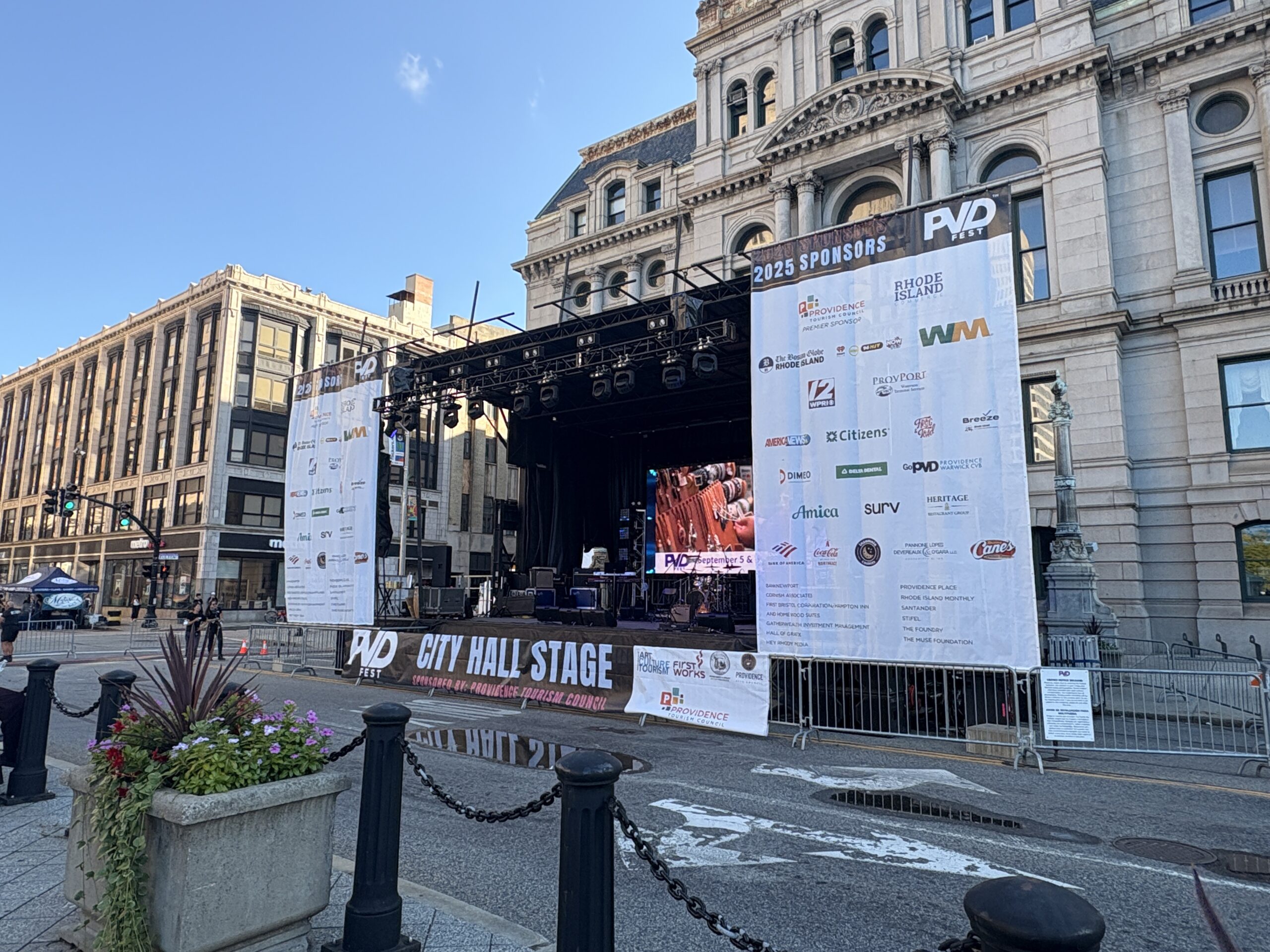
Even with the smaller footprint, some access issues remain. For example, a currently unsolved accessibility challenge for the festival involves the City Hall stage, just steps from RAMP’s tent. The position of the stage makes it difficult to provide enough runway for a wheelchair accessible ramp to make the steep climb on and off the stage.
That said, Gannette sees this year’s location as an overall improvement for accessibility, saying “When it was on the bridge, the footprint was so large. If you’re sitting in front of the main stage, you’ve got to go all the way across the bridge to get to the food trucks again — it’s a nightmare,” she said. “This is such a nice footprint. It’s nice and close, and keeps everything together.”
Togetherness is foundational to community fellowship, and as it turns out, accessibility, too.
This story was created in partnership with Journalism New England. The writers are all Providence Eye Community News Fellows and their bios are listed here.


Want to comment? Click!