




Editor’s Note: This story was originally published by ecoRI. Republished with permission.
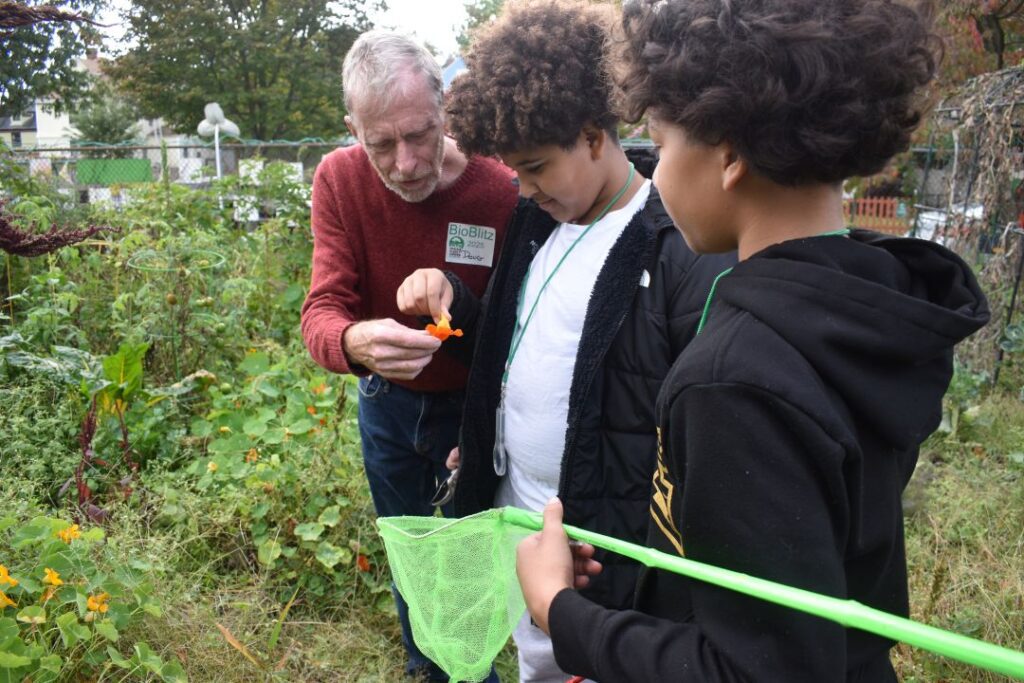
The two young boys looked dubiously at the brightly colored flower Doug Victor was holding out to them.
“Go ahead, eat it,” Victor said with a grin. “It’s a little spicy,” he added, as he popped the nasturtium in his mouth.
They were standing in the tiny but mighty Peace and Plenty Community Garden on Peace Street in the city’s Elmwood neighborhood on a recent October Saturday morning. The boys, Milan and Sandro, both 11, had stumbled upon the garden’s mini-BioBlitz event, during which volunteers collect and document as many animal, plant, and insect species in a certain area as possible in a specific time period. Although at first the boys seemed more interested in the snacks, Victor recognized a teachable moment when he saw one and pounced.
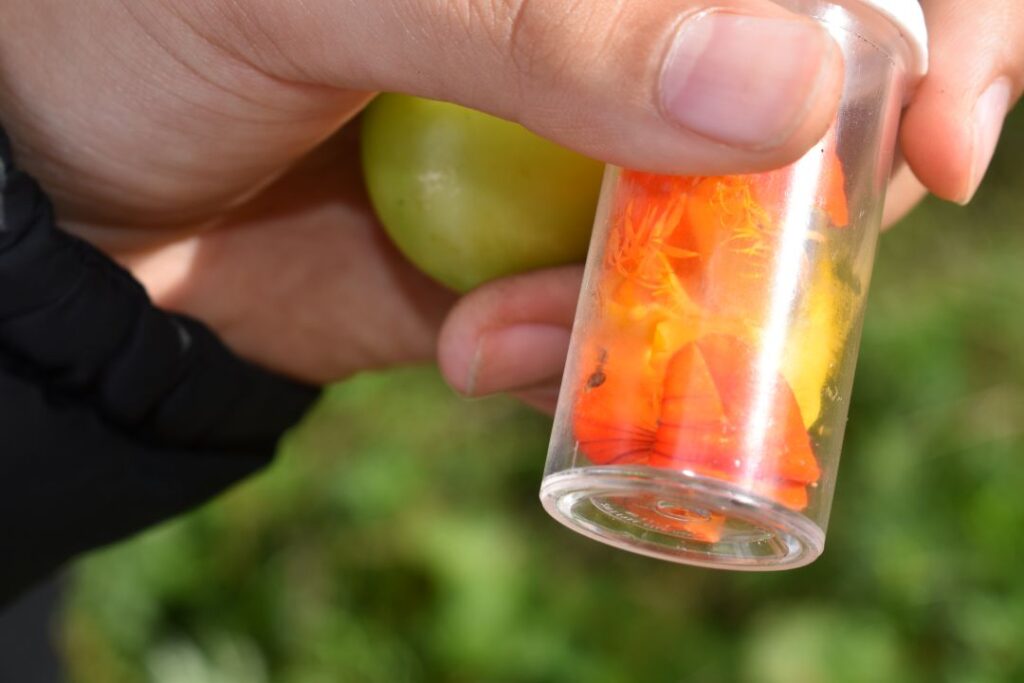
Sandro peered closely at the bright orange flower he was holding and said, “Hey, there’s ants on it!” (Later inspection by Victor and Melissa Guillet of 15 Minute Field Trips, who was in charge of tallying the species found at the blitz, determined that the bug on the flower that Sandro had almost eaten was an American winter ant, and that it was a previously unidentified species logged that day.)
Seeing the ants was enough to spark the interest of Milan and Sandro, neighborhood residents who had never before visited the garden. Victor gave them a tour, pointing out the different types of vegetables, plants, and flowers grown in the 0.39-acre garden’s 55 plots, 70% of which are tended by first-generation immigrants, Victor said.
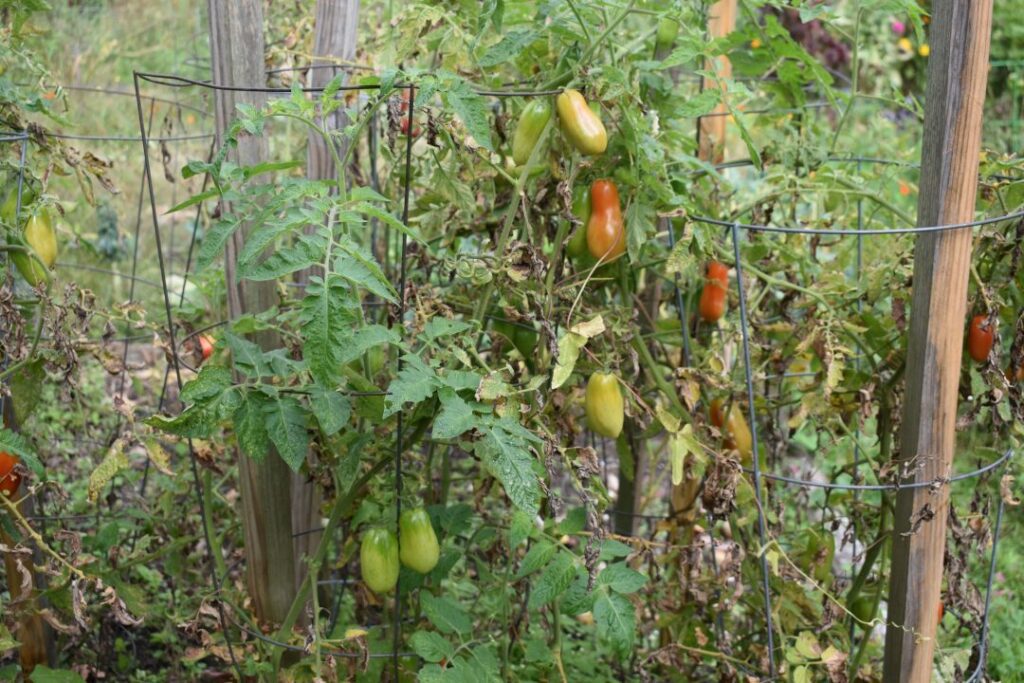
Here was corn and tomatillos, which the plot’s owner uses to make masa, corn tortillas, and tomatillo salsa, Victor said. There was squash and tomatoes, more tomatillos and a variety of herbs, pumpkins, and leafy greens.
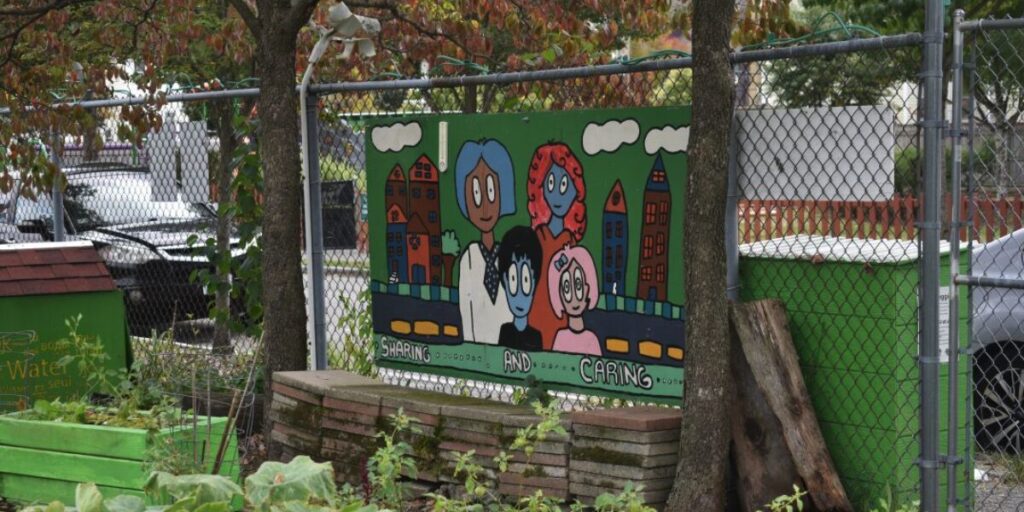
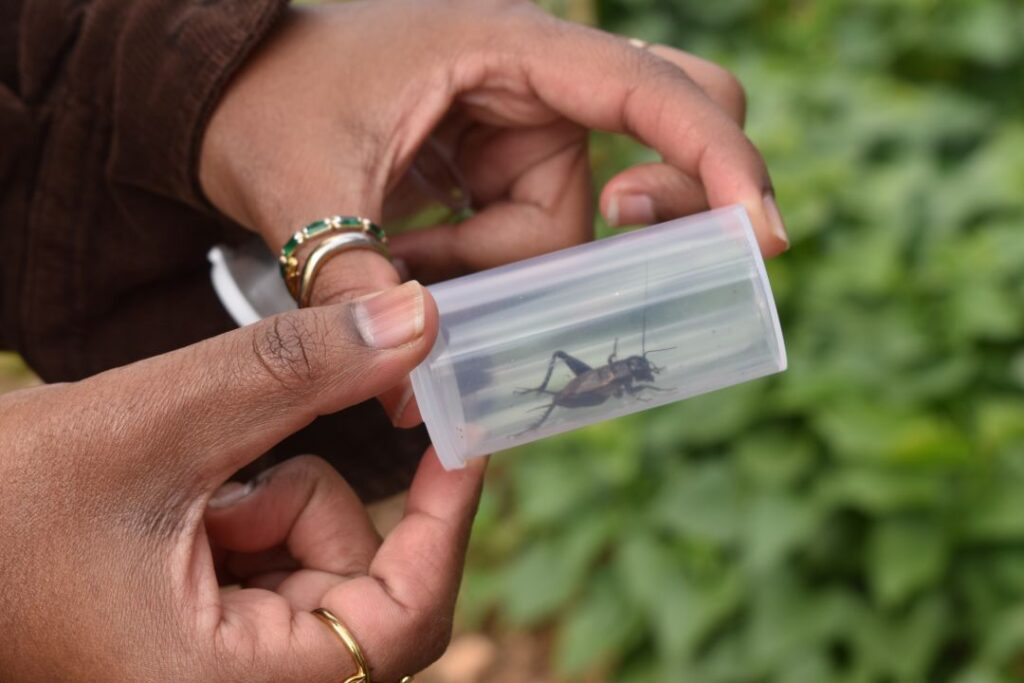
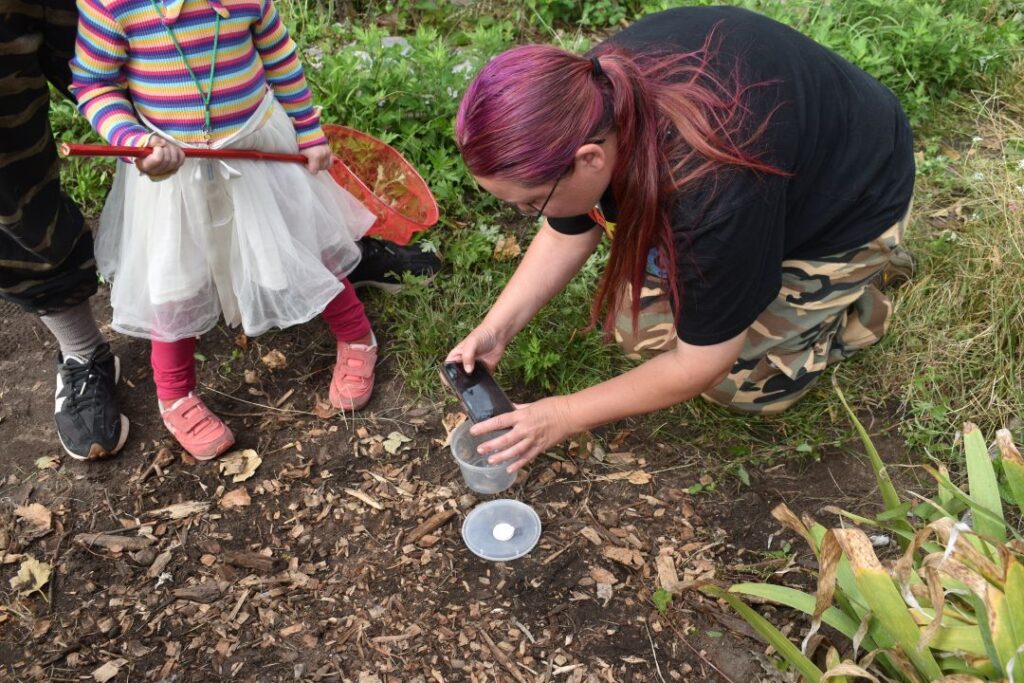
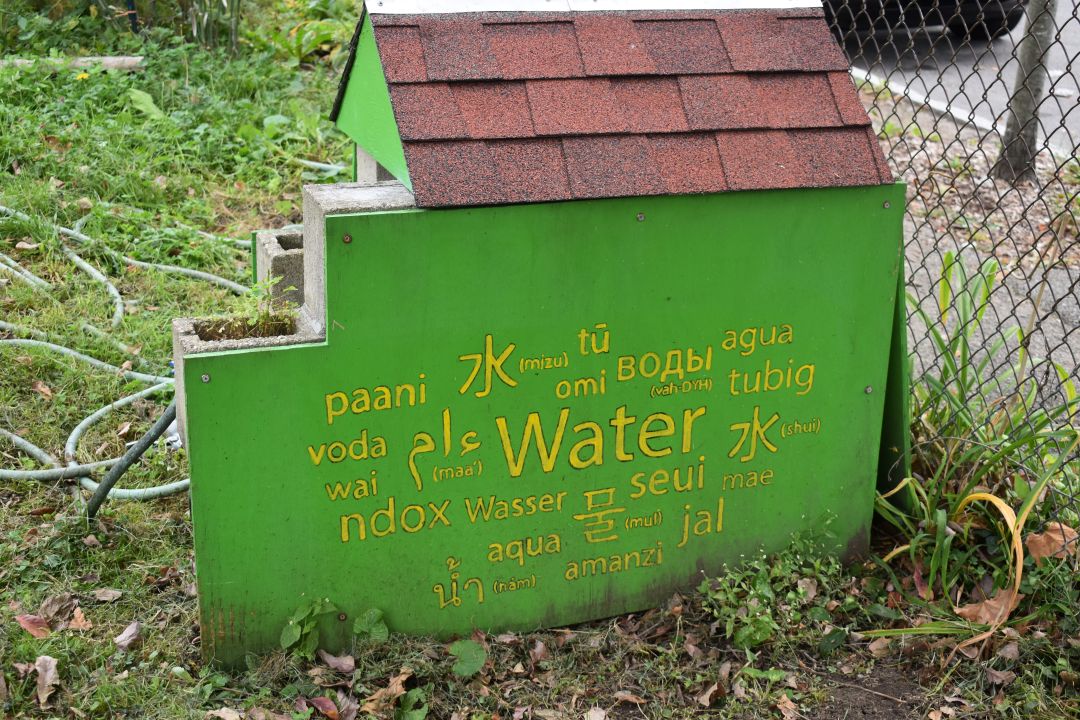
Volunteers toting butterfly nets and small plastic cylindrical containers to house the bugs while they were photographed and tallied roamed the garden, surrounded on two sides with houses, and on the other two sides by a street and a parking lot. Colorful signage in multiple languages on the front fence explained the garden’s use, and a series of signs along a side fence gave the history of the garden.
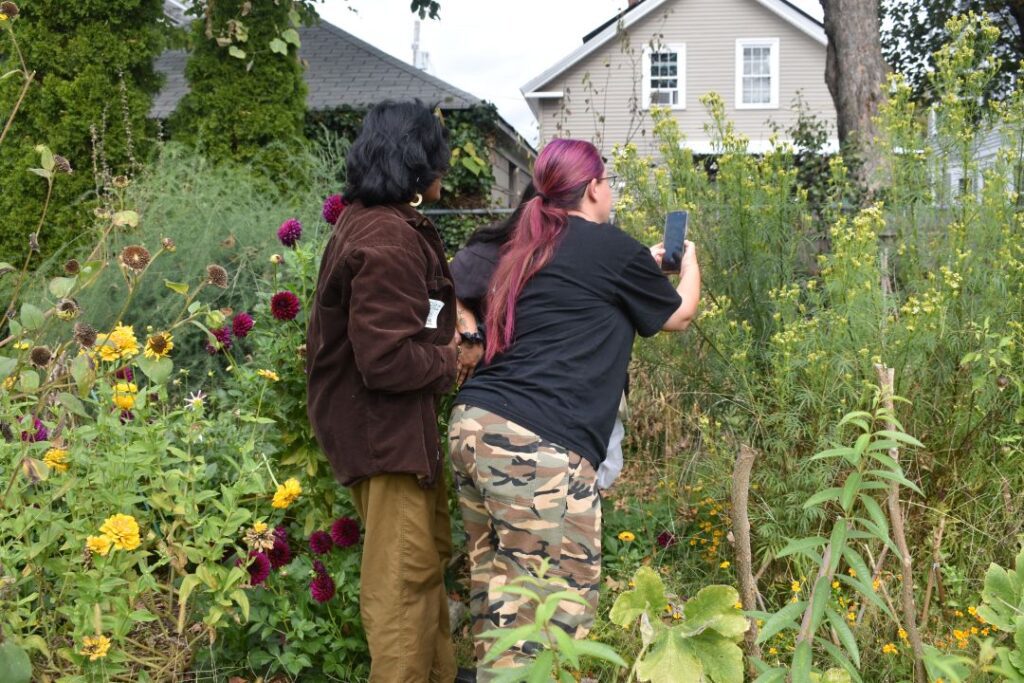
“No matter how small,’’ Victor said, “a garden plays an important role in a neighborhood.” He said it’s not just fields or woodlands that can spark interest in the outdoors. “We’re growing food around us and rethinking about how we’re growing.” The green oasis also helps teach students and residents about the effects of heat islands in the city, and is revitalizing an area that is susceptible to disinvestment, he said.
Victor has lived in the Elmwood neighborhood since 1984, and is a leader of the garden, which is part of the Southside Community Land Trust and has been recognized by the Providence Preservation Society. Bloom Rhode Island provided the grant that paid for the BioBlitz.
There have been three BioBlitzes at the garden this year, in April, July, and October. In July, Victor said, a pugnacious leafcutter bee was discovered for the first time in Rhode Island.
“We wanted to take three seasonal looks at the garden,” Victor said of the three events. “We’re contributing to the preservation of species.”
And insects were everywhere: cucumber beetles crawling on bushes, slugs burrowing into the soil, spiders lurking under leaves. There were four-spotted lady beetles, which are Asian and not native, Victor said. A few two-spotted lady beetles, which are native, had been found in the garden previously.
Shouts of delight rang out throughout the garden as another species was inventoried. In all, Guillet said the tally yielded 262 species, including wreath lichen, turkey tail, dusty slug, wolf spider, mining bee, blowfly, Asian lady beetle, monarda punctata, daisy fleabane, wild cucumber, dark-eyed junco, and eastern gray squirrel. A notable moment: yellow jackets were observed eating an invasive spotted lanternfly, which have been previously said to have no natural predators.
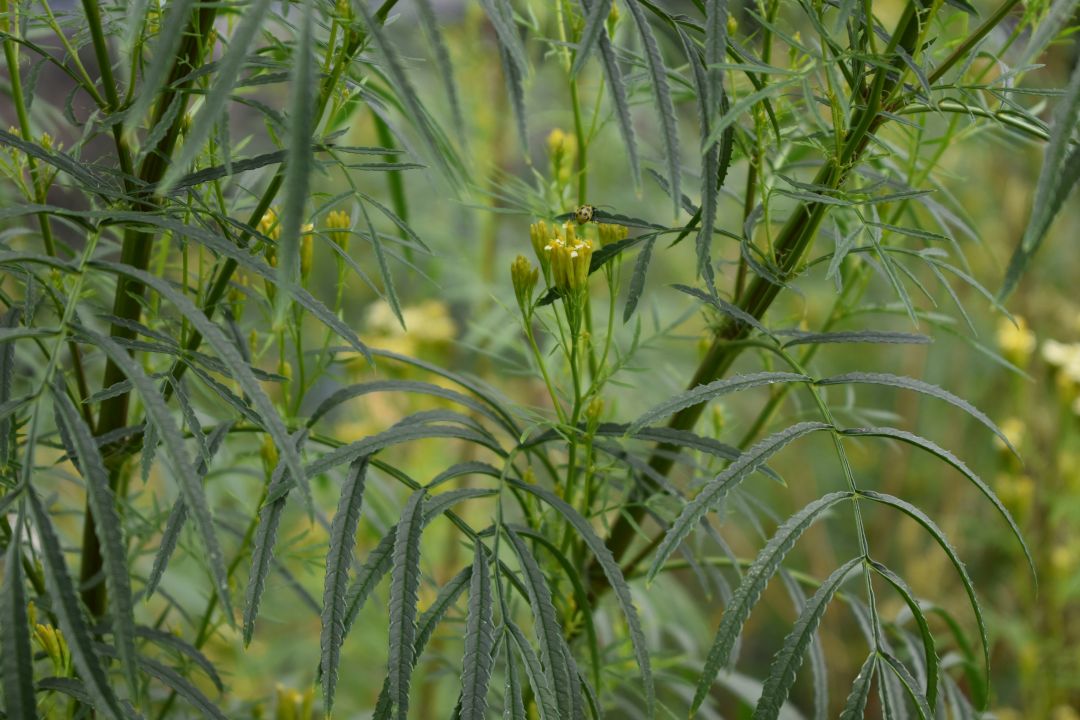
All of the findings were uploaded to iNaturalist, an online network of people sharing biodiversity information to help each other learn about nature and identify species.
The results of the blitz, Victor said, “demonstrate that all small urban green spaces, like Peace and Plenty Community Garden, play a vital, yet often not fully understood, role in Rhode Island’s rich and diverse natural landscapes.”
He said the organization hopes to “bring these often fragmented and overlooked urban habitats forward so that they are recognized, acknowledged and supported for the vital role they play in Rhode Island’s natural environment.”
George Christie, of the Rhode Island Natural History Survey, said, “You can rest assured that the information generated through these BioBlitzes will be a valuable addition to the Rhode Island Natural History Survey’s new database BORIIS2 [Biota Of Rhode Island Information System] and, as such, will form a strong base for further study of the state’s urban biodiversity. The lesson for us all is that urban ecology is vibrant and valuable.”
Other organizations involved in the BioBlitz included the Audubon Society of Rhode Island, Rhode Island Plant Insect Pollinator Network, Providence Neighborhood Planting Program, and the Southside Community Land Trust.
The chances are good that Milan and Sandro will be back next year, they said. “This was so cool!”


Want to comment? Click!