



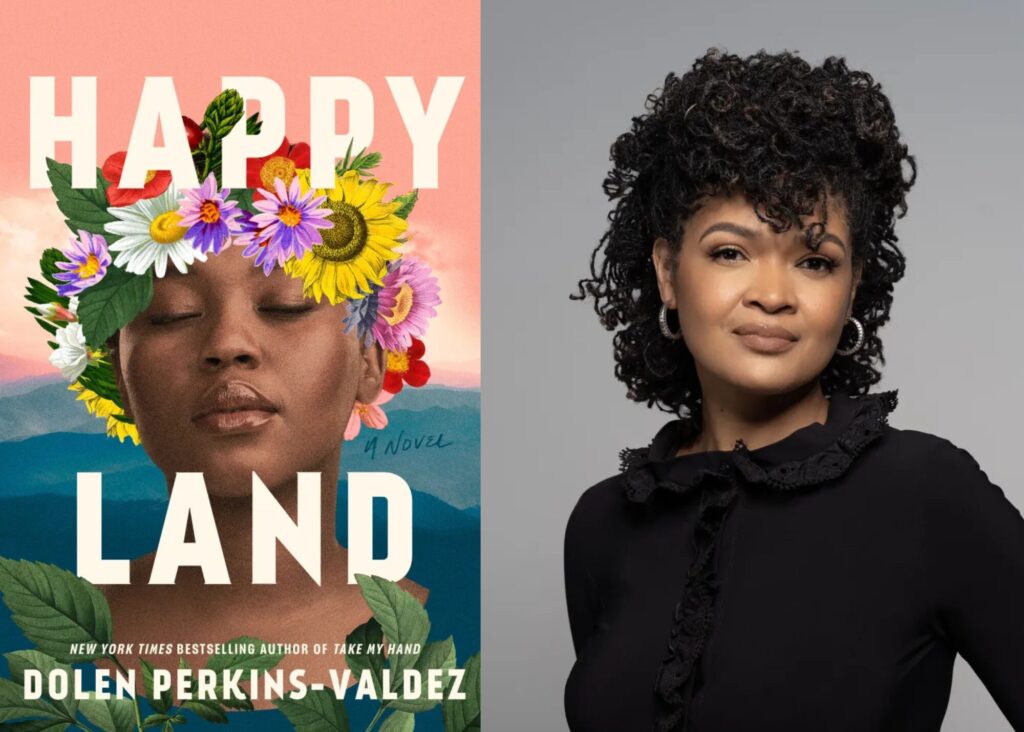
Approaching 40 with a surly teenager, an estranged mother, and an imperious grandmother with an urgent problem, Nikki Lovejoy-Berry, the burdened protagonist of Happy Land, is—in a word—unsettled. What she learns over the course of this graceful novel is that she’s never going to feel at home anywhere until she learns more about her family’s history on a 200-acre parcel in the Carolinas where, as freed slaves after the Civil War, they forged a community known as Happy Land.
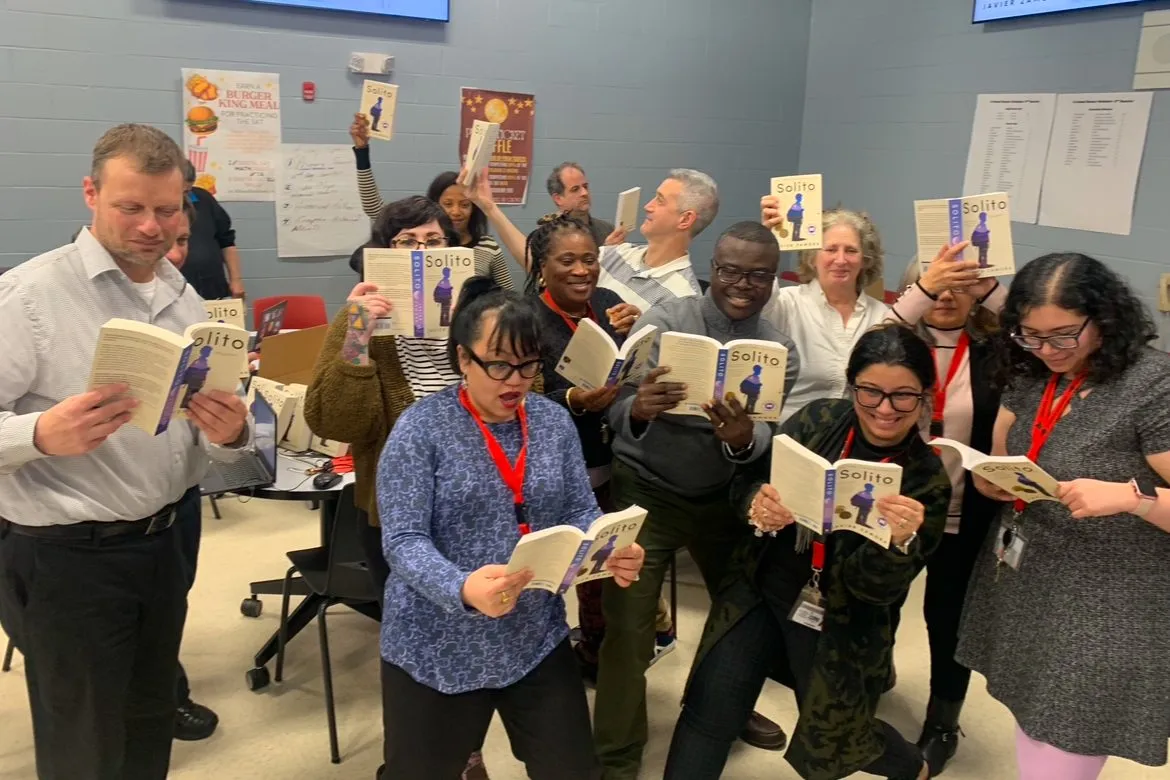
Many Providence book lovers will be talking about Happy Land this year. The novel is the Rhode Island Center for the Book’s latest pick for Reading Across Rhode Island, an annual program that invites Rhode Islanders to read and discuss a single book in formal and informal settings, including libraries and classrooms all over the state.
 Reading Across Rhode Island (RARI)
As Happy Land begins, Nikki is adrift. She is struggling to parent her teenaged daughter while keeping them both afloat by selling real estate, a job that has grown routine and stale. She becomes preoccupied by a family secret: years before, her mother stopped speaking to her grandmother, a rupture that was never explained. Summoned to her grandmother’s house, Nikki hopes to discover the cause of the rift. Instead of leveling with her directly, Nikki’s grandmother, the powerful but failing Mother Rita, plunges her into a family history going back generations.
The novel is based on historical truth: Happy Land really did exist. It was a community established after the Civil War by freed slaves on a 200 acre hilltop straddling the border between North and South Carolina. This link to history gives Perkins-Valdez, a bestselling author who is also a historian, a chance to show off her considerable skills in the archives. Starting from a single unreliable pamphlet about Happy Land, Perkins-Valdez has unearthed an enormous amount of information while preparing to write the novel, and she shares this story-behind-the-story in a fascinating three-page author’s note.
Speaking with Mother Rita, Nikki learns how, through hard work and careful saving, her ancestors—a husband and wife who were known as the King and Queen of Happy Land—eventually bought the land in which the community had set its roots. The work was hard, but there was joy in it, and much to celebrate when they all came together. This comes through, for instance, as Nikki’s great-great-great-grandmother Luella, the first Queen, recalls her wedding party: “Each wave of an arm was a limb that belonged to you. Each step of a foot came from your own leg. We might have still been in the white man’s country, but we was far, far away from his reach on that old mountain we called home.”
By law Nikki’s ancestors were entitled to leave that land to their heirs—but in fiction as in reality, securing those rights was not so simple. Mother Rita recalls: “Black folks didn’t trust the legal system in those days. Most times, you walked up to the courthouse and you had to pass by a Confederate statue just to enter the front door. It was like they was telling you that you weren’t welcome and never would be.” Intimidation by the government isn’t something you just shrug off. Wills go unwritten, deeds and titles are never filed. The family has always fought to keep the land. Mother Rita’s refusal to leave her house is just the latest skirmish in a battle that has raged from the start.
This is a historical novel but not in the conventional sense, where history shows up as window dressing for a story borrowed from myth or legend. The novel’s dual timeline anchors the reader firmly in the present while separate chapters present an account of the earliest days of Happy Land, focusing on Luella’s heroic and largely successful effort to forge a community while managing the material and emotional needs of those closest to her. This is no costume drama. Much of the tension in both storylines—past and present—derives from two looming courtroom showdowns, one past and one present, that finally converge in a surprising way.
Perkins-Valdez is also the author of three previous novels, two of which—Wench (2010) and Balm (2015)—engage with facets of the Civil War and Reconstruction, while the third, Take My Hand (2022), stems from a real case, in 1973, of involuntary sterilization of two Black sisters in Alabama. Her consistent focus on the by-roads of history recalls the work of Saidiya Hartman, a scholar and historian who has used techniques drawn from fiction to fill the gaps in the historical record. In her pathbreaking book, Wayward Lives, Beautiful Experiments (2019), Hartman showed that what’s not in the archives is just as important as what is, but it is more difficult to capture that history because the documents needed as evidence often simply don’t exist—which is certainly the case here as well.
While Happy Land is a story of stolen property, it steps lightly around the property claims of North America’s inhabitants before its colonization by the West and the broken promises and sabotaged agreements that have shaped that history. Perkins-Valdez does not comment outright on this aspect of her story, but she does make several quiet references to it—the Saluda River, named for the first inhabitants of what became Happy Land, the Saluda tribe, appears unchanged in the text; and the name of Nikki’s daughter, named Shawnie, recalls another tribe with links to the region, the Shawnee, descendants of those who lived along the Savannah River.
The novel’s equivocal and only partly happy ending also speaks to the difficulties in this history. No one’s taking any victory laps here. With this novel, Perkins-Valdez claps back against recent assaults on humanities, particularly projects that uncover histories of marginalization and dispossession. If there was ever a time for this book, it’s now.
Click to register to hear Author Dolen Perkins-Valdez talking about her book at Salve Regina on April 14.
Diane Josefowicz‘s second novel, The Great Houses of Pill Hill, will be published by Soho Press in May. Learn more at: www.dianejosefowicz.com


Want to comment? Click!