



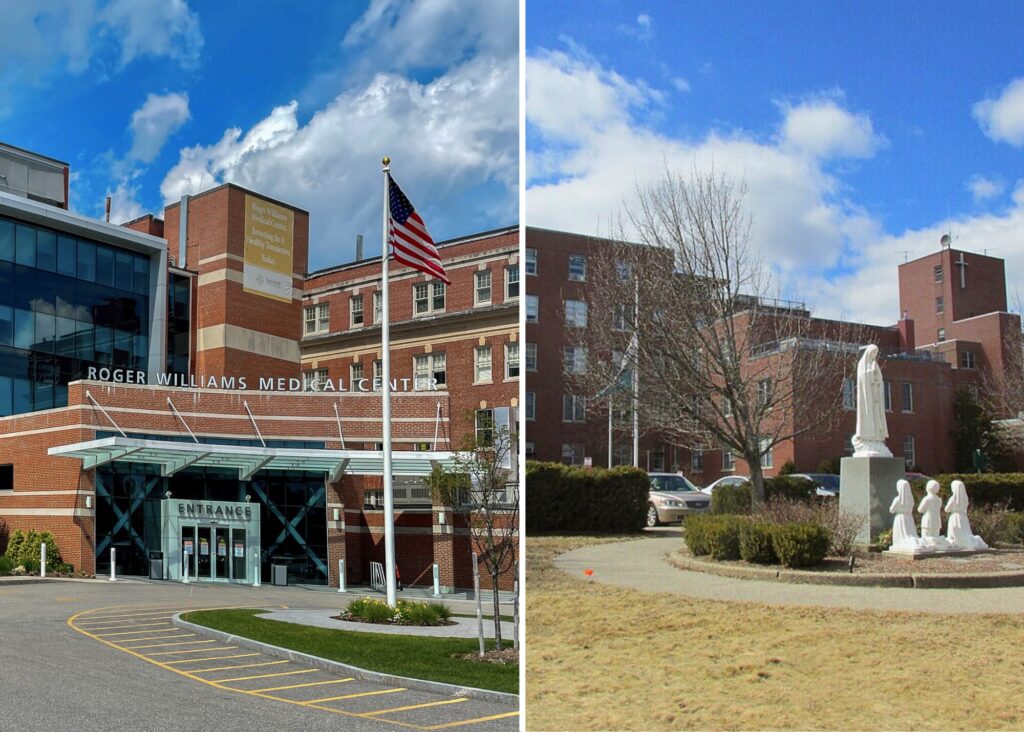
On January 18, the Providence Journal reported that the Centurion Foundation, the Georgia-based nonprofit and potential purchaser of Roger Williams and Fatima Hospitals, had missed a deadline to complete the acquisition. In a state already dealing with multiple challenges, from a broken Washington Bridge to the loss of Hasbro, this was not good news. The closing of these two facilities would be a devastating loss for the citizens of Providence.
Over the past several years we have spent far too much time in emergency rooms at Miriam and Rhode Island Hospitals dealing with medical emergencies for ourselves and family members. We know first-hand that demand greatly exceeds capacity at these critical facilities. We have seen competent and compassionate staff members struggle to treat maladies ranging from flu to life threatening injuries. Beds are unavailable. Waiting rooms overflow.
And now the residents of Providence face the very real possibility that Fatima (located just over the North Providence border, on High Service Ave.) and Roger Williams Hospital (on Chalkstone Ave., in Smith Hill) may close.
That would be untenable.
If those two hospitals close, about 2,500 people would lose their jobs. Five hundred hospital beds would be lost as well as well surgery centers, twenty percent of the beds in Rhode Island for behavioral health care, and the only bone marrow transplant program in the state. Meanwhile, the 50,000 people who currently use the emergency rooms at these institutions would flood the waiting rooms at Miriam and Rhode Island Hospitals.
It appears that, as a last resort, the State of Rhode Island may be asked to provide $18 million to save these two hospitals. The money is not readily available but, if necessary, surely creative minds should be able to figure out how to generate that sum from a state budget of over 14 billion dollars.
Our city and state leaders must seize the moment and act now before it is too late. Otherwise, a system designed to treat emergency health issues will go from bad to worse. In doing so, it would jeopardize essential health care for everyone who lives in Providence and surrounding communities.
Betty and Fraser Lang are long-time residents of Providence. For two decades they were co-publishers of Manisses Communications Group, Inc, which provided information for mental health and addiction professionals. For one decade they were co-publishers of The Block Island Times. Both have been active as volunteers and board members of non-profit organizations in education, conservation, health care and libraries. Fraser is President of the Board of Directors of The Providence Eye.


Want to comment? Click!