




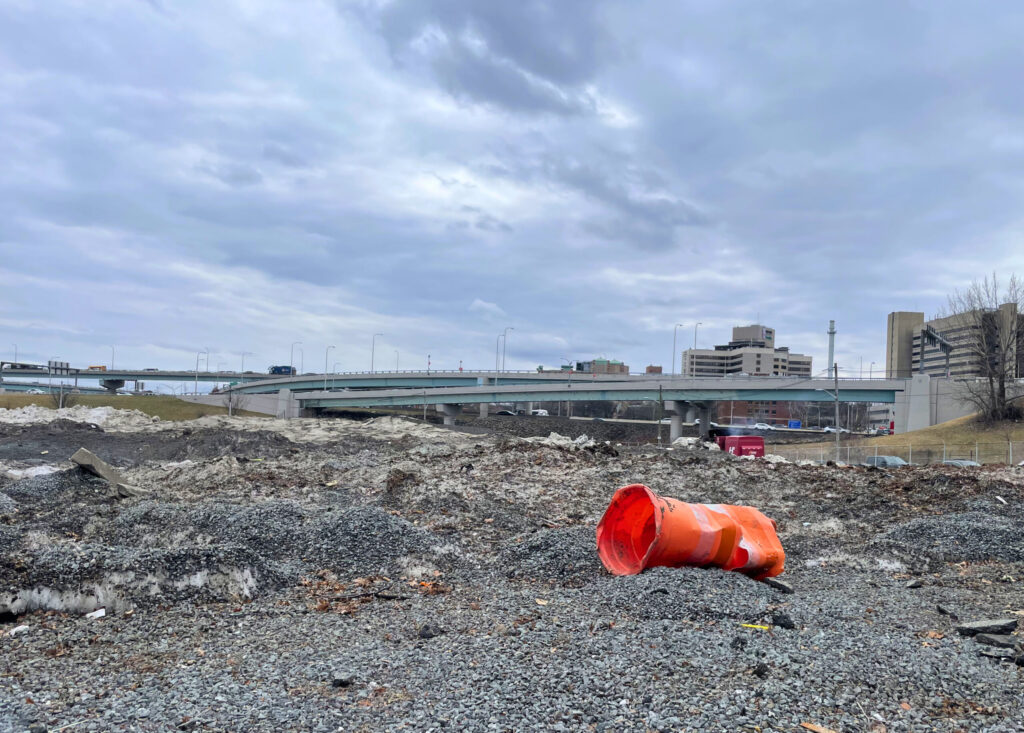
In Providence, only a few lingering snowbanks serve as reminders of the major storms this winter. As city residents say goodbye and good riddance to the snow, the snowmelt will continue to make a big impact on the local environment.
The slow drip of the snow melting allows the soil to slowly filter and absorb water, refilling the local water table at a time when Southern New England is experiencing a drought. As the piles melt, however, salt and pollution from the streets makes its way back to waterways and sinks into local soil.
Refilling the Water Table
Despite all the snow, Rhode Island just experienced its eleventh driest February in recorded history, according to drought.gov. This winter’s mean average temperature of 28.4 degrees Fahrenheit made it the 26th coldest in recorded history, leaving the ground frozen and less capable of absorbing water. Despite all the snowfall this year, half of Rhode Island is currently “abnormally dry.”
“What you’d love to see is just consistent snow throughout the season in small amounts,” said Narragansett Baykeeper Chris Dodge from Save the Bay. “That 18-inch storm in January and then that record breaking blizzard in February was a whole other scenario.”
Dodge said the best way to replenish the groundwater is to allow the snow to slowly infiltrate, or percolate, into the sediment. Local watershed expert Elizabeth Herron said the lingering snow might help replenish the local water table.
“This storm, we had so much snow and it got pretty warm afterwards,” said Herron, who is the program director for the URI Watershed Watch. The program works with 40 different sponsors to train volunteers that monitor water bodies throughout the state. “At least the surface parts of the soil got a little bit defrosted. It might have actually given us more of an opportunity for recharge than we might have had otherwise.”
As the bright snow melts away into the ground and into the sewer, Dodge said the remaining piles of dirt and asphalt get “grosser and grosser by the day.”
“As the snow initially started to melt, there were bumpers from cars starting to emerge from these snow piles, and obviously plenty of plastic bags and bottles,” said Dodge. “How much of that would be getting scooped if all we did was scoop it up and dump it into the bay?
In an emergency move to handle the February storm, Rhode Island’s Department of Environmental Management allowed municipalities to dump snow directly into select waterways, but Dodge and Herron said they did not hear about Providence using this exception. Dodge said the large lots used in Providence may not be the best at filtering snowmelt naturally, but at least they are closely connected to stormwater infrastructure.
“Whether that is a gravel parking lot or asphalt parking lot, [it] wouldn’t really matter too much if there was some type of storm water infrastructure already built up around these places with storm drains,” said Dodge. “If it’s able to get down into a water table through some type of pervious surface, then fantastic, because then you’re kind of naturally starting that filtration process, and you are then trapping any contaminants in that soil.”
In Providence, 47% of the land is covered in impervious surfaces like roads, parking lots and roofs. The water runs from these impervious surfaces into more than 2 million feet of sewer pipe beneath the City’s streets. A majority of those pipes channel water to the Narragansett Bay Commission’s wastewater treatment facility, but some of them send water directly into local waterways. The Woonasquatucket River Watershed Council’s River Rangers monitored and cleaned out snow from green stormwater infrastructure to prevent snowmelt from flooding areas around the city.
“Particularly Valley Street at the end of Atwells Avenue is very, very flood prone,” said Jarrod Holgate, WRWC’s Stormwater Supervisor. “The water rise is almost unimaginable, how bad it can get there.”
WRWC helps maintain green stormwater infrastructure, like storm trees and bioretentive areas, that follow four principles: collect, capture, infiltration and release. Each design collects running water and captures pollutants such as large pieces of trash and chemical pollutants. Then, the water sinks into dirt or grass rather than flooding the concrete, and finally releases back into the storm system. Excess water typically returns to city sewers through perforated pipes.
Holgate said the warm temperatures in recent weeks likely led to more stormwater going untreated and overwhelming local waterways instead of refilling the water table.
“After getting all the snowmelt we got, [the Woonasquatucket River] is the widest and wildest that I have seen in quite a long time,” said Holgate. WRWC uses a Bandalong Bandit litter trap to capture debris found in the river. “We attempted to go in the river last week to empty it, and it was unsafe for us with how fast the current was.”
The Pollution Piles Up
At property owned by Brown University Health, portable snow melters helped speed up the snowmelt.
The lot held piles of snow from Rhode Island Hospital’s campus, and after the blizzard, Providence officials requested to use the lot to remove snow from around the city. Weeks after the storm, crews used loaders to dump large piles of snow into three machines that together can melt over 200 tons of snow per hour.
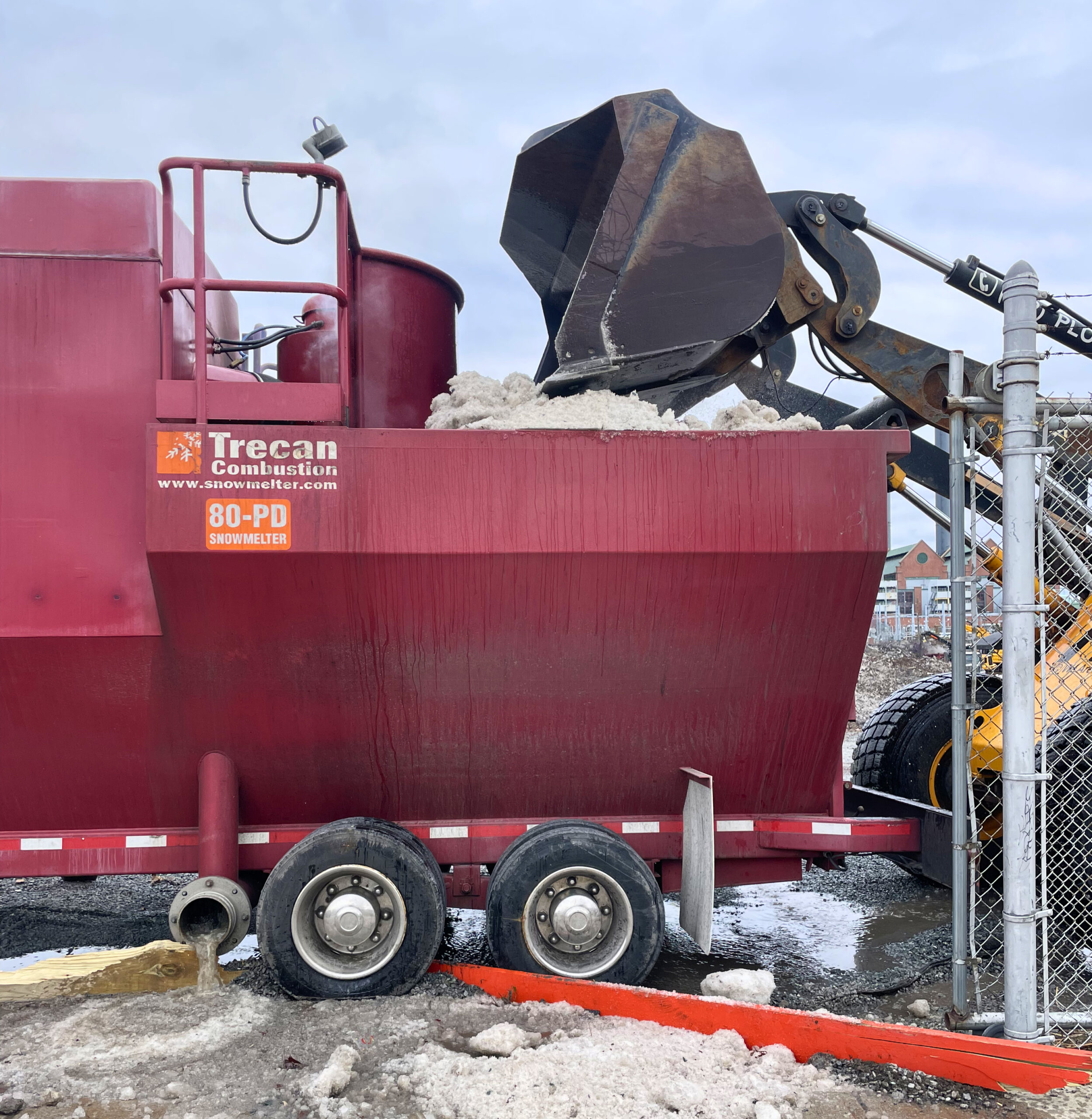
“Brown University Health does have plans to use the lot for temporary employee parking while it completes construction on the Rhode Island Hospital campus,” said Rhode Island Hospital. “Melting the snow avoids delays in starting the construction.”
While washing away the giant piles, the hospital said the machines filter out trash and dispose of it in a typical sorted waste process. But the piles also accumulate toxic chemicals that were scooped up alongside snow collected from roadways.
Nonpoint source pollution occurs “when rainfall, snowmelt, or irrigation runs over land or through the ground, picks up pollutants, and deposits them into rivers, lakes, and coastal waters or introduces them into ground water. According to the EPA, this process is one of the leading causes of water pollution in the country, and a large reason why almost half of the nation’s surveyed rivers, lakes and estuaries are not suitable for fishing or swimming. Providence is no exception.
“All of the major water bodies of Providence face contamination problems,” said the City of Providence’s Sustainable Stormwater and Sewer Assessment. “Stormwater is the primary source of pollution in most of those waterways.”
Forever chemicals such as PFAS, often used to make products water-resistant, durable or non-stick, don’t break down for decades and have been linked to a wide range of negative health effects. Another chemical, 6PPD- quinone, is found in tires and left on roadways as cars travel. Rain washes the chemical into waterways, where very small amounts quickly kill large amounts of fish.
“When we start getting spring rains, a lot of that stuff washes off roadways into waterways,” said Herron. She also points out that road salt also uses phosphorus as an anti-caking agent, which at excess levels can cause problems in marine environments. “Salt in freshwater can affect basically the health of aquatic species and how successful they are at reproducing.”
The practice of using salt to de-ice roads began in the 1940s and increased during the 70s. Chlorides, the active ingredient in most road treatment materials, interferes with freshwater organisms. Studies from the University of Rhode Island showed bodies of water in developed areas (Mishnock Lake, Tiogue Lake, and Blackamore Pond) showed spiking levels of chloride, while water bodies in undeveloped areas (Ponaganset Reservoir and Carr Pond) show consistently low levels of chloride.
Planktonic crustaceans are a major food source for fish and amphibians, but they are sensitive to high chloride concentrations. Native Rhode Island creatures such as brook trout and spotted salamanders also suffer under high chloride conditions, but some invasive species like Eurasian water milfoil are more tolerant of the high chloride. Herron said vernal pools, which are critical for species reproduction, are the product of spring precipitation and deeply affected by winter pollution.
“This is the time of year that those pools start developing because of the runoff,” said Herron. The URI Watershed Watch program does not begin monitoring this season until May, making it more difficult to track the impact on local waterways. “If there’s lots of salt in there, the reproduction success of those salamanders and those frogs may not be as good.”
Some research suggests snow can filter air by capturing pollutants from roadways, but Rhode Island DEM meteorologist Darren Austin said that likely did not make a big difference in the snow piles this winter. Precipitation does capture airborne particles, but Austin said the February blizzard mixed with clean Nor’easter winds that blew in straight from the ocean.
“The air quality on those events is pristine,” said Austin. “The fine particle readings that I saw on our monitors were ultra low.”
Austin said the dusty roads left behind by the salt and snowmelt could negatively impact health, but that wildfires, proximity to large roadways and industrial facilities are much more concerning for health effects.
Critiques of City Snow Being Piled in South Providence
To create one of several large snowpiles across the City, crews dumped plowed snow on the site of the former Urban League in South Providence. Local residents complained about possible pollution in their neighborhoods as a result of the snow piles being moved to the lot. State Representative and Providence mayoral candidate David Morales called the decision “environmental racism.”
“This was an unpaved city-owned lot,” said Smiley in a report from WJAR. “When it melts, the snow and salt will go into the ground and not into the streets, not into the neighbors.”
Dodge recognized that neighborhoods like South Providence and Washington Park are routinely impacted by environmental hazards, but said the snowmelt will likely not be as dangerous to human health as some companies operating in the Port of Providence.
“Snow piles with some potential contaminants are not going to be as detrimental as air quality impacts,” said Dodge, “Once it melts into the sediment, it’s trapped there right as long as it’s being in the dirt, in the gravel, or at the bottom of a catch basin. So at least it’s located in one spot and not transported around further downstream.”
Herron said the excess salt and sand could cause problems for those with respiratory issues, and suggested that Providence clean up the site after the snow melts.
“Hopefully the City of Providence, as so many municipalities do after the winter, will go around and sweep up some of those excess salts,” said Herron. “We’re going to have excess amounts of plastics and litter, and that could certainly be annoying and have an impact on the environment. I’m not sure how much it will affect people.”
Herron said the URI Watershed Watch program is recruiting volunteers to monitor water quality in the state, alongside groups like WRWC, Save the Bay and the Stormwater Innovation Center. Volunteers will begin testing sites in May and follow the lasting impacts of these historic winter storms on local waterways and drought conditions in the Providence area.
Eric Halvarson is a City News Reporter at The Providence Eye.


Want to comment? Click!