



Famously part of the “Blue Wall,” Rhode Island is known for its stalwart Democratic history. Now, along with most of the rest of New England, the Ocean State is experiencing the reverberations of Donald Trump’s second administration, including an assault on women’s rights. Access to birth control has been diminished, efforts to close the pay gap between men and women eroded, Title IX weakened, and the newly configured Supreme Court has ended federal protection of abortion rights. Moreover, the Trump administration has issued numerous executive actions regressing the rights and needs of the LGBTQ+ community.
Standing against these threats is a coalition of Providence area feminist organizations rallying in defense of their local communities through the arts:
Dirt Palace
In Providence, non-profit art space Dirt Palace is putting feminist values into action through creative, community-focused programming. Beginning as an underground artists’ collective in 2000, Dirt Palace has grown into an incubator dedicated to uplifting feminist artists.
Co-directors Pippi Zornoza and Xander Marro explain their interest in beginning the organization to encourage artists, especially young women, historically excluded from participation or success in the arts. “There are a lot of voices that whisper into the ears of young women about the paths that they should follow,” Marro explains. “We wanted to be the voices saying ‘No, your creative work matters.’”
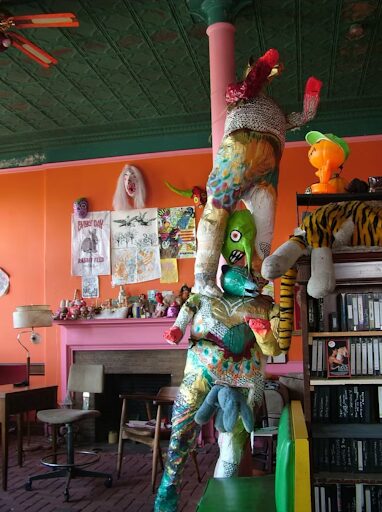
This message is embodied by the Dirt Palace Classic art residency facility. The live-work building at 14 Olneyville Square is a testament to 25 years of artistic expression outside of formal galleries: the floor is screen printed, the walls flyer-strewn, and the hallways filled with sculptures. Marro explains how this practice allows Dirt Palace’s artists to imagine through an inclusive, feminist lens: “You can sculpt new worlds; there are limits, but part of the job of artists is to push limits.”
Currently, Dirt Palace anticipates a new exhibit in 2026 centering community care and maintenance. Zornoza and Marro affirm that these remain key principles for Dirt Palace at large: “What is the unglamorous labor that goes into sustaining and taking care of each other? That’s what we’re really thinking about.”
This focus has only become more relevant in today’s divisive political climate. Recently, Dirt Palace has petitioned in support of a peer arts organization’s court case opposing the National Endowment for the Arts’s implementation of President Trump’s executive orders derecognizing transgender identity and reinforcing traditional gender roles. “We’re in this new reality where every day, rights are being taken away,” Zornoza and Marro explain. “Gender ideology is right in the crosshairs in so many ways…my hope is that people will find more commonality, and I think that’s what needs to be harnessed in order to build resistance.”
The Womxn Project
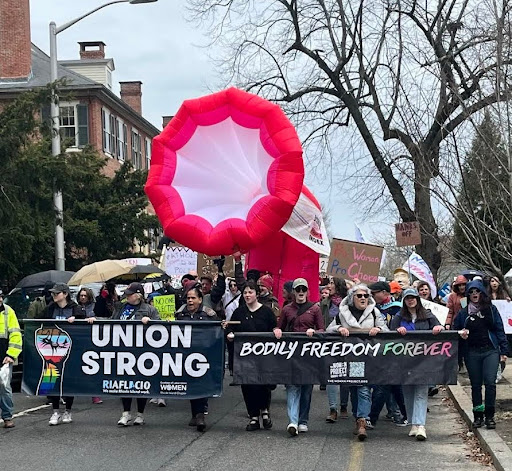
In 2017, in the wake of Donald Trump’s first presidency, another group of artists and grassroots activists founded The Womxn Project (TWP), a 501(c)4 nonprofit dedicated to using the arts as a tool for education and political mobilization towards gender equity and bodily freedom. TWP worked to preserve safe and legal access to abortions in Rhode Island, joining the fight advocating for the Reproductive Privacy Act (RPA), which was then codified into state law in 2019. Lexie Thompson, TWP’s Operations Manager, describes the critical role played by the then-new organization: “They were in the fight for two years and got something passed that had been in the works for over two decades.”
What makes TWP’s advocacy unique is its use of public art and other creative campaigns described as “artivism.” This method utilizes the accessible, emotional qualities of art to advance societal change. Artivism allows TWP and its supporters to simultaneously creatively channel their political passions, build community, and raise awareness to feminist issues. “Art is essential to our organization,” Thompson continues. “There’s truly a place for everyone in this work.”
One of TWP’s most significant artivism projects during their campaign for RPA was the Community Petition Quilt. Inspired by the AIDS Memorial Quilt, this initiative mobilized over 2,500 people to each sign a quilt square petitioning passage of the RPA. These squares were then stitched together and hung in the Rhode Island State House. The final piece spanned 52 by 6 feet, reaching from the State House’s top story to its lobby floor in demonstration of the policy’s mass support.
Thompson laughs as she recalls the Community Petition Quilt’s impact: “A lot of state representatives would say we were irritating because we were loud. Even if we weren’t speaking, our art was loud and it was in their faces.” Other artivist projects have included projections on the State House, a performative reading of the federal Roe legislation, and an annual Advocacy is Love postcard exhibition and fundraiser.
Since its initial success, TWP has expanded the scope of its advocacy to include LGBTQ+ and transgender protections. In 2024, TWP also aided the passage of the Healthcare Provider Shield Act, protecting Rhode Island providers from out-of-state interference with medical decision-making, particularly regarding transgender and reproductive care. Today, TWP is developing its Bodily Freedom Forever index, an educational tool informing constituents about electoral candidates’ positions on “bodily freedom,” including reproductive rights, gender identity, and more. Thompson explains TWP’s latest project is key to building transparency and inciting local political engagement: “Just because Rhode Island has been deemed safe because it’s historically been a blue voting state, that doesn’t mean it’s going to be that way forever.”
Contextualized by attempts from the Trump administration to remove “gender ideology” from Rhode Island education systems and restrict funding to domestic violence programs promoting “DEI” or transgender rights, organizations are feeling increasing pressure to stand down on issues surrounding gender equity and expression. “A lot of our advocates have been really scared that we’re going to go somewhere or we’re going to shut down,” Thompson continues, “But […] that’s not the plan. We’re not going anywhere.”
TWP continues its work in artivism through its community project, The Art of Autonomy, hosted at their Annex Gallery in Providence from September 13 – October 11.

Wanderground
This resilience is echoed in the archives of Wanderground, a New England-based lesbian archive and library currently housed in Cranston, Rhode Island. Wanderground is home to thousands of late twentieth century publications, creative and political works, and personal memorabilia organized by educator and activist Mev Miller, who has worked with feminist arts and publications since the 1980s. The library today highlights the women in print movement, including Audre Lorde and Judy Grahn.
Wanderground operates as both an archive, community center, and workspace dedicated to feminist expression and lesbian visibility. In addition to art and writing workshops, Wanderground has also curated pop-up exhibitions featured at the Providence Public Library, Brown University’s Sarah Doyle Center for Women and Gender, and other local libraries and universities. “We really see ourselves as a community-based archive,” Miller explains. “[Our collection] is not hidden behind walls…our goal is to try to make things as immediately accessible as possible.”
The extensive collection illustrates a history of activism and community building that may have otherwise been lost to history. “In Rhode Island there was a lot of women’s organizing around feminist issues that was mostly organized by lesbians,” Miller describes. “[Lesbians] were certainly active, but not necessarily in the foreground.”
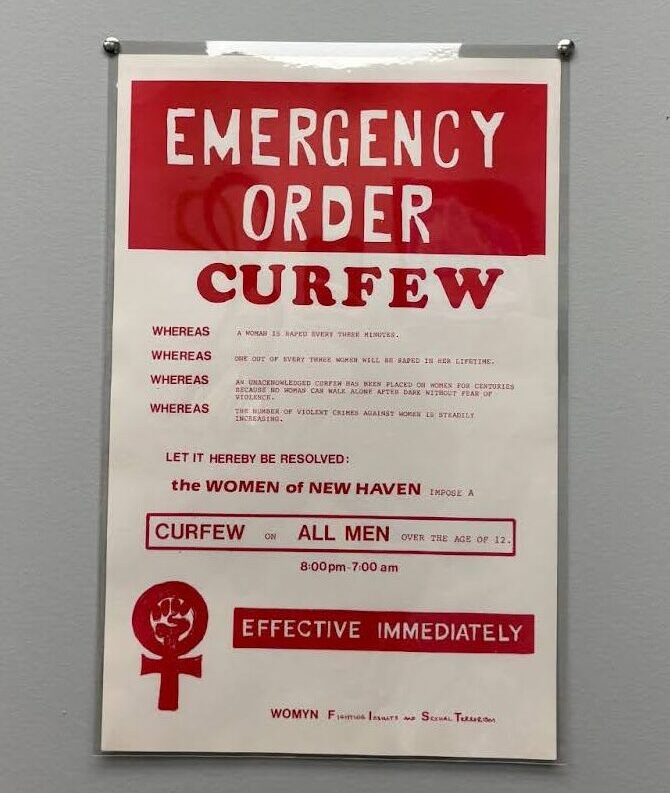
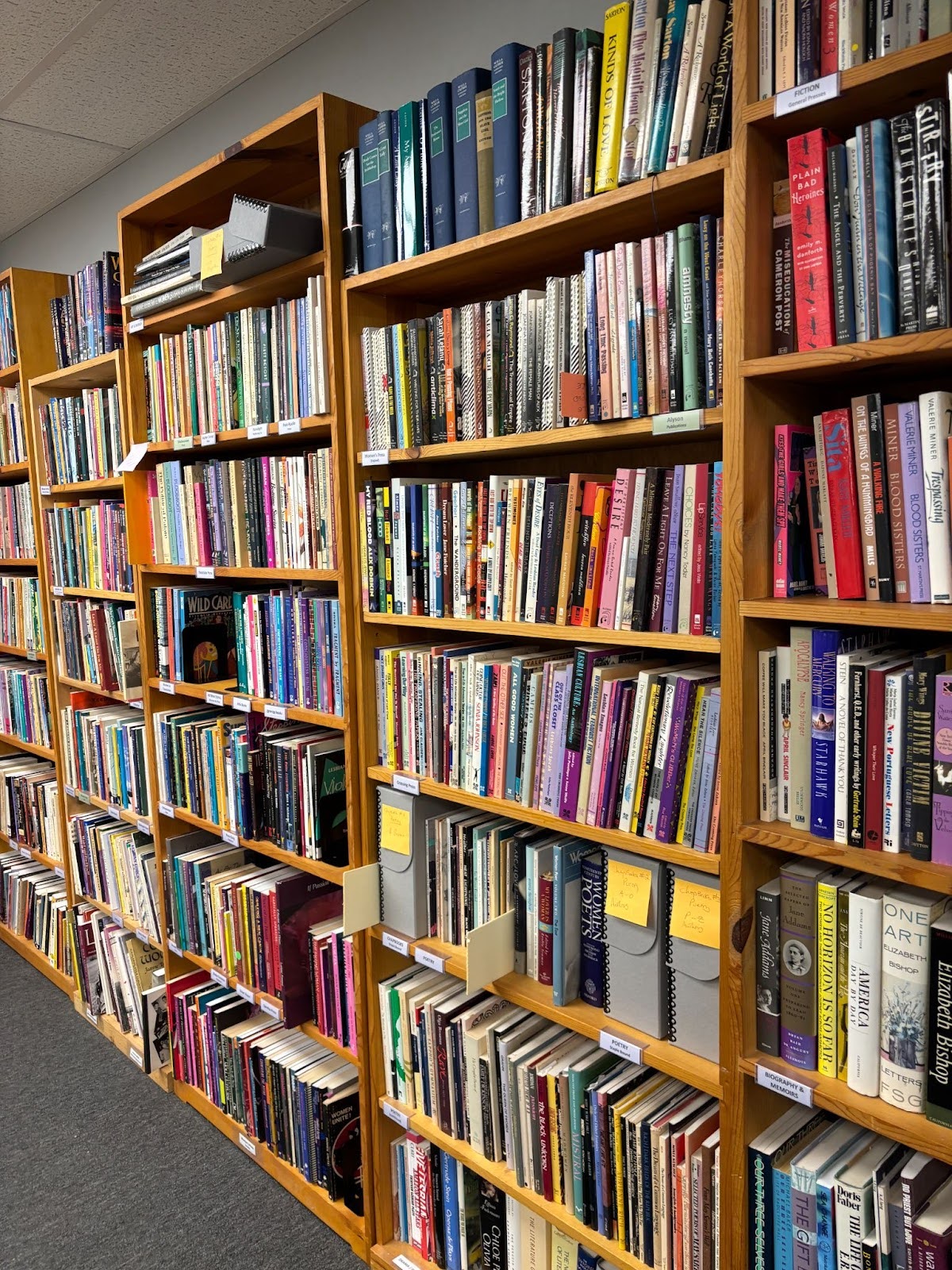
Now, Miller sees Wanderground as a tribute to this political history. “That’s the purpose of an archive,” she says, “to hold the ‘her-story’ and the stories and the art.” Faced with the Trump administration’s attempted erasure of these histories in cultural and educational institutions, Wanderland underscores the necessity of preserving these stories, and the creative media that represents them. Despite these threats, Miller’s caution is belied by the firm understanding that “Our work is now more important than ever…the more risky it gets, the more necessary the work becomes.”
Across these organizations, a shared vision emerges: that art, care, and feminist solidarity are not just tools of expression but of resistance. In a political moment marked by rollback and repression, Rhode Island’s creative communities are not retreating. They are building—louder, bolder, and more united than ever.
Samantha Ho is a writer and undergraduate at Brown University, studying English and History of Art. Originally from Los Angeles, she is excited by the relationship between the arts, advocacy, and politics, and for the opportunity to finally live somewhere with seasons.


Want to comment? Click!