




Providence is now the worst place to be a renter in the United States. That’s not just rhetoric—data shows that we have the widest gap in the country between what renters earn and what they are expected to pay. The income required to afford the median asking rent in Rhode Island’s capital is estimated at over $85,000, while the estimated median income for actual PVD renters is just over $50,000. This affordability crisis is squeezing everyday families—forcing them to make impossible choices between rent and other basic needs. It also helps explain why homelessness increased by 35 percent in Rhode Island last year and doubled over the last five.
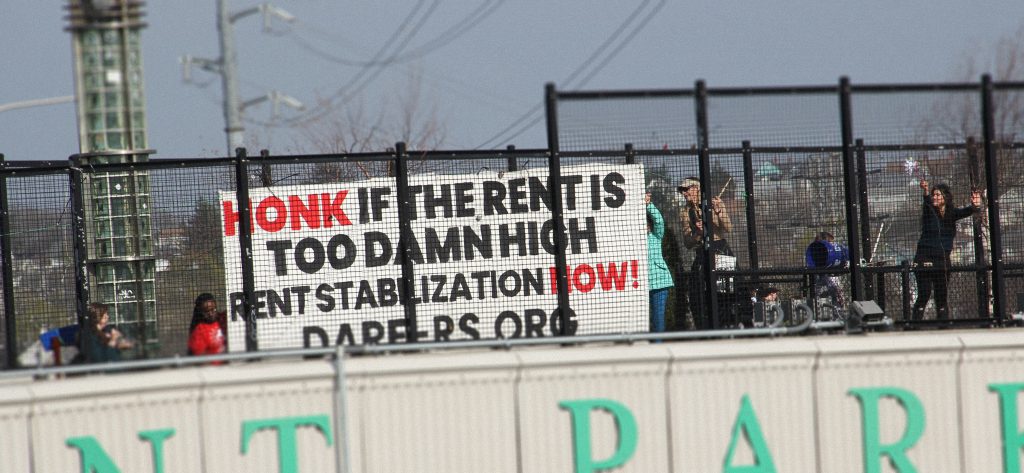
We are DARE’s Tenants and Housing Association (THA), organizing for rent stabilization and stronger tenant rights in Providence. Our top priority is a four percent cap on annual rent increases. After years of organizing by DARE and other local housing justice groups, Providence finally has a chance to pass a rent stabilization bill—one that includes, among other protections, a four percent cap. City Council President Rachel Miller has pledged to introduce a rent stabilization ordinance by the fall. DARE will publish a comprehensive summary and explanation of the ordinance once it is available (in our newsletter! Sign up here).
If passed, this measure would mean that your rent could rise by no more than four percent per year. This would offer immediate relief and peace of mind to thousands of families who have called Providence home for generations. At the same time, four percent is a sustainable rate for local landlords who rely on rental income—many operate within this range already. The proposal even allows increases of up to 8.5 percent for landlords who make significant property improvements or face higher property taxes, and it exempts new construction for 15 years. The only people who can’t tolerate this cap are predatory developers, often from out-of-state, who buy distressed properties, perform low-quality renovations, and then double the rent.
There are currently no rules in Providence about how often or how much a landlord can raise the rent. Is it any surprise, then, that Providence had the highest rent increases among metro areas in 2024? Or that more and more of our neighbors are forced to live outdoors or in shelters? People are dying in the cold, literally, for a lack of basic rental protections. This crisis will get worse if something doesn’t change. Between 2023 and 2024, there was a 12.5 percent increase in the median rent for all rental units in Providence. If prices continue to rise at their current rate, the average rent in Providence will be nearly $7,000 within a decade.
While passing a strong rent stabilization bill wouldn’t magically solve our housing crisis, it would be a major step in the right direction. Providence would no longer be the Wild West, an unregulated playground for real estate speculators.
Unfortunately, Mayor Smiley has been vocal in opposition to rent stabilization measures. His opposition makes passage of the bill much harder. It means we will need a supermajority of votes in the city council—ten instead of eight—to override his veto. Smiley argues that the city’s housing crisis stems from a lack of supply, and that limiting rent increases (and therefore profit for landlords) could deter development and make the problem worse.
But research on this question is mixed. Some studies show a decline in construction after rent stabilization, others don’t. Importantly, recent studies of more moderate policies—like the one proposed here, which includes exemptions for new construction and allows reasonable rent increases for improvements or tax hikes—have found no significant impact on housing development.
And zooming out, do we really believe that all housing development is good, no matter the cost? The root problem in Providence, and elsewhere, is not a lack of new luxury housing. It is that some people believe they’re entitled to profit from others’ basic needs, and have been empowered to act on that belief by the city’s commitment to deregulation.
Sixty percent of people in Providence rent, and nearly half are already “cost-burdened,” meaning that they spend more than a third of their income on rent. Most residents can’t plan for the long term because their rent can change drastically, month to month. With wages stagnating, the city risks becoming hollowed out—long-time residents replaced by those who can absorb the price shock. Is that fair? Is it sustainable?
Yes, we need more housing in Providence. But rent stabilization won’t stop those new units from being built. What rent stabilization stops are opportunistic, year-after-year rent hikes. What it stops is greed. The only people this scares off are those demanding massive profits from a basic human necessity.
If those are the kinds of businesses and landlords we lose—good riddance.
Harper Keehn is a knife sharpener, building super, and face painter in Providence. She rents in the West End with her partner, animals, and very soon, new baby! If you’d like to receive newsletters from the THA in the future, please sign up here.


Want to comment? Click!