




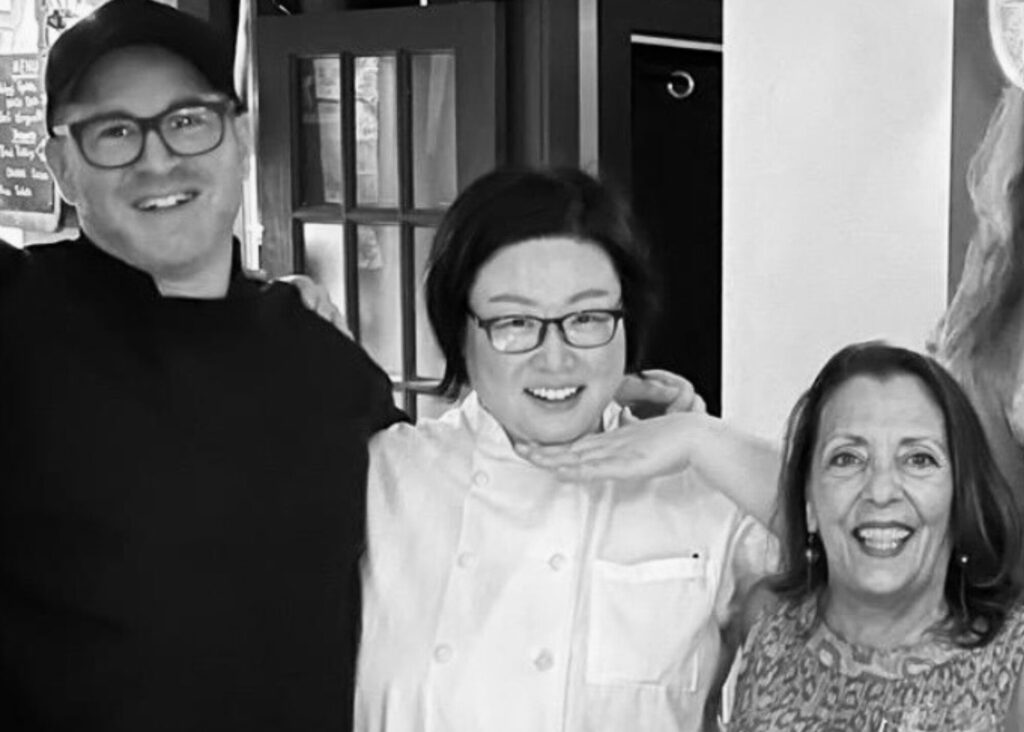
A bowl of gumbo ramen. A spoonful of kimchi mac & cheese. A bulgogi hot dog.
These are the culinary creations from the mind of Chef Jenny Han, served across Providence for the last five years. Dubbed “KoCajun,” Han’s unique blend of Korean and Cajun flavors pays tribute to the chef’s own journey living between Korea and the United States.
However, those interested in trying a bite will be disappointed to learn that this year, Han officially closed her pop-up restaurant Hanju Kitchen and returned to Korea. Citing high financial costs and an increasing uncertainty around U.S. immigration policy, Han said it became too risky to continue investing in her Providence restaurant.
Over 10,000 immigrant entrepreneurs in Rhode Island face similar challenges, navigating shifting immigration requirements, increased fees and processing delays. Despite their outsized role creating local jobs, U.S. federal policy is increasingly hostile towards immigrants, and the fallout could have major impacts on Providence’s economy.
A Cooking Journey from South Korea to Rhode Island
Jenny Han came to the U.S. from South Korea when she was 16, attending high school in Barrington and falling in love with Rhode Island. Although she always loved cooking and feeding people, Han went to art school in Boston and returned to Korea for seven years. Still, Rhode Island “felt like home.”
“After moving back and settling in Providence, I fell in love with the city,” said Han. “It felt like the perfect place to begin my journey and introduce my food to the community.”
Han found her calling in the kitchen. To her, Korean cooking is grounded in love and care, but American comfort food represents warmth and nostalgia.
“I wanted to bring those two feelings together,” said Han. “That’s what led me to attend Johnson & Wales University to formally train as a chef.”
Culinary school launched her into a career working at multiple restaurants around the city. After an internship at the upscale Italian eatery Bacaro, Han began a “transformative” experience at Chez Pascal under the mentorship of owners Matt and Kristin Gennuso. Han said the now-closed restaurant on Hope Street “felt like one big family,” and deeply inspired her own vision for starting a business.
“She used chopsticks like Matt used tongs, and she took great pride in showing us her culinary culture. Family dinner was a joy when Jenny was at the helm,” said Kristin Gennuso. “Food always gets better when you can appreciate different cultures and a different way of doing things… To lose that, means we will lose so much more than a meal.”
Han was invited to take over the kitchen at the New Orleans-themed bar the Royal Bobcat on Federal Hill. Inspired to fuse her Korean roots with the Cajun flavors of the Louisiana bayou, Hanju Kitchen started serving the “KoCajun” menu featuring staples like Shrimp Po’Boys in January 2020. Han’s upstart kitchen slowly gained fans throughout the pandemic, and she expanded her menu to include gluten-free, vegan and vegetarian options.
She parted ways with the Royal Bobcat in 2024, bringing pop-ups to Kimi’s in Providence and Archive Book & Snackery in Warren.
“Our customers loved her food, but they loved her even more; she often hand-delivered orders and took the time to connect with people,” said Uriah Donnelly, who owns Archive with Janet Moscarello. “We only stopped the pop-ups because she was leaving the country.”
U.S. Political Climate Harms Immigrant-Owned Businesses
Amid a “very difficult 2025,” Han said continuing the business became more and more challenging “especially as an immigrant on a visa.” She finally made the decision to go back to South Korea and leave behind the “growing uncertainty around immigration, rights, and protections” in the United States.
“As someone who built a life here, that uncertainty weighed heavily on me. It wasn’t the only reason—but it was part of the overall picture,” said Han, who said she could no longer take on the financial investment needed to stay in the U.S. “Ultimately, this decision was about sustainability—financially, emotionally, and legally.”
Over the course of 2025, President Trump and the federal government dramatically expanded Immigration and Customs Enforcement across the country while regularly denying people legal process, mistreating migrants and unlawfully discriminating, according to Human Rights Watch.
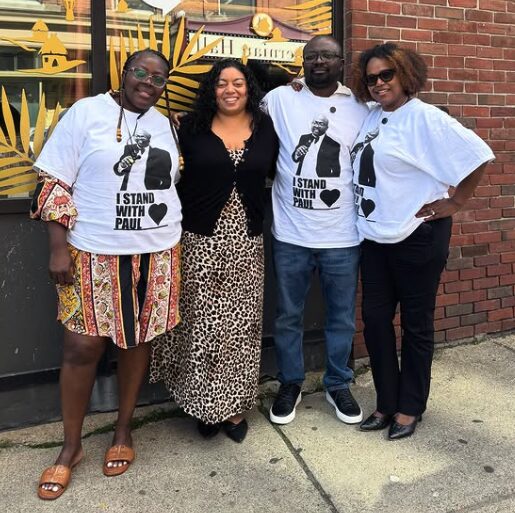
ICE arrested hundreds of people in Rhode Island last year, including Paul Dama, the manager of Suya Joint in downtown Providence. Dama’s sister Cecilia Dama Lizotte owns the African restaurant, which she opened as a second location after finding success in Boston. Dama was held in ICE detention for three months before receiving asylum.
“I’m getting more calls now—from business owners, from farms, from people as far north as Maine—asking: What happens if ICE shows up at my workplace?” said immigration lawyer Antonio Massa Viana. “People are scared… Many of my client’s children, who were born here, as well as those who are naturalized U.S. citizens, are walking around with their passports.”
There are over 11,000 immigrant entrepreneurs in Rhode Island—a quarter of all entrepreneurs in the state, according to research from the American Immigration Council. Immigrants are more likely to start businesses than the average U.S.-born citizen, often creating jobs and contributing to local economic growth. Hundreds of those entrepreneurs have no status at all, according to Viana.
“I’ve met people running multimillion-dollar companies, employing dozens of people, contributing to the local economy—and they themselves have no pathway to status,” said Viana. For Viana, the issue is personal—in 2014, he became the first known undocumented immigrant in history to become a lawyer in Massachusetts. “That, in my view, is a disservice to our country.”
Now a citizen, Viana recently expanded his law practice into Rhode Island and works with several business owners. Entrepreneurs can take a variety of pathways through the immigration system, with E visas, H-1B visas, J visas, a USMCA visa or speciality temporary worker visas for certain industries. Viana said each option is legally complex, financially draining, and in most cases, temporary by design.
“So someone can be here lawfully, building a business, paying taxes, employing people—and still living in a kind of long-term uncertainty,” said Viana, whose clients face processing delays and changing federal policies that interrupt long-term business planning. “If you have an option to take your business somewhere else, some people are making that choice. If you have an option to take your expertise elsewhere, some people are making that choice. It feels, in many ways, like we’re shooting ourselves in the foot.”
U.S. Representative Seth Magaziner’s office, which regularly assists constituents with visa applications and other immigration matters, is also monitoring the impact of federal policy on the Ocean State.
“Rep. Magaziner is deeply concerned about the impact the administration’s policies are having on the local small businesses that are core to Rhode Island’s economy,” said Magaziner’s Director of Communications Noah Boucher. “We have heard from countless Rhode Islanders who are deeply concerned about how the Trump Administration’s increasingly aggressive and reckless immigration enforcement actions are affecting their neighbors and their neighborhoods.”
Viana urges local communities to stay engaged and visit struggling immigrant-owned businesses. In the case of Hanju Kitchen, Chef Han’s collaborators were “deeply saddened” by how the changes pushed her to leave the U.S.
“Current immigration policies make it difficult for individuals to remain here, even when they have done everything right,” said Donnelly. “The loss of entrepreneurs like Jenny, alongside the broader deportation of undocumented workers, creates labor shortages that cripple small businesses and farms, ultimately hurting our local economy.”
Chef Jenny Takes Her Talents to Korea, Says Goodbye to Providence
This month, Chef Jenny returned to Korea with her beloved cat. She plans on opening a new Hanju Kitchen to serve Americans living in Korea who are craving a taste of home.

“[It will be] a place where people can come in, enjoy a delicious meal, leave with a full and happy belly—and I can go home to my cat feeling fulfilled,” said Han. “And when Hanju Kitchen opens again, Gumbo and Kimchi Mac & Cheese aren’t going anywhere.”
Despite the growing federal antagonism towards immigrants, Han is leaving Rhode Island “with gratitude, not regret.” She looks back fondly on going to High Motor on Mondays with her friend Meg, getting to know her local laundromat owner and feeling like the owner of Asiana Market was part of her family.
“Providence wasn’t just where I ran a business— it was a community that embraced me,” said Han. “Thank you, Providence. I’m grateful I got to be part of this community. This place will always be my home, in my heart.”
Eric Halvarson is a City News Reporter for The Providence Eye.
¿Quieres dejar un comentario? ¡Haz clic!