




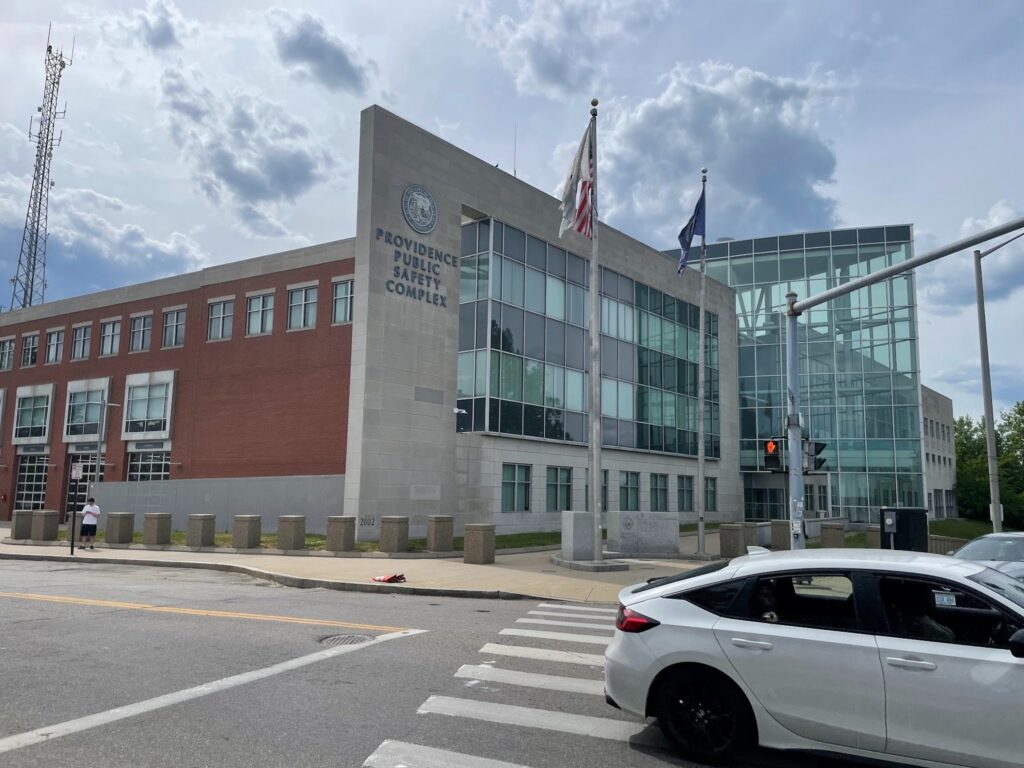
Providence police charged 148 youth with misdemeanors in 2025. The majority of those cases go to family court, where children can face incarceration or a mark on their criminal record. However, 27 were referred to an alternative municipal body that keeps juvenile cases out of the courtroom and in the community.
The Juvenile Hearing Board in Providence is a group of community members organized through City Council authorized to resolve youth cases without leaving a stain on children’s criminal records. However, this path away from the courtroom is only available to youth referred to the JHB by the Providence Police Department—which only happened in 18% of eligible cases last year. A new ordinance in City Council would automatically refer eligible youth to the JHB, possibly offering hundreds of young people in Providence “second chances.”
A “Get Out of Jail” Card for Children?
Councilman Miguel Sanchez introduced the proposed changes on April 9, with the support of fellow Councilors Rachel Miller, Jill Davidson and Shelley Peterson. The ordinance bypasses the need for police referral, automatically referring residents of Providence under 18 charged with non-violent offenses to the Juvenile Hearing Board.
“Police officers should respond to incidents and make arrests when necessary,” said Sanchez. “They should not also be prosecutor, judge, and jury. Providence youth deserve second chances.”
There are 25 Juvenile Hearing Boards in the State of Rhode Island, with Providence establishing its JHB in 2017. During a hearing, four of the board members welcome a police detective, youth and parents to discuss the case and deliberate a plan to address this behavior.
“A little simple mistake that a lot of youth make could follow them for the rest of their lives, because police officers have the right to arrest them. It’s not okay in my eyes,” said Rev. Jaquel D. Scott, who for the past two years has been a member of the Juvenile Hearing Board. “It takes the Justice Department out of the cases and then allows the community to restore them, and then allows them to take ownership without jeopardizing their future.”
In 2025, the Providence JHB oversaw 22 case hearings—18 of them were for disorderly conduct charges, with a handful of other instances of alleged shoplifting, simple assault and other offenses. Some of the cases were for children as young as 12 years old. The board ordered youth to volunteer at food pantries, participate in mentorship programs, and discover new outlets in the form of creativity, leadership training, and even apology letters to those they impacted. But Sanchez said this program is not being used to its full potential.
“Over the last three years, 508 young people were eligible for the Juvenile Hearing Board, but only 108 were actually referred,” said Sanchez. “An individual officer should not have the power to decide whether a young person gets a chance at diversion or is sent into the traditional court system.”
In 2024, only 33 out of 205 eligible youth cases were referred to the board. The rest were committed to the Rhode Island Training School, released pending investigation or went to court.
“The amendments were drafted because the JHB, by its own account, is being underutilized,” said Kati Stevens, Providence City Council’s communications director. “The Providence JHB is an extraordinary success, but with 15 members, they have the capacity for significantly more work than they are currently conducting.”
Providence police said the proposal affects “where eligible cases are directed after arrest, not the department’s responsibility to protect public safety and hold offenders accountable.”
“Providence police officers would continue to investigate crimes, make arrests when appropriate, and enforce the law,” said spokesperson Kristy DosReis. “We will continue working with city officials, community partners, and the courts to support accountability, public safety, and positive outcomes for youth.”
In addition, the ordinance would allow police officers to refer juveniles to JHB over truancy issues. Scott said it’s “disappointing” when the JHB doesn’t see more cases because he “knows that it works.”
“They’re kids that are acting out because they lost loved ones, and they don’t have access to the tools to process it, and just having that community there with them, I think it’s just beautiful,” said Scott. “We want to see this, we want to restore our youth, we want to strengthen our communities, we want to be there and be that bridge for law enforcement and in our community.”
The program still bars youth who went through the process twice before, those who failed to complete their previous JHB sanctions, and those whose case is already being heard at Family Court. Sanchez said diverting cases away from criminal proceedings can have positive impacts on the future of Providence youth.
“One path risks pushing a child deeper into the school-to-prison pipeline, while the other offers them a chance at growth, education, and repair,” said Sanchez. “It is a fair and balanced solution that recognizes that many young people are better served by community-based accountability and support than by being pushed unnecessarily into family court.”
According to a report from the Rhode Island DCYF, youth in Providence are about 3% more likely to recidivate (be charged with offenses multiple times) than the state average.
On June 9, the City Council is hosting a hearing on whether to automatically refer youth facing criminal charges to the JHB.
There are 12 currently active members of the board, and the JHB is seeking three individuals to bring the board to 15. Those interested in volunteering on the board can send a resume to Melissa Cruz, Senior Director of Constituent Services, at [email protected].
Eric Halvarson is a City News Reporter for The Providence Eye.


Want to comment? Click!