


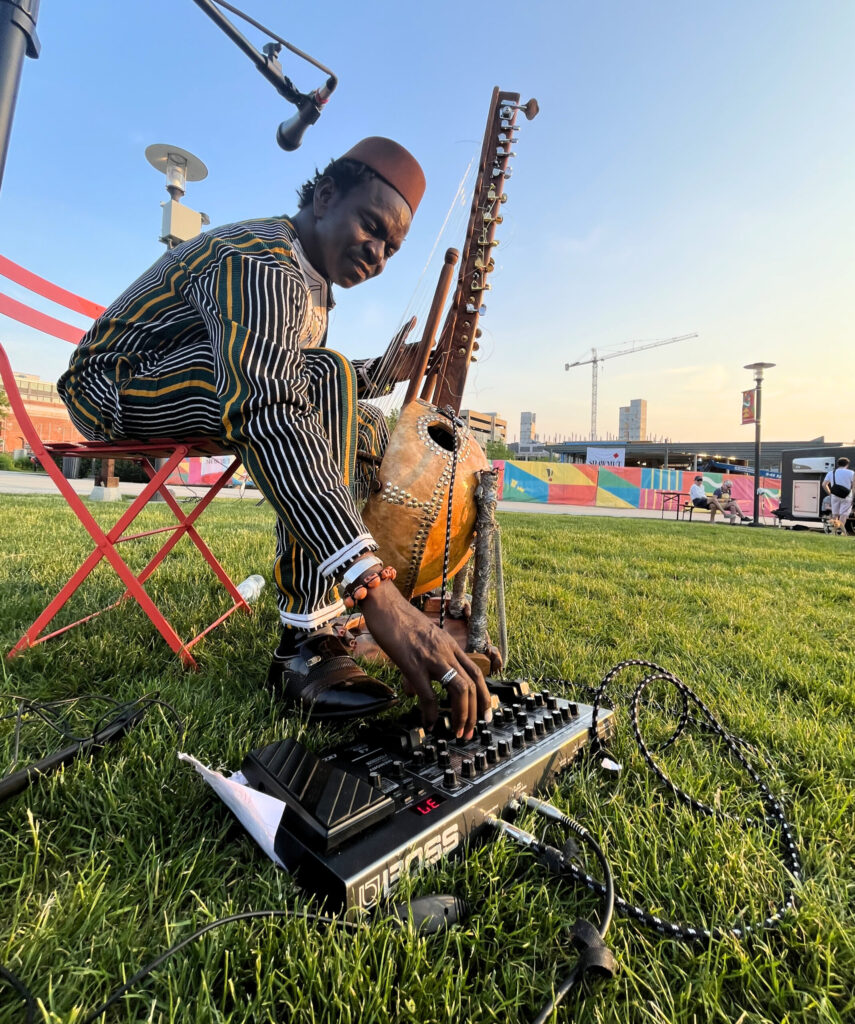
Beginning this year, the Trump Administration fully or partially suspended issuing visas to 40 countries and territories, with 26 of them located in Africa. At the same time, Trump’s federal government is slashing federal arts programs or redirecting funding towards a conservative agenda. One of Providence’s younger arts initiatives, PVD World Music, is feeling the impact on both sides.
“How do we deal with promoting music from the immigrant community during this tough time?” said founder Chance Boas. “I came from the refugee community, and we are producing concerts to be attended by immigrant folks.”
PVD World Music’s eighth consecutive year of programming kicks off on May 7, the beginning of over 17 events celebrating music and arts of African refugees and immigrants in Rhode Island. The PVD World Music team is determined to continue the organization’s work bringing together local and international artists to share their work in the Ocean State.
PVD World Music Grows
Since 2019, PVD World Music has grown into a cultural landmark of Rhode Island’s capital, putting on over 100 concerts in parks and music venues around the city. Through the program, acts traveling from places Madagascar, Ethiopia and Chile play with local groups to crowds looking for either a familiar sound or a new experience.
“Not everybody who lives here has access to their homeland,” said Boas. “Especially the youth who came here. Some are born in a refugee camp, some born here—they don’t have access to their grandparents’ music.”
Boas’ aunt gifted him an Inānga instrument in 2018, but he didn’t know how to play it. The instrument is traditionally played in Burundi, where his family is from, but Boas grew up in a refugee camp in Tanzania. After receiving asylum in 2008, Boas learned English and attended Bryant University, but also started to connect with other musical members of the refugee community in Rhode Island.
“At some point in 2019, I realized that I can participate in a change, where I can make people know about the diverse musical sound we have here in Providence,” said Boas. “That way when we are thinking about supporting the arts in Providence, we’re not just thinking about a few bands, a few organizations, but also extending that support through the immigrant community.”
Boas started to book shows in 2019, but he struggled to find places where musicians like Kora players could share their art. Venues were more interested in looking for popular bands that bring large crowds and sell beer.
“We couldn’t just call and say ‘We need to play a djembe concert at your venue,’” said Boas. “People would be like, ‘What did you eat last night?’”
Since becoming a nonprofit in 2021, PVD World Music grew their program through grants from organizations like New England Foundation for the Arts, the Providence Department of Arts Culture and Tourism, Rhode Island State Council on the Arts and Papito Opportunities Connection.
Now, the project is operated by a small, collaborative team that books venues, does promotion and operates the sound for concerts.
“If you come to one of our shows, there’s a high likelihood that you might end up volunteering yourself to pick up chairs or clean up some of the equipment,” said Ian Lyle, who began working part-time for PVD World Music in 2022. Lyle looks back fondly at picking up a South African filmmaker at Boston Logan Airport, only to get stuck on the trip back due to bad weather. “We went to this vegan diner and had pancakes and talked about American politics.”
PVD World Music’s African Film + Art Festival is now in its seventh year. The event showcases the work of filmmakers from African and African Diaspora with work from places like Senegal, Cape Verde, Kenya and the U.S.A.
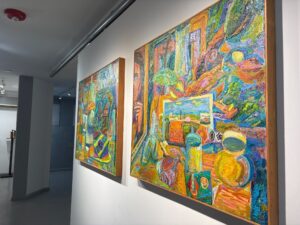
The organization also organizes art shows, like last year’s “Finding the Spirit of the Inanga” hosted at the Pawtucket Arts Collaborative (PAC), which explained the history of using gourds to create instruments and featured performances by Yacouba Diabate on the Kora, and Silas Pinto and Grupo Ondas on the Berimbau.
However, despite the organization’s resonance locally, a slate of changes on the federal level is looming over this year’s season.
Sustaining the Organization Through Federal Cuts
In the past year of federal attacks on immigrants, their supporters and the systems that care for them, Boas said there is an emotional impact on PVD World Music.
“Not too long ago, I was a young immigrant kid with no English,” said Boas. “Seeing all of that happening is crazy to watch.”
But funding is also a big part of the battle, said Boas, who said he did not host a winter concert series in 2025 due to a lack of funding. Federal funding has dried up for arts in humanities in Rhode Island. In one example, DOGE allegedly used ChatGPT to strip funding away from National Endowment for the Humanities grants.
“Last year, we were forced to cancel 16 grants that we were about to award,” said Elizabeth Francis, executive director of Rhode Island Council for the Humanities, which lost over half a million dollars in funding from NEH last year—40% of their entire budget. The organization took legal action, but it is still in process. “For over a year, our federally funded grant program has been suspended, resulting in thousands of Rhode Islanders losing access to vital community-based humanities activities.”
RI Humanities granted PVD World Music $5,000 this year through the state-funded THRIVE program, but future funding remains in question.
“The loss of federal funding, for us, and so many other nonprofits, is profoundly challenging and indeed existential,” said Francis. “If it persists, it will have a long-term impact that we can only begin to imagine.”
A federal judge ruled in favor of Rhode Island Latino Arts and three other arts organizations last year, declaring the National Endowment for the Arts penalized the groups for their speech. Trump attempted to withdraw federal money from groups that “promote gender ideology,” a term Human Rights Watch said is used by right-wing groups to attack the rights of LGBTQ communities.
This year, Trump again suggested eliminating the NEA and NEH entirely, along with dozens of other programs. In the end, Congress appropriated level funding for both endowments, but Francis said RI Humanities still has not received federal funds in over a year.
These changing funding streams could impact projects beyond Providence, as PVD World Music also hosts fundraisers to build a music library and archiving project in Burundi. Boas welcomes supporting international artists in Providence, but also is committed to supporting opportunities for those traditional music performers in their homeland.
“These artists, they are there,” said Boas. “They grew up there, they perform there, but they never had a recording.”
PVD World Music’s Air Tanganyika Music Festival is happening on May 16 this year. This fundraiser is separate from the organization’s regular programming budget and designed to support musicians in Burundi. Money from previous years supported a musical festival that showcased more than 50 musicians in Kayanza, Burundi. The funds also went towards recording several musicians in the area. Now, future funds will go towards the construction of a new library dedicated to preserving African art and music.
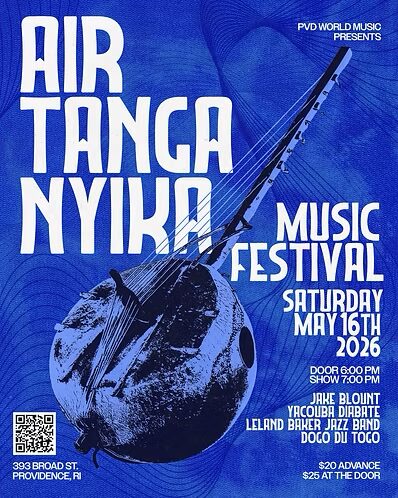
“We need to archive this knowledge among the refugees and the African artists traveling around the world and stopping in Providence,” said Boas. “But this knowledge is not available at home.”
While Boas hopes the project abroad continues, this season in Providence is front and center of his focus. Especially as the uncertainty of federal funding and policies weighs on the organization, Boas is asking the community to support their work.
“If you really want to support us, come to our concerts,” said Boas. “If PVD World Music is sustained here, then whatever the financial culpability, we’ll be able to support the work in Burundi.”
In 2024, the Southside Cultural Center hosted prominent Burundian musician Steven Sogo. Playing the Inanga, the same instrument Boas attempted to learn in 2018, Sogo shared the art of an instrument played for thousands of years through periods of slave trade, European missions, colonialism and globalization. The show brought together the worlds of Providence and the Great Lakes region of Africa to keep their tradition, history and cultural connections alive.
“The Burundian community really came out to that show, and were dancing, singing along, singing their language, doing their traditional dance,” said Lyle. “That was sort of the epitome of what we’re trying to do.”
For more information about PVD World Music, visit pvdworldmusic.com.
Eric Halvarson is a City News Reporter for The Providence Eye.


Want to comment? Click!