




You may have noticed an uptick in The Providence Eye’s reporting of recycling and waste management in Providence, which is no mistake.
Despite the City’s poor record of recycling, our neighbors and readers are engaged in the topic, writing in letters to the editor and asking questions about how we can learn from other cities, and what people can do in their households to combat this issue. To encourage community and reader dialogue around this topic, we are re-sharing those recent letters below.
Interested in learning more and discussing these issues with your neighbors? Join us for Trash Trek on Saturday, May 30, as we trek (on a bus) to the Johnston landfill to see where our trash goes, how recycling is sorted, and hear directly from staff at the Resource Recovery Center. Tickets are $5 — reserve your spot here before tickets sell out.
In the meantime, here’s some select stats from Providence’s 2025 recycling data. You can compare these numbers to the 2023 data, which we reported on here.
190,934 — Number of residents in Providence (based on 2020 Census data)
51,541 — Number of households in Providence served by Waste Management
73,924 —Tons of solid waste generated
1,999 —Tons of Materials Recovery Facility recycling diverted (mixed recyclables)
3,278 — Tons of composted material diverted (includes leaf and yard waste, Christmas trees, brush and stumps)
78 — Tons of scrap metal diverted (includes appliances with and without freon, auto batteries, propane tanks and other tons reported as scrap metal)
509 — Tons of “other recycling” diverted (includes all other diverted materials: antifreeze, bicycles, books, bulky rigid plastics, concrete, cooking oil, electronic waste, fluorescent bulbs, food scraps, household batteries, reused household items, mattresses and box springs, motor oil and filters, paint, plastic bags and film, paper shredded at special events, tires and wood pallets)
79,788 — Tons of total waste generated (total tons of solid waste + MRF mixed recycling + composted material + clothing + scrap metal)
16,849 — Tons of rejected recycling (contaminated mixed recycling loads that do not meet minimum quality standards, are not processed in the MRF and are subsequently landfilled)
1.43 — Tons of trash landfilled per Providence household
78 — Pounds of accepted MRF recycling per Providence household
654 — Pounds of rejected recycling per Providence household
2.6% — MRF recycling rate (includes MRF mixed recyclables)
6.8% — Providence mandatory recycling rate (includes materials on RIDEM’s Mandatory Recyclables list: MRF mixed recyclables, composted materials, scrap metal and clothing)
7.3%– Providence diversion rate (includes MRF mixed recyclables, RIDEM mandatory materials and materials listed as “other recycling”)
Find the annual metrics on the Resource Recovery Center’s website here.
Letters to the editor:
May 13, 2026
I have appreciated the Eye’s consistent coverage of the changes to the city’s recycling collection. The city has said that it “hopes” the larger size will result in better recycling habits. Has this, or any of the other anticipated savings and improvements, been tried in any other cites? Is there data to back up these statements? Or is it modeling or conjecture? I’m skeptical about taking them at their word. (Colette Sosnowy, East Side)
What are the rules for apartment buildings? They have those big dumpsters where everything is thrown in, no possibility of separating recyclables. (Diana Maher, Pawtucket)
I recall from your previous article on the recycling that the East Side has high compliance. Are things we can learn from that area that can be applied to the other neighborhoods? (Carlos Abrahamson, Providence)
March 18, 2026
There was a brief throw away line in one of the early emails from the City when announcing the advent of these new bins that caught my eye—that the old bins would be recycled. I would love to have more detail on that because most of us who are interested in recycling understand that plastics of all shapes, sizes and types are nearly impossible to recycle. This number of bulky, heavy cans is an enormous amount of material. Often we can’t even pay other countries to take our bundled plastics away. So, it ends up in the landfill, either ours or someone else’s, to further pollute the environment. Is the plan to use one of those controversial high heat incinerators that burns medical waste and other nasty stuff, giving off noxious gases and leaving a greatly reduced–as in cooking, meaning much more intense –end product, highly toxic, that goes who knows where? One such company tried to get itself a spot somewhere here in RI a couple of years ago and met with a lot of resistance from climate activists. If incineration is the plan, where would that happen? It also would be interesting to know the total cost to “recycle” the old? (Jessie Kingston, Providence)
June 5, 2024
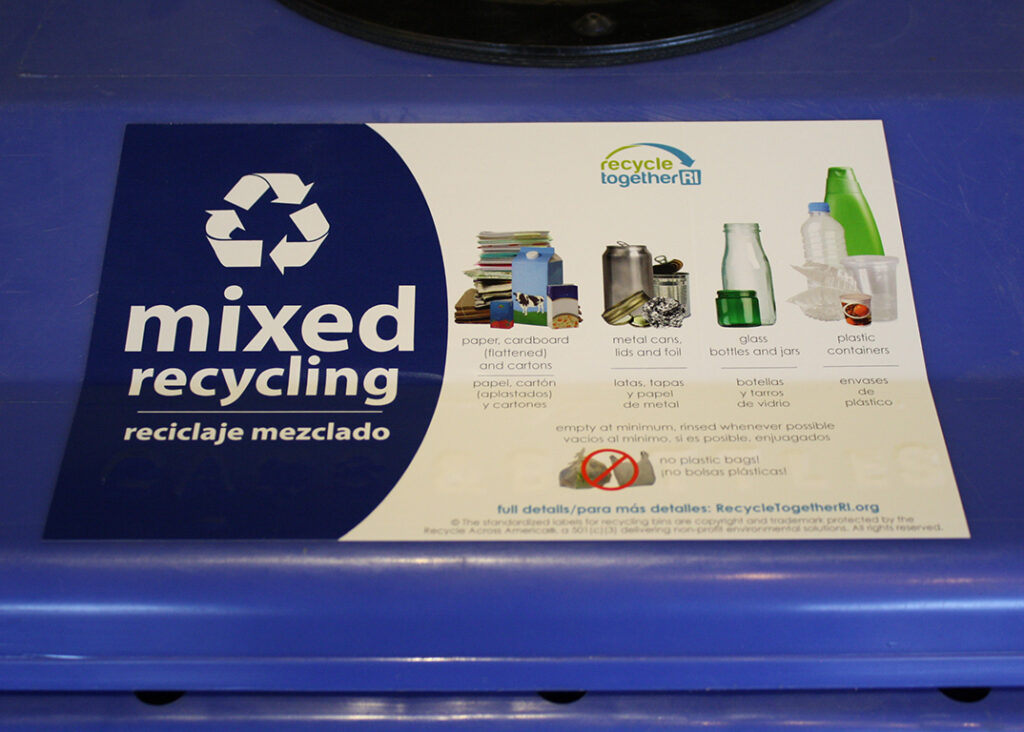
I was interested in your article about the miserable state of recycling in Providence, which seems to be the worst of any municipality in the state. I suspect that one reason recycling rates are so low is the fact that Providence (and Rhode Island) has committed itself to “single stream” recycling: everything is thrown into one barrel together, including plastic, glass, foil, paper, cardboard. This leaves it to the RI Resource Recovery people to sort out all this stuff into the correct piles, and it also assumes that home-owners have a clear idea about what can go into the recycling barrel and what cannot. Those mailers that we all receive about what goes into which barrel are specific about what goes into the recycle barrel, and lots of discarded food containers do not. Anyway, few people really read the numerical plastic designation on plastic containers.
I believe there is a back-story. About 20 years ago, RI Resource Recovery Corp. made a very expensive purchase of a single stream sorting machine from Holland, which is supposed to sort the various kinds of recoverable, recyclable trash — and assist the machine operators in sorting this stuff. If you know anything about the Dutch, you know that they are some of the tidiest people on the face of the earth. Without a doubt, the Dutch put the right trash into the right barrels, so that a machine like this can do its job effectively. Americans have no such tradition of tidiness, civic or personal.. So I suspect that this single stream Dutch approach is the wrong one for us. Tours of the facility in Johnston are available to the public, and you can see the operators desperately pulling inappropriate trash out of the recycling stream as it heads up the conveyor belt. They are overwhelmed, and no doubt they miss a lot. That is why they cannot be bothered to deal with trucks from Providence that show huge piles of the wrong recyclables in the recycle loads. (The contamination of American recycling streams is why the Chinese will no longer take American trash for recycling.)
In Massachusetts, the recycle stream at least separates paper & cardboard from plastic, foil & glass. It would probably simplify and improve RI recycling if paper was collected separately, although the logistics of the barrels would have to be restructured. If Providence recycling trucks are being turned away and directed straight to the landfill, the system we have now is hardly better than no recycling at all. (John Woolsey)
Emily Smith has been a volunteer writer for the Providence Eye since 2023. She works in the field of social impact and lives in East Providence.


Want to comment? Click!