




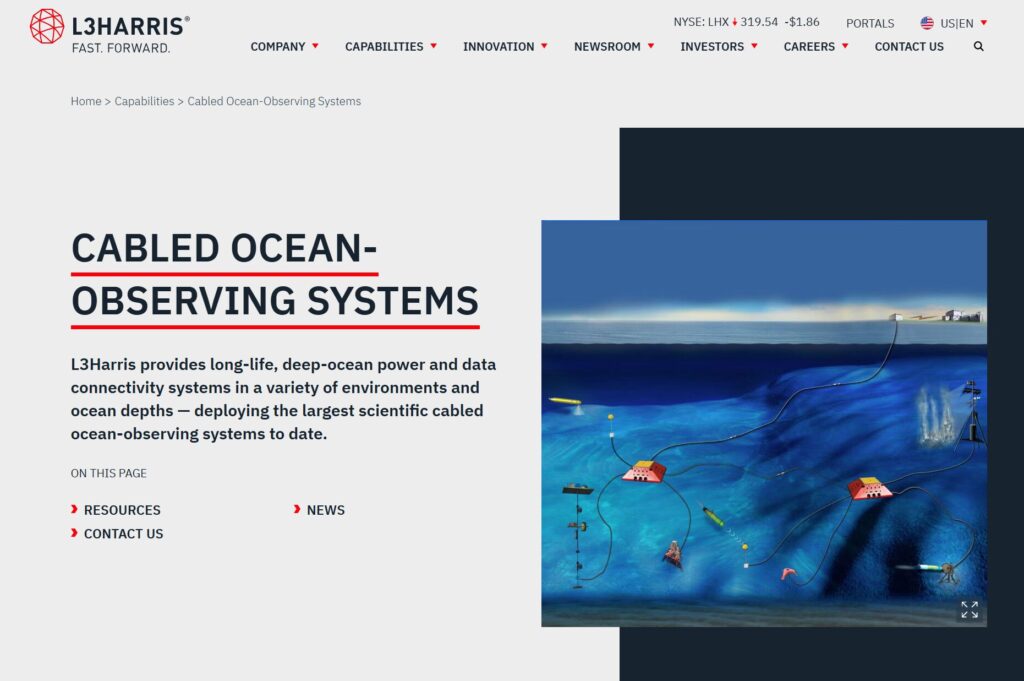
Providence’s newest portside tenant is L3Harris, one of the largest defense contractors in the world. The company plans to build a 50,000 square foot warehouse in ProvPort worth $6 million to load and offload subsea telecommunications cable.
The news comes as ProvPort looks to complete its new master plan, a guiding document for the business park that will lease land from the City of Providence for the next 30 years. The plan positions the maritime terminal as a “hub for the emerging blue economy,” a term that generally refers to businesses using ocean resources covering anything from ecological research to military manufacturing. Local feedback on the plan, and the arrival of L3Harris, reveals different opinions on how to manage Providence’s bay side for the next three decades.
ProvPort is accepting feedback on the draft plan through May 4th.
Blue or Ballistic? Ocean Industries Include Tourism, Boating and Military Contractors
In December of 2025, Waterson Terminals announced the deal with L3Harris, the ninth largest defense company in the world that generated $21 billion dollars in revenue last year. The company offers a variety of products and services related to missile propulsion, space systems and communications. L3Harris is the ninth largest contractor of the U.S. government, and on April 23, the company secured a $1 billion dollar investment in missile technology from the Department of War (formerly Department of Defense).
“L3Harris will utilize ProvPort to support subsea telecommunications cable operations, including the loading, offloading, spooling, and storage of undersea cable,” said the ProvPort master plan draft. “The addition of L3Harris further diversifies ProvPort’s tenant base into the defense and telecommunications sectors while leveraging the specialized cable-handling expertise developed through the port’s offshore wind operations.”
Between Ørsted/Eversource, WIND Cable, Green Development and L3Harris, renewable energy and maritime technology businesses now constitute one quarter of ProvPort.
“ProvPort Inc and the Waterson Terminal Services team bring the specialized expertise we need in undersea cable handling and spooling,” said L3Harris Acoustic Systems General Manager Trey Mathews. “Combined with Rhode Island’s strategic location, it was a clear, smart investment for us.”
Protesters in Northampton called for a citizens’ arrest of the company’s CEO Chris Kubasik last year, alleging the company is violating international laws by selling weapons to Israel. The American Friends Service Committee also is calling for divestment from the company due to its connections to military operations around the world.
“I’m getting chills talking about it, because I think they’re absolutely terrifying,” said Ellen Tuzzolo, community organizer and People’s Port Authority staff member. “That’s a big one that we should all be very mad about.”
The Providence Eye contacted L3Harris to determine what the cables will be used for but the company declined to comment.
People’s Port Authority—in coalition with Conservation Law Foundation, Washington Park Association, South Providence Neighborhood Association, and One Square World—is calling on ProvPort to adopt a definition of blue economy that “explicitly excludes defense contractors and weapons manufacturing.”
“Blue economy means different things to different people,” said Austin Becker, chair of the Department of Marine Affairs at the University of Rhode Island. “There’s people who, when they think ‘blue economy,’ they think of fishing. And then there’s other people who, when they hear ‘blue economy,’ they think: defense industry.”
Over 6% of Rhode Islanders work in the state’s ocean-based economy, a sector URI calculates is worth more than $5 billion including tourism, marine trades and defense.
Southeastern New England and Rhode Island are sometimes called the “Silicon Valley for undersea ocean technology,” and defense is a significant piece—hiring more than 16,000 people in the state at firms like Raytheon, General Dynamics Electric Boat and operations by the U.S. Navy.
“If working on defense type products goes against people’s ideologies, we respect that, but there are lots of other options in the ocean economy aside from national defense,” said Christian Cowan, director of Polaris MEP, a RI nonprofit that provides consulting for manufacturers. “The most important thing for people in Providence to know is that this ocean economy is an economy that will provide them jobs.”
Neighboring Communities Demand Strong Governance and Accountability
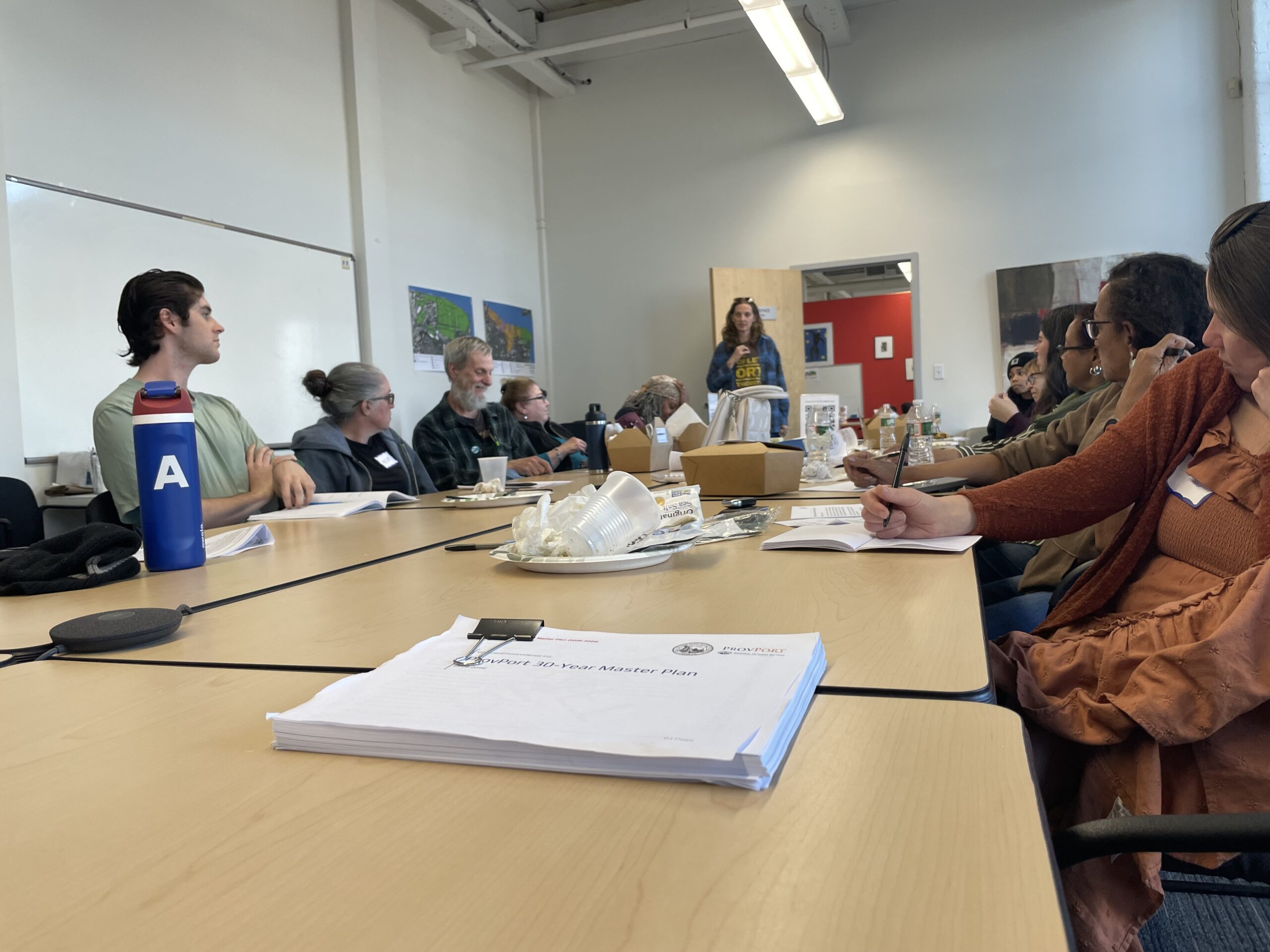
ProvPort has held five community meetings since September to discuss its master plan and fulfill a tax agreement with the city. However, a draft of the text wasn’t available until the last meeting held on April 4, leaving the public one month to comment on a document that is over 200 pages long.
“The whole origin of the master plan came out of some decades of community members saying, ‘Hey, we have the highest adult asthma rates in the country… We need to do something,’” said Tuzzolo. “We had some high hopes. Maybe, we should have known better.”
The People’s Port Authority responded to the document with a series of recommendations, including participation in ProvPort’s governance, open meetings and strict environmental regulations for public health.
“The greatest weakness of the current draft is the overwhelming lack of detail to assure community members that the goal to limit negative social, environmental and public health impacts of ProvPort will be realized,” reads a statement from a coalition of local community groups. “Actionable, measurable and enforceable accountability mechanisms must be defined and committed for the community to have confidence this master plan will deliver on its promise.”
The groups are also asking for a local board of residents to oversee the administration of the community benefits reserve account, which receives 1% of ProvPort’s annual revenue or at least $120,000 each year as part of their lease agreement. The money is currently being managed by the City of Providence’s Board of Park Commissioners, which spent at least $250,000 of the accrued money on local parks in Wards 10 and 11 nearby the port.
ProvPort spokesperson Bill Fischer wrote the plan is a result of a “two-plus year endeavor that involved robust community input” and will “better position the city and ProvPort to apply for federal grants related to resiliency and climate change.”
“Once finalized, the master plan will position ProvPort to remain a vital economic engine, while becoming a national model for how industrial waterfronts can evolve responsibly,” said ProvPort in a statement. “By aligning port modernization with climate resilience, environmental justice, and community partnerships, the plan lays the groundwork for a well-positioned working waterfront for Providence’s economy, its neighborhoods and future generations.”
ProvPort said there is no set date yet for the City Council to host a hearing on the plan, but State Senator Lammis Vargas, who represents the area encompassing the Port of Providence, said she is following the process closely.
“In light of the high asthma rate within Washington Park and the recent fires in the neighboring Senate district just across the street from the ProvPort, I would like to see a proactive approach on public health… as well as continued communication and accountability from all parties involved and environmental protections and safety for all,” said Vargas. “As a community, we have a right to know who is there, who is coming, and what is happening in our backyards.
Narragansett Bay’s Unique Environment
Becker said Providence’s uniquely deep shipping port in Narragansett Bay, close access to transportation and necessary zoning creates an ideal place for a variety of maritime industries, and allowing for flexible uses of the port is advantageous.
“We had no idea that the wind industry was going to pop up and blossom for the port of Providence,” said Becker. “Keeping aside this resource for maritime uses, in my opinion, is a smart thing to do.”
How those industries will affect local health and the environment is an ongoing concern.
Rhode Island’s history of manufacturing textiles, jewelry and industrial products in the colonial United States left a lasting legacy of environmental pollution, and in recent years, the industrial sites near the Port of Providence have contributed to significant health effects in nearby neighborhoods. To understand how future tenants might impact Providence’s environment, lessons can be learned from naval sites farther down the bay.
“In general terms, major contaminants from military sites include PCBs and other toxic chemical waste that can contaminate groundwater, soil, and nearby shores impacting shellfish/marine ecosystems,” said Emi Uchida, chair of the department of environmental and natural resource economics at URI. “High tech projects can potentially be one path towards economic growth and more high-paying jobs, but whether or not it can minimize environmental impact depends a lot on what kind of materials are used and how their waste/pollution is managed.”
Uchida points to the Davisville superfund site in North Kingstown as an example of the historical contaminants left by a former Naval construction center, and NK’s General Dynamics Electric Boat facility continues to generate air and chemical waste.
“What’s different now compared to 100 years ago is that there is more transparency… and the regulations in place like the Clean Water Act and the [Resource Conservation and Recovery Act] so firms have more accountability,” said Uchida. “That said, the regulations and the way they are enforced can change from administration to the next, so communities would want to be vigilant.”
The master plan process for ProvPort reflects a wider debate in Rhode Island about balancing environmental justice, economic security and democratic input for our coastal community. Leveraging ocean assets and businesses is a major pillar of the state’s long-term economic strategy, as laid out in the Governor’s RI2030 plan and the Ocean State Accelerates plan.
“Rhode Island is extremely unique,” said Peter A. Rumsey, associate vice president of economic development, innovation & entrepreneurship at URI. “Leveraging our natural resources, as well as our history, as well as what’s going on in the world right now, really positions us and especially Providence very well to focus on the blue economy as a core part of our economic strategy.”
Eric Halvarson is a City News Reporter at The Providence Eye.


Want to comment? Click!