

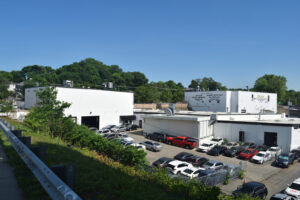


This past Saturday, May 17, The Providence Eye hosted its first ever public event. Providence Port Day, a free event held at Johnson & Wales’ Harborside campus and various locations around the port, aimed to shed light on some of the port’s main functions — what it is, what operations occur there, and how the new 30-year master plan will maintain or change its current functions, including its impacts on the local neighborhoods’ economy and quality of life.
Below are a few important numbers about the Providence port put together by students in Roger Williams University’s course, Concepts in Communication.
1994 — The year that ProvPort was created as a non-profit and purchased the port parcel from the City of Providence for $16.5 million.
13,200 — The number of jobs created directly and indirectly by ProvPort in Rhode Island from 1994 to 2014.
- 7,440 of these jobs were within the city of Providence.
$14.7 million — ProvPort’s revenue in 2023, according to ProPublica
- $50.5 million in total assets as of 2023
10% — Of all east coast dry bulk imports are handled by New England ports, including Providence’s port. The Port of Providence brings in “dry bulk” goods like salt and coal, which are distributed across the region.
3.8 million cubic yards — The amount of maintenance material dredged from the channel between 2003 and 2005 to maintain the dimensions for a deep-water port, as part of the Providence River and Harbor Maintenance Dredging Project (PRHMDP).
105 — Acres along the Providence River are covered by ProvPort’s property.
2nd largest — The Port of Providence is New England’s second biggest deep water port
30 years — The length of ProvPort lease term. ProvPort’s lease renewal has gained the attention of local residents, environmental and racial justice activists, and city officials, prompting the inclusion of community engagement efforts within the non-profit’s required master plan process.
To learn more about the master planning process, go to the article series about the port written in collaboration between The Providence Eye and Communities of Hope.
Editor’s note: The students who contributed to this article are Amy Howell, Connor Huffman, Lillian Poletto Matthew Droney, Ryan Alexander, Jack Kester, Gabby Venneri, Alana Lemene, Leland Bacas, Dylan Kolakowski, Drew Steinfeld, and Kayla Nolan. Thank you to the course’s professor, Bernardo Motta, who has worked in collaboration with The Providence Eye through Communities of Hope.


Want to comment? Click!