


Providence is one of the most culturally rich, historically significant, and creatively energized cities in the United States—yet it doesn’t seem to believe it.
We have all the raw ingredients of a top-tier tourism destination: walkable historic districts like downtown, College Hill, and Broadway; extraordinary architecture, like our Victorian, Italianate, and Greek Revival residences, the art-deco Superman Building, and the neoclassical Rhode Island State House; a world-class art school; one of the country’s oldest and most prestigious universities; delicious restaurants; a thriving arts scene, and a centuries-old narrative of rebellion and reinvention. Add to that one of the nation’s busiest highways bringing 220,000 people to and through our city daily, plus one of the top-rated airports in the country.
But tourism in Providence suffers from something deeper than underexposure or a small marketing budget—it suffers from an enduring humbleness about its place in the national tourism scene. In short, we’ve got a confidence problem.
If the people who live here and lead here embraced the idea that Providence belongs on any serious list of top U.S. destinations, we’d see more than just pride—we’d see more investment, energy, and visitors.
When locals, business owners, and government officials don’t fully believe in Providence’s status as a national-caliber destination, it shows. Providence has significantly underinvested in primary tourism drivers that lead to follow-on restaurant spending and hotel nights – things like museums, aquariums, science centers, or cultural sites. Our city visitor center (located at the Convention Center) isn’t open on Sundays, when many leisure visitors would travel here. And most state tourism campaigns – remember “Cooler and Warmer”? – leave Rhode Islanders feeling unseen and disappointed. This lack of confidence and investment translates into real missed dollars and opportunities.
To some, tourism may seem like a soft or superficial economic sector. It lacks the ribbon-cutting appeal of a new biomedical research center or the gritty credibility of advanced manufacturing. But in Rhode Island, tourism is big business.
According to CommerceRI, our state welcomed 28.4 million visitors in 2023, fueling a $8.3 billion traveler economy that supports over 86,000 jobs, nearly 13% of all employment in the state. Imagine what those numbers could look like if Providence stopped being a “hidden gem” and started being a proudly polished one.
Let’s take a cue from Boston. The city has fully leaned into its identity as the “Cradle of the Revolution,” turning that narrative into a major economic and branding engine. Walk the Freedom Trail, visit the Boston Tea Party Ships & Museum, or see where the Declaration of Independence was first read publicly in Massachusetts at the Old State House. These aren’t just historical sites; they’re well-packaged, well-funded, and well-promoted experiences.

The irony? Providence has just as valid revolutionary credentials as Boston does. The Gaspee Affair, a year before the Boston Tea Party, was a bolder act of colonial resistance than dumping tea, and Rhode Island declared independence from Britain two full months before the rest of the colonies. We even have our own Old State House, impeccably preserved. But Boston turned its history into an identity; Providence has been left to look like a gaggle of loyalists, with its role in this history untold and infrastructure unknown.
That doesn’t mean we need to compete with Boston on its terms. Our strength lies in owning our individuality—and leaning into what makes us uniquely Providence.
Take our emerging leadership in offshore wind and ocean science. Rhode Island is home to the first offshore wind farm in the U.S. and some of the most respected marine researchers in the region, including at URI and Roger Williams University. Imagine a National Ocean Science & Sustainability Center—an interactive public museum that highlights our innovations in renewable energy, aquaculture, and marine science. It could be built in partnership with federal agencies like the Smithsonian Museum and the National Park Service along with local universities, inspiring the next generation of engineers and marine biologists while establishing Providence as a hub for green innovation.
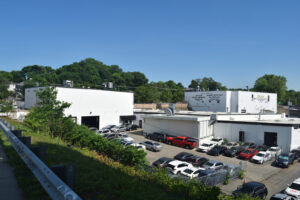
Or consider our underused waterfront. For decades, huge swaths of Providence’s upper harbor have been dominated by scrap metal yards and industrial vacancy. Why not reimagine that space the way Milwaukee did with its Henry Maier Festival Park, turning an abandoned waterfront military installation to a venue for the largest annual music festival in the world, that now brings over a million tourists per year? Or look to Montreal, which, 20 years after the city moved its port operations four miles to the north in the 1970s, redeveloped its Old Port into a premier tourist recreation center that draws over six million visitors every year.
A dedicated waterfront festival ground—Providence Piers, perhaps—could be home to concerts, seasonal markets, cultural celebrations, and public art installations year-round. More than a venue, it would be a new cornerstone of city identity: a signal that we take our arts and culture identity seriously, not as afterthoughts.
This isn’t just about tourism—it’s about transformation. Providence ranks near the bottom among Rhode Island municipalities in median household income. The city faces a crisis-level pension liability and urgently needs investment in schools, housing, and infrastructure. Real, sustained investment in tourism may be the most powerful untapped strategy to meet those challenges.
Tourism is more than sightseeing. It’s jobs, it’s pride, it’s reinvestment. It’s choosing to see our city as others could see it—vibrant, creative, worthy of the spotlight—and then speaking and building accordingly.
We’ve spent enough time being the “hidden gem.” Let’s stop hiding. Let’s shine.
Bradly J. VanDerStad is a tourism entrepreneur in Providence, founding the Providence Tour Company in 2018. He is a Roger Williams University MPA graduate as well as a board member of the West Broadway Neighborhood Association. Bradly lives in the West End of Providence with his fiancé Katie and his cat Sylvia.


Want to comment? Click!