



We are Washington Park residents in Ward 10, and we are deeply concerned about the continued concentration of late-night clubs and entertainment venues along Broad Street.
This is not about opposing small businesses, restaurants, music, culture, or nightlife. A healthy city can support all of those things. But nightlife cannot be allowed to operate in a way that shifts the burden onto nearby residents, families, elders, tenants, homeowners, and first responders.
Broad Street is not only an entertainment corridor. It is a residential community. People live here, raise children here, care for elderly relatives here, work early shifts, and deserve the same level of peace and safety as any other neighborhood in Providence.
Broad Street residents should not have to accept late-night disorder, repeated police responses, assaults, weapons-related incidents, noise, and large uncontrolled crowds as the cost of living in their own neighborhood.
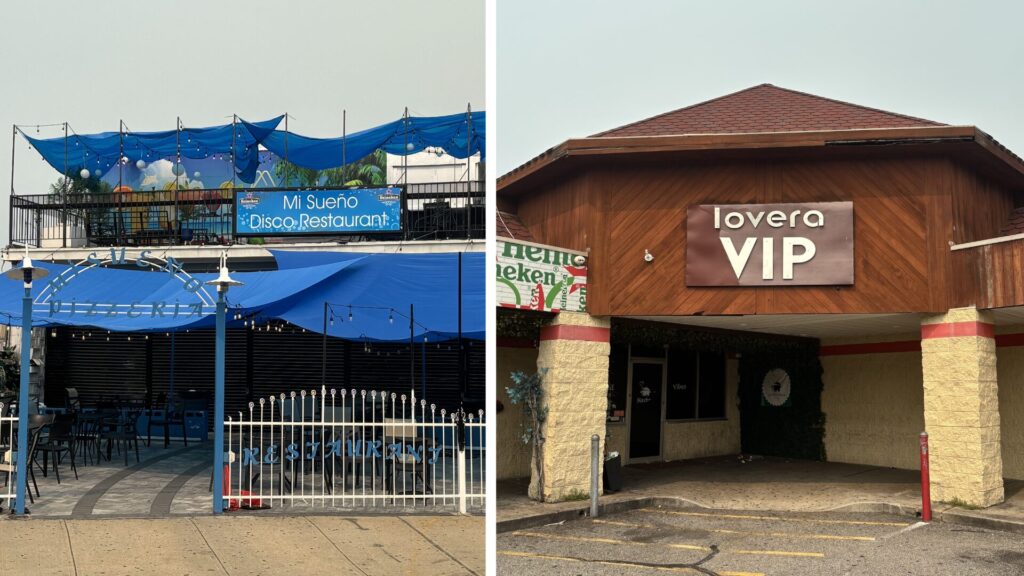
Recent events show a troubling pattern. On July 5, Providence police dispersed a crowd of roughly 300 people in the parking lot of the nightclub Lovera VIP around 2 a.m. Less than an hour later police were called back for a robbery and assault. In its report on those incidents, NBC 10 noted prior incidents connected to Lovera, including a 2024 stabbing where three people were hurt.
This latest event follows an October 2025 disturbance outside Lovera where, around 2 a.m., police observed multiple people fighting in the parking lot. After officers found a firearm, a Massachusetts man was charged with carrying a firearm without a permit.
Broad Street has also recently seen serious incidents connected to the nightclub Mi Sueno. In January 2026, Providence Police responded to a shooting report outside Mi Sueno, where security reportedly said a fight occurred, a gunshot was heard, a man with a handgun was seen, and police recovered a 9mm shell casing. In March 2026, a man was stabbed at Mi Sueno and was reportedly bleeding so heavily that a Providence police officer drove him directly to Rhode Island Hospital rather than wait for rescue. The Board of Licenses allowed Mi Sueno to reopen the month after a temporary closure, with reduced hours, required security at entrances and exits, Saturday police detail, and patron checks.
These are not minor nuisance complaints.
These are incidents involving large crowds, assaults, robberies, weapons concerns, stabbings, police deployment, and repeated disruption to nearby residents.
Providence already has a Board of Licenses with authority to investigate complaints through the Solicitor’s Department, Licensing Department, and Providence Police Licensing Unit. The Board’s own rules provide for notices of violation, show-cause hearings, public hearings, penalties, and consideration of aggravating factors such as patterns of poor performance, lack of cooperation with public-safety personnel, and threats to public health and safety.
The problem is not that the city lacks a process. The problem is that the process is not producing enough deterrence.
We believe the City of Providence should amend its licensing rules and ordinances to create a clear, enforceable standard for repeat public-safety offenses. Any licensed establishment with two substantiated public-safety offenses within a six-month period should face an automatic emergency suspension, a mandatory revocation hearing, and a presumption of license revocation unless the Board makes specific written findings showing why revocation is not warranted.
For the second substantiated offense within six months, the city should also impose a minimum $5,000 fine, with the money directed into an established neighborhood public-safety and quality-of-life fund for the affected community.
If a license is revoked for repeated public-safety offenses, the same ownership group should not be eligible to reapply for a license at that location for at least 365 days. The city should also prevent simple ownership transfers, corporate restructuring, or name changes from being used to avoid accountability.
Residents should not have to attend hearing after hearing while the same problems continue. If an establishment repeatedly requires police intervention or becomes associated with violence, weapons, disorder, or large uncontrolled crowds, the burden should shift to the license holder to prove why it should be allowed to continue operating.
We are also concerned about the role of political contributions in public confidence around licensing decisions. GoLocalProv has reported that Mi Sueno management has donated more than $36,000 in political contributions, according to Rhode Island campaign-finance reports.
The Rhode Island Board of Elections maintains public access to campaign-finance filings, and residents should not have to guess whether business owners with pending or recurring licensing issues are also contributing to elected officials who influence city policy, appointments, enforcement priorities, or neighborhood development decisions.
At minimum, the city should require public disclosure of campaign contributions from nightclub owners, managers, license holders, and affiliated business entities when those establishments come before the Board of Licenses or City Council. Any elected official or appointed board member with a direct financial, political, family, or business conflict should recuse themselves from decisions involving that establishment.
The goal is simple: public safety must come before politics, campaign money, profits, or convenience.
We urge the Providence Board of Licenses, Mayor’s Office, City Council, and Police Department to pause approval of any new or expanded late-night liquor, nightclub, or entertainment licenses on Broad Street until a full public-safety review is completed.
We also call on the city to require enforceable safety plans for venues with repeated incidents, publicly release incident and enforcement data connected to late-night establishments, and hold accessible public hearings with adequate neighborhood notice and language access, including for English- and Spanish-speaking residents.
Broad Street residents deserve more than temporary closures, limited conditions, and repeated promises after each new incident.
The pattern is already clear.
The city should not wait for the next stabbing, shooting, assault, robbery, or large-scale police response before taking meaningful action.
We ask neighborhood associations, community leaders, residents, and public officials to join us in calling for stronger enforcement, transparent decision-making, and real accountability.
Linda Perri is a Washington Park resident and member of the Washington Park Association. She has been active in neighborhood quality-of-life and public-safety issues affecting Broad Street and Ward 10.
Jose Comi is a Washington Park resident, homeowner, landlord, and real estate professional in Providence. He is focused on neighborhood stability, responsible development, and quality-of-life issues affecting residents and families in Ward 10.


Want to comment? Click!