




Do we believe our votes make any difference? Are those who fought to extend the franchise to the landless, the formerly enslaved, to women, to Native Americans and others, forgotten? My great great Aunt Harriet, in her mid-forties, chained herself to the railings outside the Houses of Parliament in England demanding that women be permitted to vote. Having endured horrors and hardships as a nurse in World War I, she was willing to be dragged away to prison and endure force feeding to ensure she won a political voice. She is perched on my shoulder every time I go to vote.
Twenty-four years ago, on a sunny spring afternoon in a small room in downtown Providence, I worked my way through the questions on the U.S. Citizenship Test without too much trouble. Twenty-two years after immigrating to Rhode Island from England, and gradually recognizing I had no desire to return there permanently, I could no longer be separated from the political process. It was time for me to play an active role, become an American citizen, kiss my green card goodbye, and vote.
Getting a master’s degree in American Civilization from Brown and heading the history department at a local independent school at that point for seven years did not exempt me from the test. I spent a lot of time practicing with sample tests before the big moment. Memorization was the key to success. When faced with the question “Who was president during the Civil War?” I paused, thinking it depended which side you were on. Since history is all too often written by the winners and a large portrait of Abraham Lincoln hung over the desk at which I was sitting, I suppressed the urge to put down Jefferson Davis just to see how they’d react. The test was, after all, about memorization, not about my ability to discuss a question from multiple points of view – or even understand the rationale that put it on the test at all.

Where are civics in the classroom?
In my teaching career, civics and current events were taught by everyone in the history department. We aimed to turn out good thinkers, good writers, and responsible, informed citizens. This commitment to civics was not part of the curriculum in all schools, unfortunately. In 2018 fourteen Providence public school students and their parents brought a lawsuit contending that a lack of civics instruction was violating their constitutional rights. Although their case was not successful since the right to an education does not mention civics specifically, the state woke up and passed the Civic Literacy Act in 2021 requiring all students to achieve civics proficiency and engage in one student-led civics project before graduation. The Rhode Island Department of Education (RIDE) set up the Civic Readiness Task Force and the Center for Information and Research on Civic Learning and Engagement (CIRCLE) produced a report, with input from teachers and students, on the state of civic education in Rhode Island in 2022.
The CIRCLE report showed that most Rhode Island students did not have direct access to civics instruction and often learned about government only when their teachers could find the time. They cited a lack of resources, training and support. School administrators, the report concluded, had difficulty prioritizing civics and misunderstood teachers’ needs.
Unfunded recommendations
The Civic Readiness Task Force made recommendations: address the meaning of “civic readiness,” define the characteristics of student-led civics projects, strengthen civics within social studies instruction, find methods and resources needed to engage in discussion and debate on voter registration, and support the implementation of them all. These recommendations hope to substantially improve civics education in Rhode Island. RIDE also recognized the need to have clear communication about expectations, professional learning opportunities for teachers, and accessible and supportive resources.
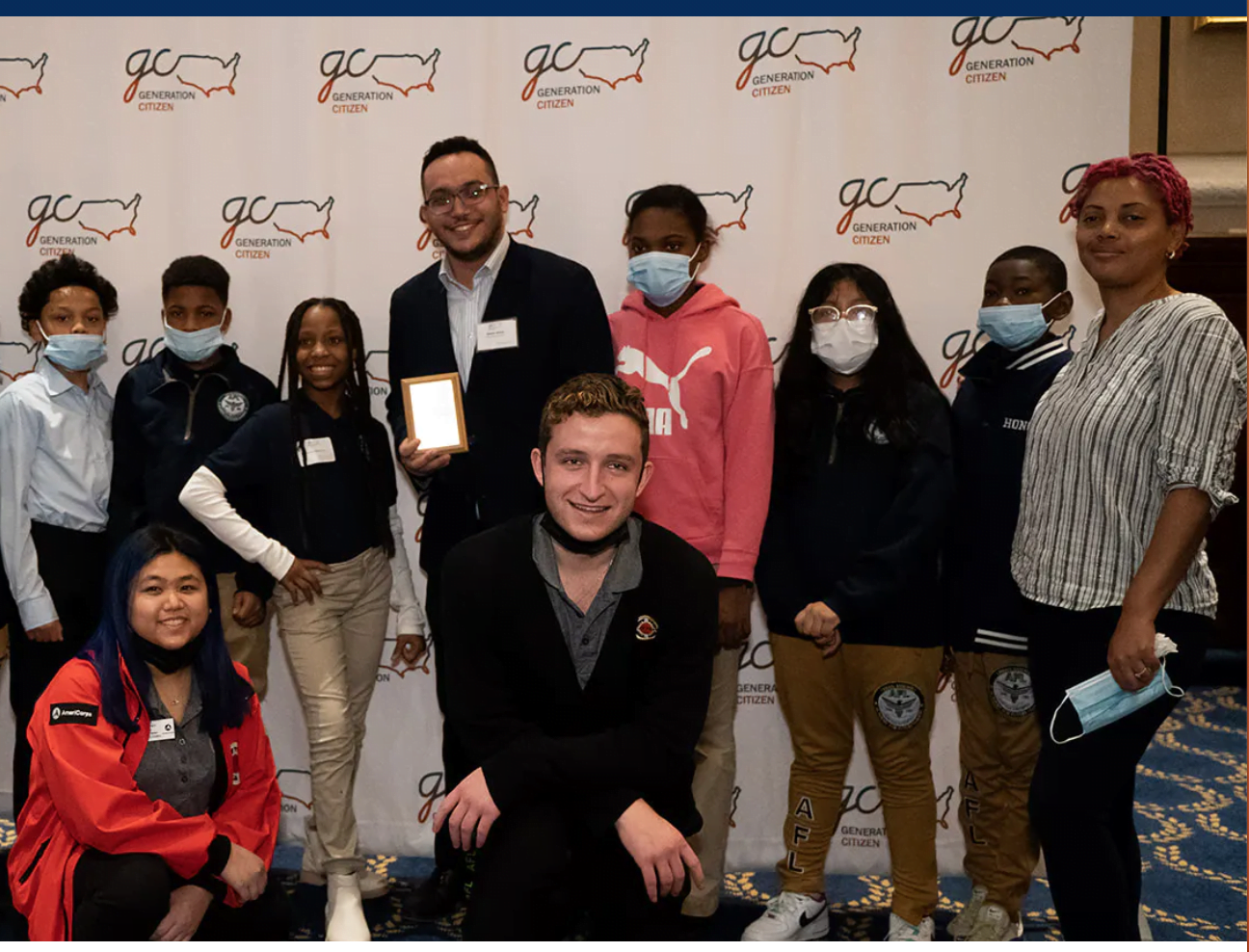
So far, so good, an excellent move. Despite the passage of the Civic Literacy Act, however, funding remains elusive. As Adam Robitaille, board member of Generation Citizen New England, pointed out in The Providence Journal, even when youth engagement is increasing, youth turnout in elections remains low. Generation Citizen has made important contributions to a project-based civics curriculum that helps students become civically engaged in their own communities. More than 80% of those who participated understood they could contribute to bringing about change. This program reached 5,600 of Rhode Island’s 131,835 public school students in 2022. The hands-on approach of Generation Citizen is exactly the kind of program that engages students the most, but more funding is needed for stimulating classroom materials, equitably distributed.
Rhode Island students know almost nothing of their government, only 16% of middle and high schoolers in the state knew that there are three branches of government, according to the CIRCLE report, and only 12% could clearly explain the rights and responsibilities of a citizen. But learning by rote is like a swimming pool without water – there’s nothing to dive into unless you want a concussion. What happens, for example, when the democratic institutions, whose existence we memorized, become corrupted – when democracy itself is threatened? Memorizing how many judges sit on the Supreme Court doesn’t help if you don’t know what the expectations for those judges are.
Usable information in the classroom
Relating civics information to current events is vital. How else are students able to decide whether Samuel Alito should recuse himself for allowing partisan flags to fly at his residences or if Clarence Thomas should refrain from accepting large gifts from interested parties? How will they be able to comprehend a justice system that can convict both Donald Trump and Hunter Biden when high schoolers swim in a sea of fake news and conspiracy theories generated by social media? They need to have some basic information but also need to know how to use it, question it, and listen to what their peers have to say about it.
In one class, students read Democracy & Its Crisis by philosophy professor A.C. Grayling who proposes voting at age 16, compulsory voting (which he compares to obeying the law or paying taxes) and mandating civics education for all students aged 14 and older. students strongly believed that without compulsory civics education they would not know enough to vote at 16. In New Hampshire, where civics education is mandated in public schools, Matthew Prince, who teaches history and civics, reports that civics is either taught as a separate class or as part of the social studies curriculum – or both. Civil rights historian and author Peter Lau, one of the principals at The Met School in Providence, says, “The Met’s Social Responsibility program, one of the school’s five major learning goals, helps students to engage with their communities, do research, develop critical thinking and apply these skills to their project-based learning endeavors, as well as everything else they encounter. Current events are discussed regularly in our advisories three times a week.” Teachers there have access to good resources and plenty of professional development. It is a strong model that teachers and administrators could do well to explore.

Funding civics education in all Rhode Island schools must be a priority if we are to foster equity through democracy, justice, and the rule of law. They are all threatened. Education on the nature of authoritarianism, how it emerges, who it appeals to, and what it can lead to needs to go hand in hand with learning about how American democracy is structured. Democratic institutions and values cannot be taken for granted, for the Constitution itself does not spell out every detail on voting. Amendments to the Constitution and laws passed by Congress and state legislatures regulate the practice of voting, expanding and sometimes restricting that right. Only an informed electorate ensures that “government of the people, by the people, for the people shall not perish from the earth.”
Ruth Marris-Macaulay is a retired educator who taught at Lincoln School in Providence for 34 years. Born in England she has lived in the United States for 45 years and became a citizen in 2000. She has a bachelor’s degree in History from the University of Leeds, England, and a master’s degree in American Civilization from Brown University. For 20 years she worked during summers as a mentor teacher to students in Brown’s Teacher Education Program and was a Visiting Lecturer in the Education Department at Brown for a year, doing weekly observations of student teachers in Providence public schools.


Want to comment? Click!