




“Today’s the day!”
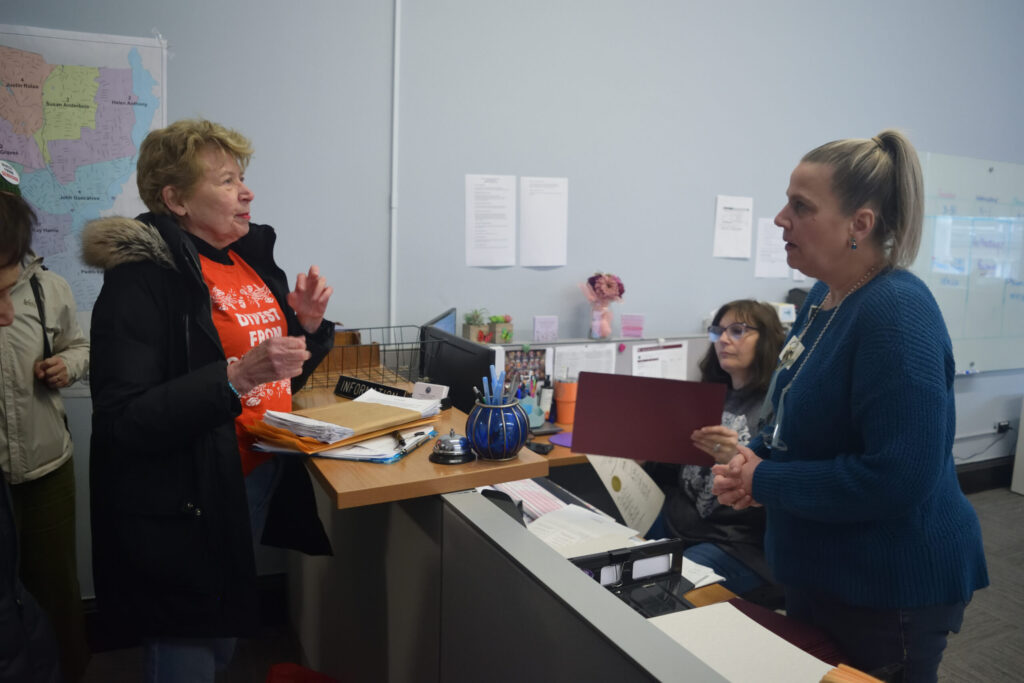
On March 27, staff at the Providence City Clerk office greeted about 15 activists delivering signatures of 1,200 Providence residents. The signatures represent the first step in a ballot initiative to ask voters a question in the upcoming November election: Will the City of Providence divest from genocide?
The activists are using a little-known clause in the City Charter that allows citizens to vote on a law during local elections. Jewish Voice for Peace (JVP) Rhode Island hopes the voters will agree that all City funds should be divested from entities complicit in violations of international humanitarian law—such as ethnic cleansing, apartheid, illegal occupation or genocide.
The ordinance will be introduced to City Council on April 16, but activists are already beginning to gather over 4,000 additional signatures required to put the question of divestment before Providence voters in November.
The Ballot Initiative Process
City clerk employees said the last time they saw a ballot initiative process was in 2014, when local hotel workers tried to raise minimum wages from $8.50 to $15 an hour in Providence. Just as the City Council prepared to put the question on the ballot, the Rhode Island House of Representatives prohibited cities and towns from setting minimum wages higher than the state’s hourly wage.
Meanwhile, divestment measures are not new to the City of Providence, which became the first state capital to divest from fossil fuels in 2013 and the first U.S. city to divest from companies supporting the genocide in Darfur, Sudan, in 2006. However, this would be the first time the citizens of Providence would directly vote on how to regulate city investments.
“It’s too rare that everyday people are given the chance to vote on how our tax dollars are spent,” said Zack Kligler, an organizer with JVP. “We want to give the people of Providence the chance to weigh in on whether they think our City funds should be invested in war crimes, apartheid and genocide.”
Section 209 of the Providence City Charter allows for citizens who gather 1,000 signatures from qualified voters to propose an ordinance at City Council. If the City Council does not enact the ordinance, citizens behind the initiative can put the question on the ballot for the next general election by gathering signatures from 5% of Providence voters—about 4,500 people.
“We’ll be collecting way more than (the minimum number of signatures)” said Adelaide Dickens, an organizer with JVP. “We want to have thousands of conversations with our neighbors about this effort to make sure our city stands for human rights and against violence.”
Dickens recently met a Democrat outside of grocery co-op Urban Greens and asked her to sign the petition. The stranger never registered to vote because she lived in New York before moving to Rhode Island, two Blue states where she felt her vote didn’t make a difference.
“And then I watched as the gears turned for her, and she was like, ‘Wait, but Blue doesn’t mean against genocide,’” said Dickens. “She said, ‘I’m going to register to vote and I’m gonna come find y’all because I want to vote for this.’”
Petitioning for Palestine
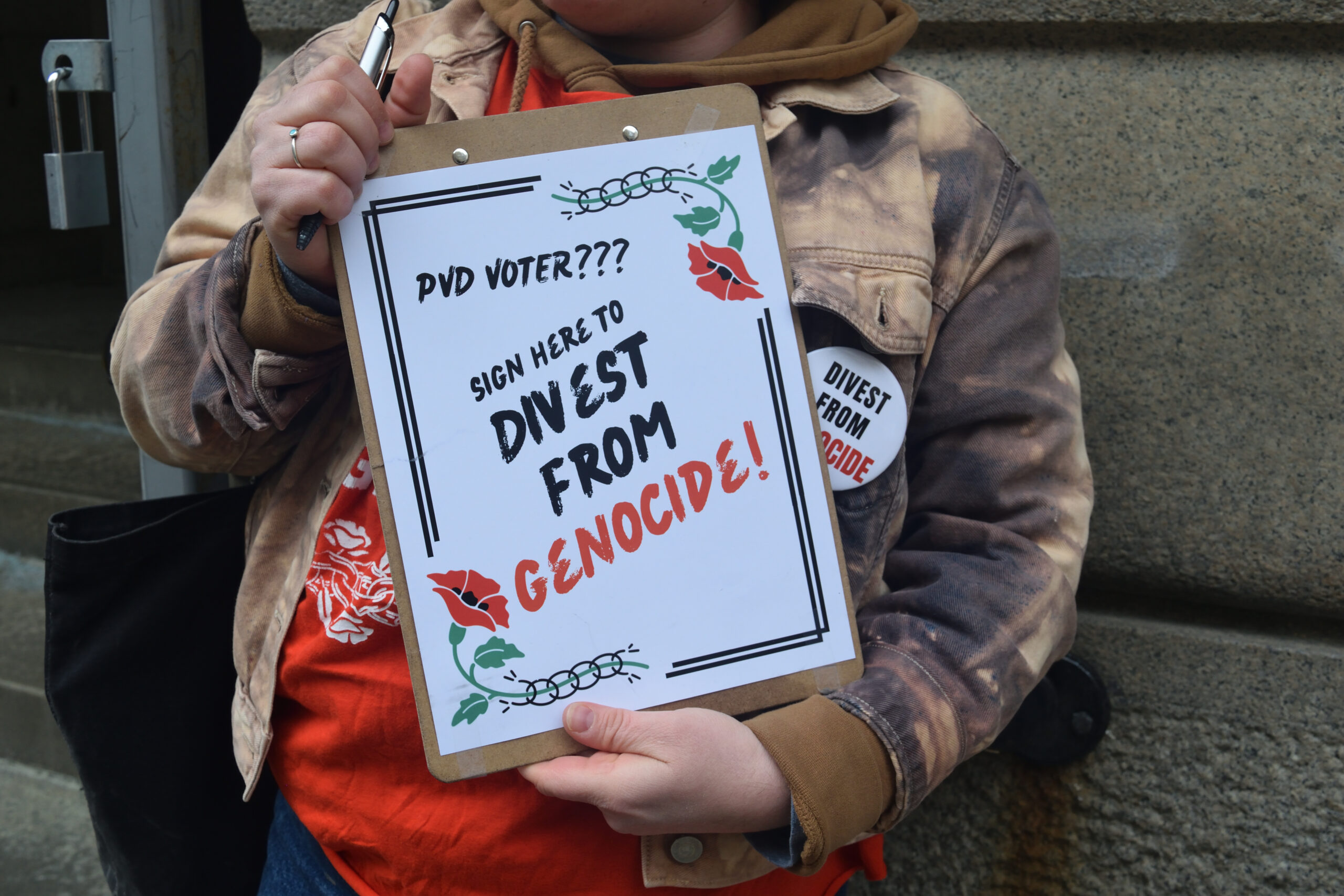
During the past two months, over 75 volunteers collected signatures across Providence in places like Lippit Park, the Downtown train station and even the St. Patrick’s Day Parade. Groups including Jewish Voice for Peace, the Democratic Socialists of America and the Graduate Labor Organization at Brown are all helping spread the petition.
“This is really first and foremost about bringing attention to Palestine,” said Zohar Gitlis, a member of JVP and the GLO studying Jewish philosophy at Brown. “[This is about] making the stakes of investment in Israeli bonds and weapons manufacturers feel palpable and alive in this city and at the local level.”
Since 2023, Israel’s war against the Gaza Strip has killed at least 70,000 Palestinian people, and some studies put the death toll closer to 100,000. Over half of those killed were women, children and elderly individuals. Despite a U.S. brokered ceasefire, Israeli attacks have killed over 700 Palestinians in Gaza since October.
“As a direct result of the Israeli military conduct in the war, more than 10% of the pre-war population of Gaza has been killed and injured,” according to a paper published by the Costs of War project at Brown University. “If we put the Gaza War in context, the direct and indirect cost in lives makes it one of the worst in recent memory.”
The International Court of Justice already found Israel operates an illegal system of apartheid and occupation in the West Bank, and human rights groups blame Israel’s decades-long blockade on Gaza for causing wide-spread famine and negative health outcomes for Palestinians. The ICJ ruled it was “plausible” that Israel is violating the genocide convention in Gaza, but the court case is ongoing.
While the organizers hope the ordinance helps to stop Israel’s violence in Palestine right now, the policy would apply to any future companies and countries complicit in human rights violations. The ordinance states that the City of Providence will refrain from “investing in “‘complicit entities’ or ‘sovereign debt’ of foreign countries conducting ethnic cleansing, apartheid, illegal military occupation, or genocide,” as determined by a variety of sources including United Nations experts, any U.S. court ruling or definitions in federal policy, or International Court of Justice rulings.
“I don’t know what country is going to do stuff like that in a million years,” said Stuart Waldman, a retired book publisher and member of JVP. “I’m Jewish. In a million years, I never thought my people could be involved in this.”
In a major departure from recent history, new polls show more Americans sympathize with Palestinians rather than Israelis, but Jewish people in the U.S. are still more likely to support Israel. Among Democrats, over two-thirds of voters now support Palestinians, but many Democrat politicians have been slow to follow the trend.
“The people of the U.S. and particularly Democratic voters… really actively oppose the genocide in Gaza and oppose continued U.S. support for it,” said Kligler. “But our politicians are much more timid.”
Break the Bonds Campaign
In November 2023, Providence City Council became one of the first legislative bodies in the United States to call for a ceasefire in Gaza.
In June 2024, City Councilors Rachel Miller, Justin Roias and Miguel Sanchez sponsored an ordinance to divest City funds from Israel sovereign bonds and ban future investments in bonds from governments accused of war crimes and human rights violations. Providence previously held Israeli bonds for over 20 years, and most recently held $2.3 million in bonds that expired in 2022.
“A lot of the City Council people agreed with us,” said Waldman. “But they just couldn’t get enough members to override a veto.”
Providence Mayor Brett Smiley opposed the ordinance, along with the Jewish Alliance of Rhode Island and the Rhode Island Coalition for Israel. Polls show that 39% of Jewish individuals in the U.S. believe Israel is committing genocide in Gaza, compared to 60% of the total American population.
“The ordinance is divisive and polarizing and will only make members of our Jewish community feel further isolated and targeted,” Smiley said at the time, saying the ordinance “reeks of antisemitism.”
Smiley converted to Judaism in August of 2024 and has Jewish family members as well. In 2025, the Mayor traveled to Israel and called the experience “deeply moving.” In December, Smiley attended a conference organized by the Combat Antisemitism Movement, which considers boycott or divestment from the State of Israel a form of antisemitism.
“I totally respect his journey into religious practice,” said Kligler, who said JVP’s effort is grounded in members’ Jewish practices and values. “Throughout his conversion process, he has not hesitated to use weaponized accusations of antisemitism against us.”
A City spokesperson said Mayor Smiley will review this new ballot initiative ordinance when it is formally introduced.
When the 2024 ordinance proposed by councilors stalled at City Hall, JVP began looking for another strategy.
“Then one day…Somerville did this ballot initiative,” said Waldman. “And I just thought, ‘Wow, we can take it directly to the voter.’”
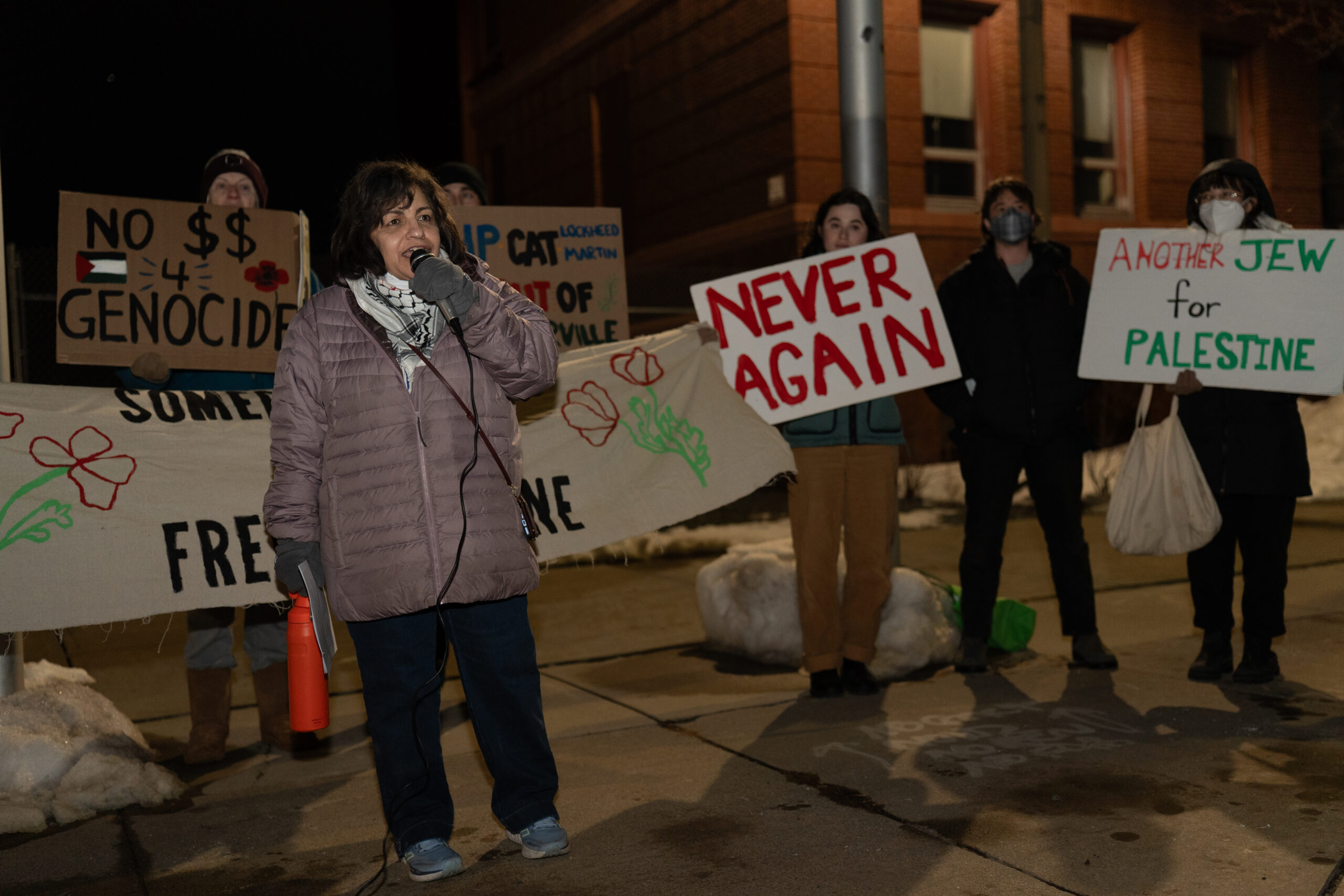
Somerville for Palestine Pushes for Divestment
Just like Providence, Somerville passed a ceasefire resolution, but activists wanted to take material steps to stop the violence in Palestine. Three days before delivering a petition to put divestment up for local election, masked federal agents detained local Tufts University student Rümeysa Öztürk after she wrote an op-ed asking her school to divest from Israel.
The incident brought a large group to the next Somerville City Council meeting, but councilors still filed the measure, requiring organizers to collect signatures from 10 percent of city voters— about 5,500 people.
“Our city counselors would condemn Rümeysa Öztürk’s kidnapping,” said Leila Skinner, an organizer with Somerville for Palestine. “But then, [they] refused to truly stand in solidarity with their residents and support their freedom of speech and to call for divesting from Israel.”
Ultimately, Somerville voted “Yes on 3” and became the first U.S. city to vote to divest from Israel. The result was a non-binding resolution, but City Councilors resolved to honor the vote this past December. To implement the policy, Somerville is now considering the People’s Ordinance for Palestine, which would end contracts with companies who work with the government of Israel or any illegal settlements in the West Bank or East Jerusalem.
Preparing to Petition in Providence
Nearly five months after Somerville voted to divest, Providence organizers began the process to put divestment on the ballot in the capital of Rhode Island. Walking onto the steps of City Hall, organizers got one more signature from Heidi Machado, a local resident whose daughter lives in Los Angeles.
“She’s told me I need to be more consciously involved,” said Machado. “When I see people out doing things for the betterment of society, I’m basically going to sign up.”
While the ordinance makes its way through City Council, JVP is focusing their energy on gathering more signatures and putting divestment up for election.
“The celebration is over,” said Waldman, looking out over Kennedy Plaza. “Time to pick up our clipboards. Time to get back to work. Time to put genocide on the ballot.”
Eric Halvarson is a City News Reporter at The Providence Eye.


Want to comment? Click!