


In 2026, there are about 50 public K-12 schools in Providence, including public charter schools.
More than half of them are named for notable people, predominantly men. If we remove the two national figures (RFK and MLK), and the five public or charter schools I’ve already covered in this occasional Providence Eye series — namely Messer, Cuffee, Bishop, Kizirian and Hopkins — about twenty remain. But we may be about to lose three of them.
Demographic fluctuations, an aging school infrastructure, and changes in educational philosophy mean that several Providence schools have closed, are in danger of closing, or are about to be combined with other schools.
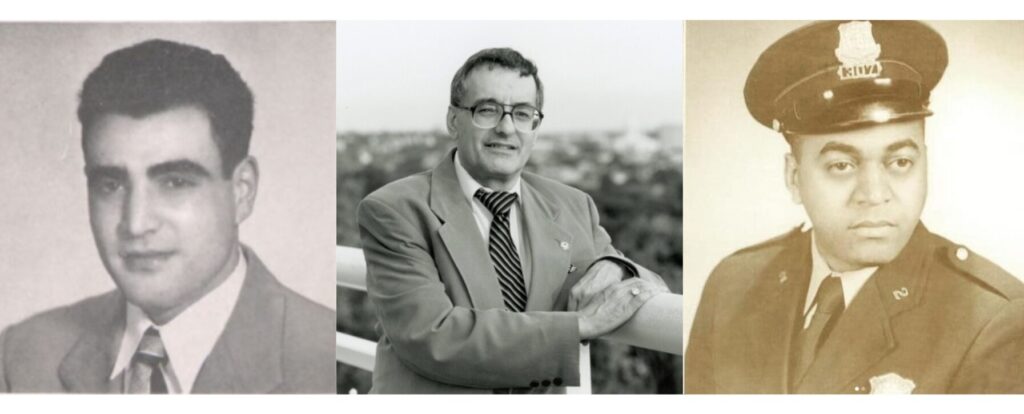
Three of the currently threatened schools are named for local men of achievement who were children (or grandchildren) of immigrants. Their ancestors came from Cape Verde, Southern Italy and Czarist Russia, three places which represent the most important sources of immigration into Rhode Island in the early twentieth century.
The three schools are Lima, Lauro and Feinstein.
The Alfred A. Lima School is scheduled to move into a new-build on the site of the demolished Gilbert Stuart School. There were advanced plans for a charter school to occupy part of the Carl G. Lauro School, but the scheme was voted down last summer, while there are currently no plans for the shuttered Alan Shawn Feinstein School.
Before these schools and their names disappear, let’s remember the notable people they represent and the contributions immigrants have made to their city and to their communities.
Lima’s Legacy
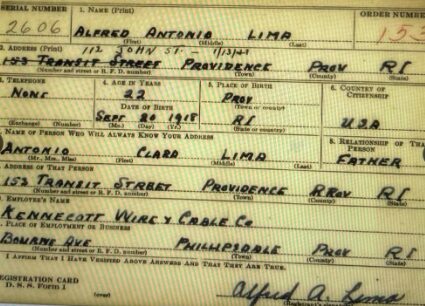
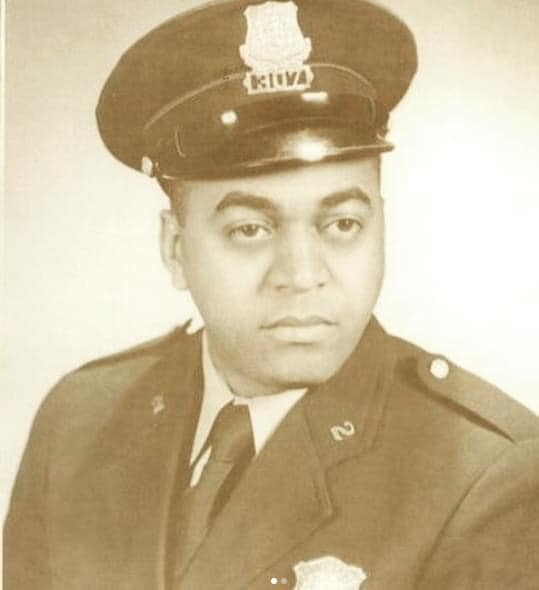
Alfred A. Lima (1918-1998) was both Providence and Rhode Island’s first Black policeman. A first-generation Cape Verdean American, he joined the previously all-white Providence Police Department in 1946, where he served until 1969.
He was born in Providence and died there in 1998, two weeks short of his eightieth birthday. He was the oldest of five children.
His father had arrived in the U.S. in 1911, leaving San Antonio, a windswept Cape Verde Island, for the Fox Point area of Providence, home to many Cape Verdeans.
On the police force, he served with distinction for 23 years, retiring in 1969. He was also a charter member of the police union, the Providence Fraternal Order of Police Lodge # 3.
After his retirement from the police department, Alfred Lima received many honors, including induction into the Fox Point Boys Club Hall of Fame, and awards for outstanding community service from the St. Antonio Society and the NAACP. He was also recognized for his “outstanding performance, leadership and professionalism,” from the Rhode Island Minority Police Association.
The Alfred A. Lima School at 222 Daboll Street in the West End of Providence will soon be moving to the nearby site of the demolished Gilbert Stuart School. (The famous artist Gilbert Stuart was also the son of an immigrant. His father was born in Scotland.) Rather than its current K-5 configuration, the Lima school will take students from Pre-K through grade 8, while continuing to emphasize ESL and dual-language teaching.The existing Lima School will be used as a swing space to house schools undergoing renovation.
Lauro’s Lasting Impression
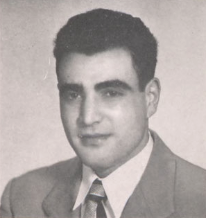
Carl G. Lauro (1926-1976) was a first-generation Italian American. After graduating from the University of Rhode Island in 1948 he began a distinguished career in education, cut short by his untimely death at the age of 50.
Carlo George Lauro was born in Brockton, MA to immigrant parents (He later anglicized his first name by dropping the “o”). The family came from Southern Italy: his father was a tailor and they moved to Providence’s Federal Hill when Carl was a baby. After attending Kenyon Street Elementary, which was renamed for him in 1978 as the Carl G. Lauro Memorial Elementary School, he graduated from Central High School in 1944 and attended the University of Rhode Island, graduating with a degree in Zoology in 1948.
After working at Providence College as a biology instructor, Carl Lauro began his teaching career at Central High School in 1953. An all-round science teacher, he taught classes in math, chemistry, physics, and biology.
A 1976 City Council resolution notes that of his many writings, one included a publication emphasizing the importance of Black scientists’ contributions to the field.
During his time at Central High School, Lauro coached the wrestling team, which won, for the first time, the New England Wrestling Championship.
Lauro continued his own education, and in 1961 he earned a master’s degree from Brown as one of few high school teachers funded for work in STEM by the National Science Foundation. The Brown chapter of Sigma XI named him Rhode Island’s Outstanding Science Teacher in 1961.
Leaving the classroom after fifteen years, he took on various administrative leadership roles. He became science supervisor for the Providence Public Schools in 1970, worked on the science curriculum, both in its design and implementation, and at the time of his death he was Acting Superintendent.
Lauro School, in an almost century-old building (it opened in 1927) is currently in a state of limbo, but according to the City, it costs $300,000 a year to maintain. Part of it is currently used as a swing site for Asa Messer students while their school is being rebuilt.
Lauro School closed in 2023, and plans were well in hand to house charter school Excel Academy in part of the building, but in July 2025 Providence City Council voted it down, despite earlier support. Charter schools are popular with Providence parents. State education commissioner Angélica Infante-Green recently noted that almost three quarters of Providence students, some 19,000 of them, applied for 2,500 charter school places. This makes the acceptance rate similar to Brown’s. Charter schools are less popular with the teachers’ and public service unions, and with some education officials who see money draining away from the public schools.
Feinstein’s Footprint
Alan Shawn Feinstein (1931-2024) was a second-generation Russian Jewish American who, after graduating from Boston University and Boston Teacher’s College (which merged with UMass Boston in 1982), taught school in Massachusetts for a number of years before moving to Rhode Island and turning to business and philanthropy.
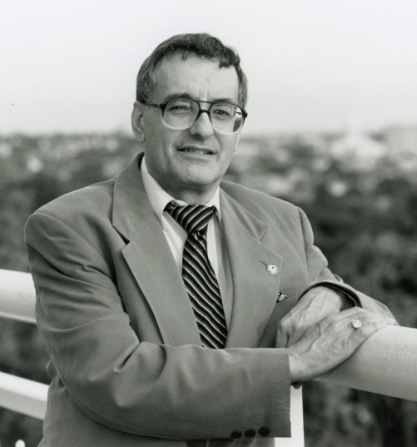
He created the Feinstein Foundation in 1991, funded by his direct marketing and mail order collectible business and his newsletters, which included “The Wealth Maker.” Aiming to “reward kindness,” foster education and combat hunger, the foundation gave (and still gives) grants to individual students and to schools, many of them in Rhode Island. He insisted that all of the schools he funded bear his name, or the name of a member of his family. The Lillian Feinstein School, named after his mother, still exists, but the Alan Shawn Feinstein School on Broad Street closed (despite community protest) in 2023.
Feinstein was much praised, particularly in Rhode Island, receiving honorary doctorates from seven local colleges and universities, and five awards or medals from local organizations. He was also named Rhode Island Citizen of the Year by the March of Dimes.
These three men gave back to their communities, and even if the schools named after them disappear, they should be remembered.
Jane Lancaster, PhD is a historian and former public school teacher (in the UK). She has lived in Providence for a very long time, taught at Brown and RISD and knows quite a lot about the state’s history, but still doesn’t sound much like a Rhode Islander. (Though her friends in England think she has an American accent).


Want to comment? Click!