




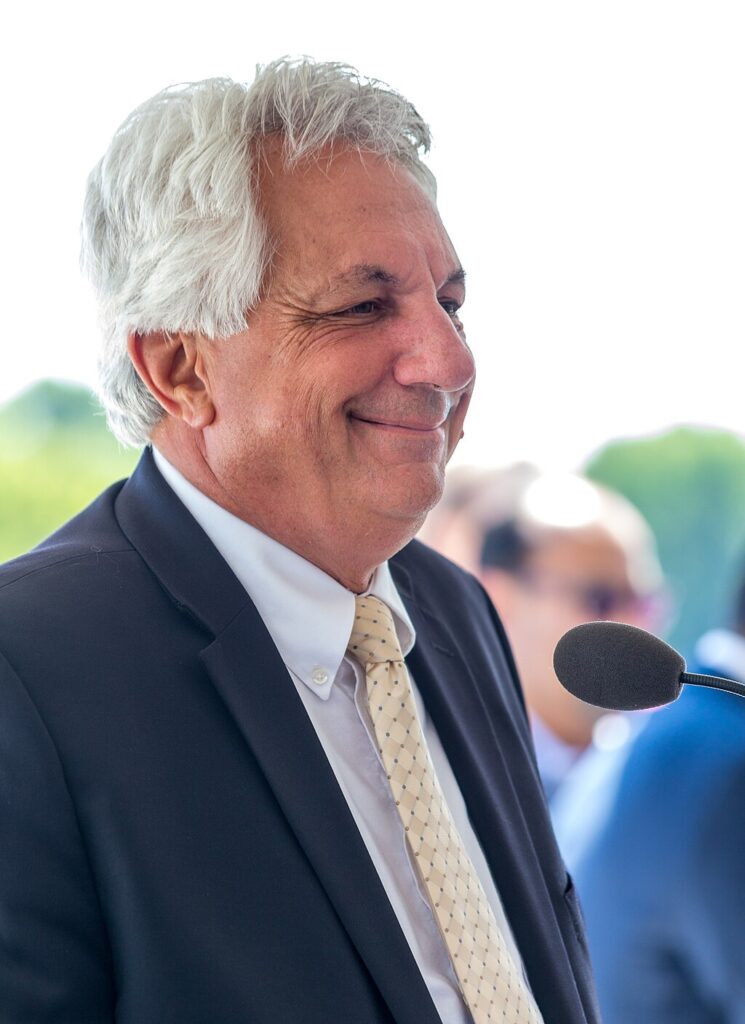
Peter Alviti’s resignation last week as director of the Rhode Island Department of Transportation marks the end of a long and troubled chapter for the agency.
For many Rhode Islanders — especially those of us in Providence — his departure feels long overdue. From the Washington Bridge crisis to the mishandling of Kennedy Plaza — including controversial proposals to break up Providence’s central transit hub with no clear benefit to riders — Providence repeatedly absorbed the consequences of a transportation philosophy that treated the city as infrastructure to be moved through, not a place where people live, work, and rely on public transit every day.
But simply replacing the person in charge will not fix what is broken. The most serious problems facing public transit in Rhode Island are structural, and unless they are addressed, Providence will continue to bear the consequences in the form of service cuts, stalled planning, and missed economic opportunity. If the state’s response is to appoint a new DOT director and move on, it will miss the point. The core failure is not only who sits at the top of RIDOT, but how transit decisions are structured in Rhode Island — a framework the legislature fundamentally altered just a few years ago, with damaging results.
To understand why changing leadership alone is not enough, it is necessary to understand what changed, why it was done, and why it has failed.
For decades, Rhode Island maintained a clear division of responsibility between its transportation and public transit agencies. RIDOT managed highways, bridges, and road infrastructure. RIPTA operated the state’s public transit system — primarily fixed-route bus service and door-to-door transportation for riders with disabilities — and played a central role in statewide transit planning and connections to rail and other modes. Coordination between the two agencies was imperfect, but the separation was intentional. Each had a defined mission, distinct leadership, and accountability aligned with its core purpose.
That separation was undone in 2023.
That year, the General Assembly passed legislation that changed RIPTA’s governance structure so that the RIDOT director automatically became chair of RIPTA’s board. The rationale was alignment — the belief that placing transit under the Department of Transportation would improve coordination, efficiency, and oversight.
In practice, it subordinated the state’s public transit system to an agency whose institutional mission, incentives, and culture are oriented toward roads, not toward moving people efficiently, equitably, and reliably through cities.
This distinction matters, and our experience can be understood by looking just next door. In Massachusetts, public transit sits within the broader transportation umbrella, but it is governed separately: the MBTA has its own dedicated leadership and a board chaired by a governor-appointed transit lead, not the state’s highway director.
Rhode Island chose a different path, and that choice created a series of predictable problems. Transit advocates warned at the time that consolidating transit governance under RIDOT was “a solution in search of a problem.” Instead of fixing anything, it introduced a new set of structural failures.
First, it created a fundamental conflict of mission. Highway agencies are designed to move vehicles efficiently. Transit agencies are designed to move people — including those who cannot or do not drive — reliably, affordably, and safely. When transit governance is placed under a highway agency, transit priorities inevitably compete with, and lose to, road projects, construction timelines, and commuter traffic pressures. This is not a question of intent; it’s a function of institutional design.
Second, it diluted leadership focus. Running RIDOT is a full-time job. At the same time, providing meaningful oversight of a public transit authority responsible for dozens of bus routes, hundreds of employees, and tens of thousands of daily riders is also a serious and time-intensive responsibility. Combining the two does not create efficiency. It increases the risk that transit becomes secondary — particularly when the DOT is consumed by major bridge and highway crises of the kind we have seen since the abrupt closure of one side of the Washington Bridge, in 2023.
Third, it weakened accountability. When RIPTA operates as an extension of RIDOT, responsibility for transit outcomes becomes diffuse. Service cuts, stalled planning, and rider frustration are attributed to budget constraints or coordination issues, while the structural cause goes unaddressed. Providence riders experience the impact directly through longer waits, reduced frequency, and fewer reliable connections, but the system makes it difficult to identify who is truly responsible for fixing it.
Fourth, it stalled long-term vision. Public transit is not merely a service; it is economic infrastructure. Cities like Providence grow when transit is reliable, frequent, and easy to use — connecting workers to jobs, students to schools, and neighborhoods to opportunity. Under the current structure, transit has too often been treated as peripheral rather than essential, resulting in years of unresolved planning around Providence’s central transit hub and decisions that have made transit harder to use instead of easier.
Providence has felt these failures most acutely. As the state’s densest city and transit hub, it depends on a system designed around people, not cars passing through. Instead, it has endured repeated disruptions and uncertainty around the future of its central transit hub, along with service reductions that have reduced frequency and reliability for tens of thousands of riders. This is not the failure of one individual. It’s the outcome of a structure that deprioritizes transit by design.
Alviti’s resignation, which will take effect later this month, creates a critical inflection point — if the state chooses to leverage it. As the governor searches for a new DOT director, lawmakers should act this session to revisit and repeal the 2023 change that made the RIDOT director the chair of RIPTA’s governing board.
Such a move would restore independent, transit-focused leadership to the agency responsible for public transportation, with a clear mandate to plan, operate, and advocate for improved service without competing against highway priorities. As transit advocates have long warned, “the chair of the RIPTA board should have their loyalty, as far as agencies go, to transit, not to highways.”
This is not about relitigating past leadership. It is about building a governance model capable of delivering a 21st-century public transit system for the state’s capital city.
Matt McDermott is a communications strategist who recently ran for Providence City Council in Ward 2. He lives in Wayland Square with his husband and is a regular public transit rider.


Want to comment? Click!