


Editor’s Note: All Providence Eye interviews with former Central Providence Unidos staff in this article were conducted before notice of their termination.
On Tuesday November 18, Central Providence Unidos (CPU) staff prepared to celebrate the completion of the largest participatory budgeting program in Rhode Island history. Known as the Nine Neighborhood Fund, it distributed $1 million dollars to projects chosen by over 1,200 Providence residents with their facilitation. As their team gathered to recognize their accomplishments that night, they received an email announcing a mandatory HR meeting the next day.
By Wednesday afternoon, all of the staff working with Central Providence Unidos were laid off.
The firings by CPU’s organizational sponsor One Neighborhood Builders stand in stark contrast to the democratic process facilitated by those same employees from 2022 to 2025. One Neighborhood Builders said the decision “was the result of months of difficult financial analysis.” Central Providence residents say choices like these are exactly what participatory budgeting could be for.
Participatory Budgeting in Rhode Island
Developed in Brazil in 1989, participatory budgeting invites community members to democratically decide how to spend public funds. Studies show the process increases voter turnout, produces equitable outcomes and offers young people civic engagement skills. Cities like Boston, Hartford and New York have applied the process to budgets that vary in scale from $100,000 dollars to $24 million.
Central Falls first brought the concept to Rhode Island, allowing students at Central Falls High School to decide on how to use $10,000 for school improvements every year since 2019. In 2020, the Rhode Island Executive Office of Health and Human Services (EOHHS) decided to invest Medicaid funding through this method as a way to address the social causes of negative health outcomes.
“It gives voice to the community and those with lived experience of systemic racism, of what it means to navigate the health system as a BIPOC, and as a Medicaid beneficiary,” EOHHS wrote in a document explaining the strategy. “It brings those we serve ‘into the room’ in a meaningful way.”
When the Rhode Island Department of Health worked with EOHHS to administer the money through the state’s Health Equity Zones (HEZ), Central Providence Unidos jumped at the chance to invest in their neighborhood.
“There was the opportunity to try this out at a somewhat larger scale within Providence and show that it can have an impact,” said former managing director Anusha Venkataraman. “You develop that project, win over some community members, and then it can actually happen.”
RIDOH granted $450,000 each to Central Providence Unidos and Pawtucket-Central Falls HEZ for participatory budgeting projects, and One Neighborhood Builders secured an additional $550,000 from private philanthropic source Blue Meridian Partners. In August 2022, Central Providence residents learned that they could decide how to spend $1 million dollars to improve community health, and the ideas started pouring in.
Community Process Begins in Committees
Named after the nine neighborhoods of Elmhurst, Federal Hill, Hartford, Manton, Mount Pleasant, Olneyville, Silver Lake, Smith Hill and Valley, this newly established Nine Neighborhood Fund (NNF) received over 300 suggestions for ways to spend the money. Residents submitted ideas at public events, when they met CPU staff on the street or online at decideRI.org, a website designed by former project manager at the Participatory Budgeting Project Pam Jennings. Jennings advised CPU staff and residents as they brought these ideas to the ballot.
“We were learning as the folks involved were learning as well,” said Dominique Resendes, a former CPU staff member who worked on the budgeting process from beginning to end. “I think it also exemplified the trust people have. I think there’s a vulnerability in learning together. [It] gets rid of hierarchy because we’re all just learning as we’re going along.”
A steering committee of 17 people who live, work or go to school in Central Providence designed the rules for the budget process, including setting the voting age at 13 years old. 32 locals became project delegates tasked with making the community suggestions into specific project proposals. After months of weekly meetings consulting with subject experts, residents finalized 20 ballot options split between two budget categories: $880,000 for large projects and $120,000 for small projects.
Budget Ballots in Central Providence
Almost 1,200 people cast their votes on how to spend the money, and eight of the projects moved on to the implementation phase. Voters decided to invest in new bathrooms in public parks, distributing filters to remove lead from water, a peer-led mental health program for youth and improvements to local bus stops. For the smaller projects, $30,000 each went to youth life-skills classes, planting food-bearing trees, giving free bikes to local kids and a children’s soccer program.
Central Providence Unidos staff continued to facilitate public participation throughout the implementation phase, with an oversight committee and subcommittees for each project. Residents evaluated responses to their Request for Proposals, selected implementers and informed their neighbors on project updates. The Chad Brown Alumni Association (CBAA) led the bike distribution program after being assessed for their capacity to implement the project, involvement in the community and their dedication to serving BIPOC in Central Providence.
“[Kids] wanted to get outside… A lot of them couldn’t afford bikes,” said Stevie Santos, president of the CBAA. They distributed 75 bikes and repair kits. The children attended bicycle maintenance and safety training with the Lefty Loosey Bike Collective before participating in an inaugural bike ride through Smith Hill from Madeline Rogers Recreation Center to Davis Park, along with the Providence Police. Santos said the participatory budgeting process empowered local voices in the project. “It’s not really good to have someone who is not going to be nowhere near the ground handing these bikes out, planning it for you… We’ve been around since 2012 and we’ve done things like this over and over.”
Other winning ideas pushed residents to learn about things they had never worked on before. The proposal to install a bathroom in Merino Park received the most votes out of any project, but Resendes and Venkataraman said installing a public toilet is far from simple.
“Then we’re faced with the challenges… How can we put investment into this park knowing that it’s prone to increased flooding?” said Venkataraman. When Resendes attended the ribbon cutting in July, she felt proud that pushing through the technical challenges with the city’s Parks Department did not go to waste. “A lot of people come into the city say they want to do these things, and then don’t necessarily always follow up… And we’re actually coming together to celebrate the fact that this did happen.”
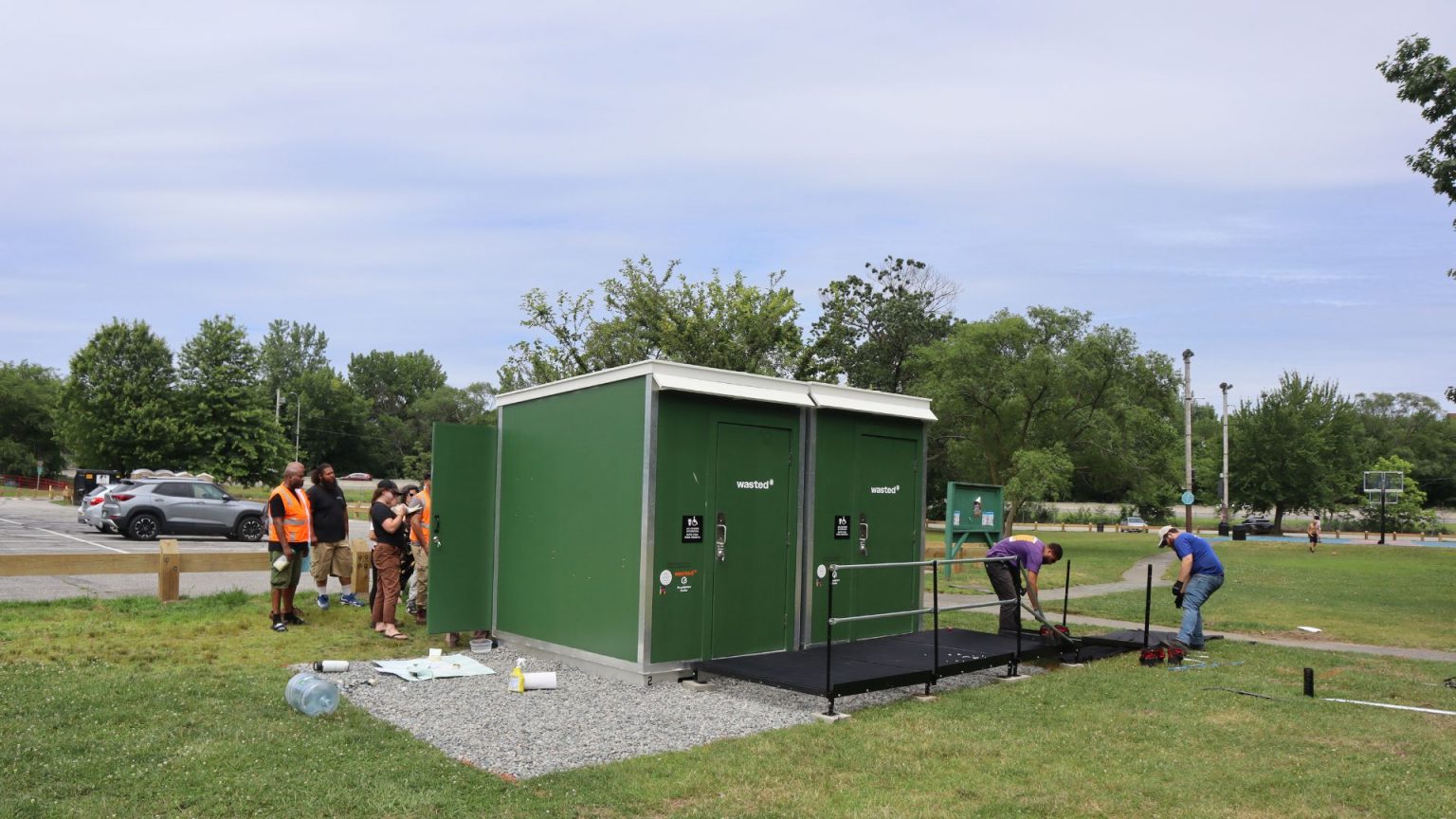
Bathroom project delegate Myra Morales said the project is a huge success, and the community makes use of the new facilities.
“They love that now they can go to the park and be able to be there and not have to rush home,” said Morales, translated from her native Spanish. Morales, who also sits on the Resident Advisory Council for CPU, said she wants to see more participatory budgeting in the future. “If we can find more projects like this one to continue serving the community, it will be great.”
One Neighborhood Builders Slashes Participatory Budget Capacity with Staff Layoffs
However, the capacity for local participatory budgeting took a huge cut when One Neighborhood Builders fired the entire CPU staff.
“The entire Central Providence Unidos initiative is in jeopardy – at a time when it is needed more than ever,” said Central Providence Unidos Executive Committee member Shelby Mack. “The community needs this work – and so we need to do everything we can to transition it as smoothly as possible to another organization.”
One Neighborhood Builders said that although Central Providence Unidos is a valuable community engagement platform, it can no longer sustainably fund staff for the effort.
“As key grant funding for the work of CPU severely decreased, ONB became the primary financial supporter of the Central Providence Unidos staff,” said One Neighborhood Builders President & CEO Peter Chapman, who said ONB will continue CPU’s core activities through June 2026. “Between the start of FY2024 and the end of October 2025, ONB invested more than $2 million into Central Providence Unidos. Unfortunately, ONB can no longer sustainably fund CPU positions without jeopardizing our ability to carry out our primary affordable housing and neighborhood revitalization mission.”
Mack expressed doubt regarding that financial justification and said the Executive Committee of Central Providence Unidos was not informed in any way beforehand.
“This decision was made without consulting the staff, communities, dozens of organizations, and hundreds – thousands – of community residents who will be impacted,” said Mack. “Participatory budgeting demonstrates that community residents and stakeholders are more than capable of making and informing critical decisions like this.”
Does Participatory Budgeting Have a Future in Providence?
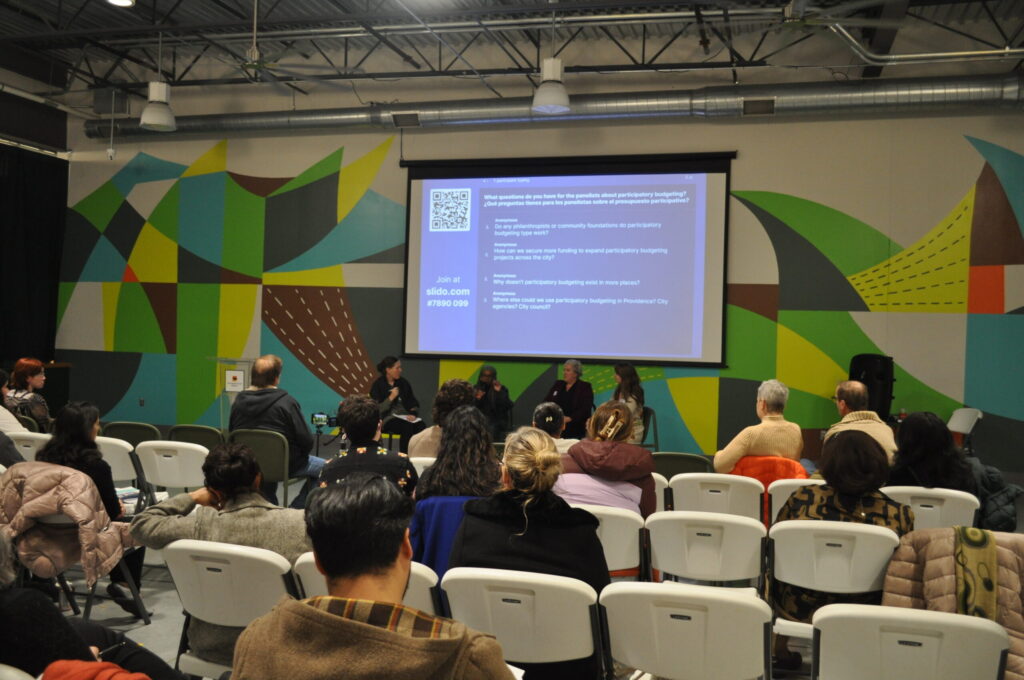
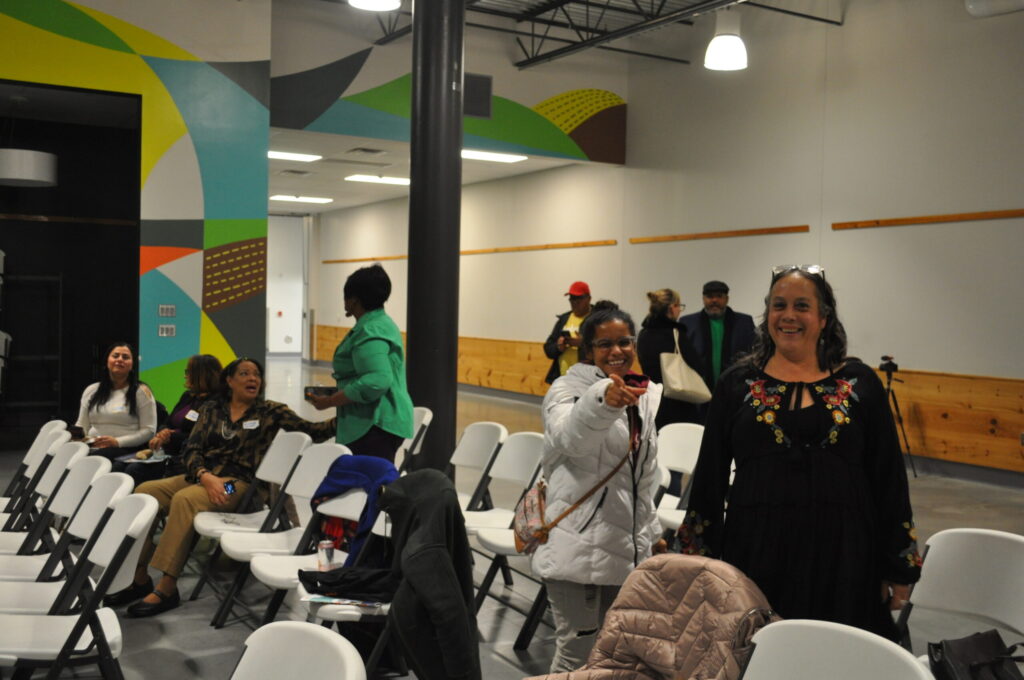
At Farm Fresh, CPU staff joined Nine Neighborhood Fund committee members and project implementers, celebrating the years-long journey to bring this investment to their community. Residents took selfies with each other and told stories about making new connections across languages. For Resendes, the fund will leave an impact on local residents beyond the physical investment in Central Providence
“When we all see each other at events that aren’t related to [participatory budgeting], we’ll be like, ‘Oh my God, a Nine Neighborhood Fund Reunion!’” said Resendes, who said the process changed local perception of civic engagement. “I think it also gave folks a sense of who’s working in our state, who’s working in our city.”
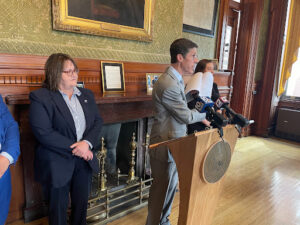
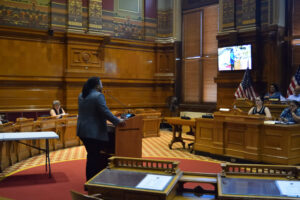
To end the night, Pam Jennings led a panel with City Council President Rachel Miller, board chair of another participatory budget project Hartford Decide$ Zoe Chatfield and NNF steering committee member Rochelle Lee. The four spoke about the power of democratic budgeting to spark positive political changes in Providence.
“At the end of the day, the budget is really the expression of our values as a community, as a society,” said Jennings. “Anywhere there’s a budget, it can be participatory. Can we all say that together?”
The whole room responded.
“Anywhere there’s a budget, it can be participatory.”
Eric Halvarson is a multimedia journalist based in Providence, Rhode Island.


Want to comment? Click!