







A guide for anyone who wants to request local or state information
The press plays an important role in holding the government accountable, but the public does too, by keeping an eye on their local and state officials.
In 2021, a Webster, N.H., couple uncovered an illegal land deal between town officials and the town treasurer. The treasurer, who had purchased town-owned land at a significant discount without public notice, was convicted and can no longer hold public office in Webster. The news coverage of the couple’s efforts inspired residents in other communities to investigate how their own officials were selling town-owned lots.
There are many other examples.
The ACLU of New Hampshire has used records requests to shed light on immigration enforcement at the Canadian border and the Trump administration’s efforts targeting foreign students.
A Nashua woman has won several court challenges against the city of Nashua for denying records, some of which showed the town had improperly assessed her property. She won an $8,000 tax abatement.
Each prevailed by using New Hampshire’s right-to-know law, which ensures public access to government records and proceedings.
While these examples come from New Hampshire, residents across New England face similar challenges. In Rhode Island, requesters have also encountered delays, denials, or excessive fees when seeking public information. These challenges are not unique to one state — they reflect a regional and national struggle over the public’s right to know.
How to Request Local and State Records
Here’s a guide for requesting local and state records, including email, phone, and text communications, in Rhode Island:
Determine what you need. Has the town or state agency already published the information on its website or in meeting minutes? Collect what you can and file a request for the rest.
Find out how requests should be submitted. Does the agency have a form or designated contact person? Using their preferred process helps speed things along.
Narrow your request. Focus on a timeframe, a set of officials, or specific keywords to avoid overwhelming delays.
Craft a clear request. Provide enough detail and include contact information for follow-ups. Written request forms may vary between state departments. You can find key agencies and departments for public records in RI at rhodeisland.publicoffices.org. The website states “Many agencies now offer online portals for submitting requests and accessing certain records electronically. The Rhode Island Department of Administration maintains a Public Records Request Portal that facilitates requests to multiple state agencies.”
Know your legal rights. In Rhode Island, agencies must respond within 10 business days, with a possible extension of 20 business days for complex requests. If denied, you can appeal to the Chief Administrative Officer of the department that maintains the records you are requesting. Additionally, you can file a complaint with the Department of the Attorney General or the Rhode Island Superior Court.
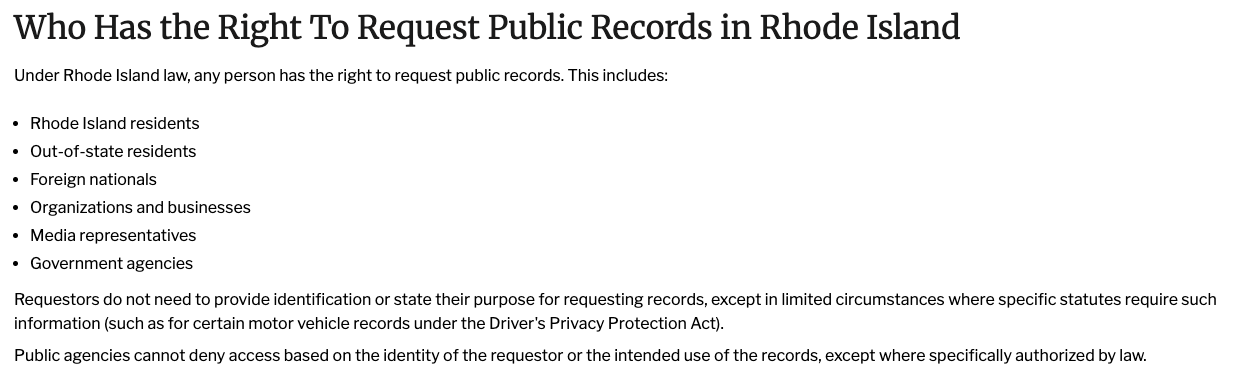
Prepare for resistance. Agencies may attempt to deny requests based on residency or misinterpretations of the law. Know that in most states, access is not limited to residents.
Don’t overpay. Most states limit fees to copying costs or modest charges for electronic communications. If you’re charged beyond that, check your state’s law.
The Attorney General’s office can assist with submitting an Access to Public Records Act (APRA) request. For questions, email [email protected] or call (401) 274-4400 and ask to be connected to the Open Government Unit. Additional materials regarding the APRA can be found at riag.ri.gov (then proceed to the “Open Government Unit” page).
This story is part of Know Your News, a Granite State News Collaborative and NENPA Press Freedom Committee initiative on why the First Amendment, press freedom, and local news matter. Stories are shared freely with outlets nationwide to promote awareness of the importance of a local free press. Share this story with someone who doesn’t usually read local news.
Editor’s Note: Rhode Island-specific information added by The Providence Eye.


Want to comment? Click!