





On June 5, the full Rhode Island House of Representatives approved a $750,000 amendment to the House budget supporting multilingual education in the Ocean State. The amended budget includes the Support and Access to Bilingual Education (SABE) Act, which was sponsored by Rep. David Morales.
The SABE Act would focus on growing the number of certified dual language teachers to help meet the needs of multilingual learners in Rhode Island’s public schools, including Providence Public School District (PPSD).
For Dr. Erin Papa, the executive director of Coalition for a Multilingual Rhode Island, the focus on traditional public schools is especially important. Papa says that “our focus as a coalition has always been on trying to make the most impact on the most students […] we know that the vast majority of almost 20,000 multilingual learners are served in these 11 districts, and so we really want to change the norm of how education is carried out for the whole state.” The 11 districts Papa refers to are districts that have a “high incidence” of multilingual learners.
Despite the demand for multilingual education, there is a lack of certified teachers who can provide it. There are currently 200 vacancies for teaching positions in the state. Cindy Miranda, the Coalition’s communications and advocacy chair, says that this issue could easily be solved by the SABE Act. “We have the talent right here, they just need the pathways and the resources,” Miranda said.
As previously reported by The Providence Eye, 42% of Providence Public School District’s students are multilingual learners, with only a quarter of those MLLs currently enrolled in dual language programs through PPS. The dual language programs that are provided are exclusively in Spanish.
In addition to directing resources towards creating multilingual programs in schools, the act would also focus on supporting preexisting world language programs. Across the state, both K-12 schools and institutions of higher education are cutting back on their language programs due to budget constraints. In Middletown Public School District, for instance, students and community members are attempting to save their school’s French language program from being cut. This, Miranda explained, shows that the issue of multilingual education “doesn’t only affect urban core student populations, it also affects students in suburban school districts who are also monolingual, that are trying to learn a second language.”
The amended budget describes strategies and support methods to expand teaching certifications for multilingual teachers and teachers of world languages. These methods include helping with certification costs for multilingual individuals who plan to teach in traditional public schools in districts with high incidences of multilingual learners, as well as a streamlined process for certification. Furthermore, the Department of Secondary and Elementary Education will establish a bilingual education fund to provide grants to public schools to expand and establish bilingual education models. Generally, most provisions in the budget focus on providing direct financial support to schools and potential educators.
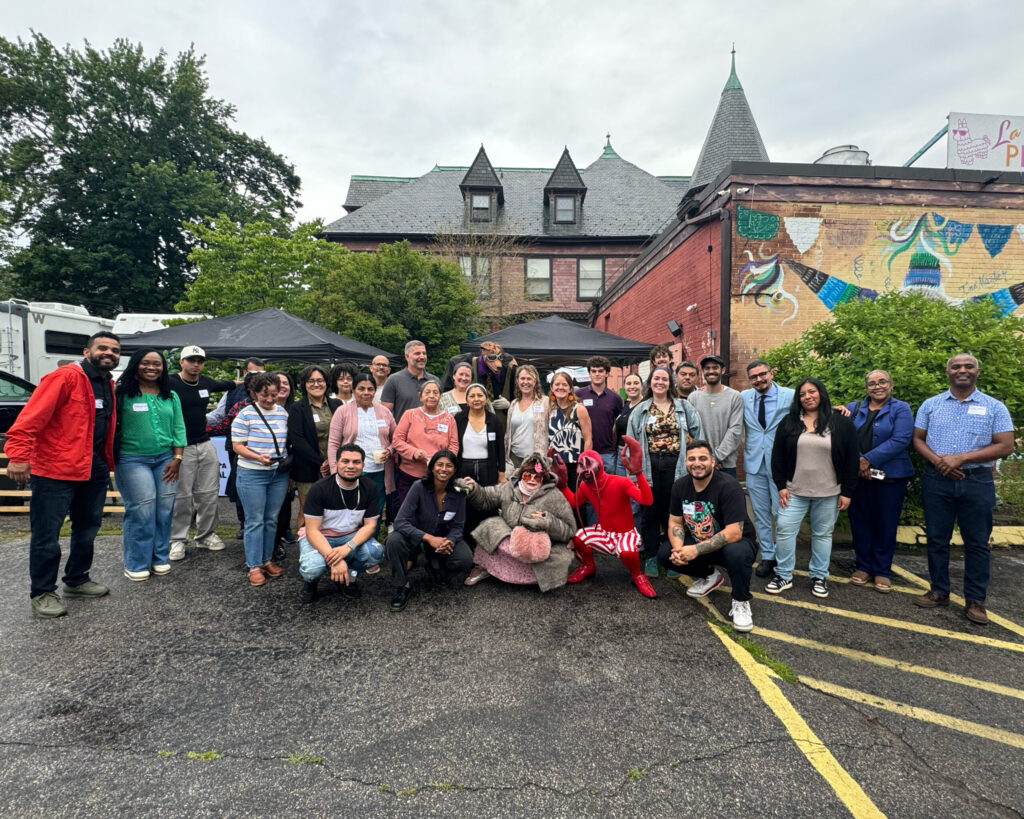
To commemorate their success, the Coalition for a Multilingual Rhode Island hosted a celebration on June 23 at La Piñata Mexican Grill + Bar on Westminster. The event was organized by CMRI’s fiscal sponsor, Olneyville Neighborhood Association and featured performances from Big Nazo) and remarks from supporters. Despite the momentum of recent legislation, the Coalition states that “this is not the end of the work, it’s a beginning.”
Camilla Rodriguez is a SPRINT intern at The Providence Eye helping to create multimedia content to help promote our reporting to a wider audience across platforms. She studies English and Modern Culture & Media at Brown University.


Want to comment? Click!