


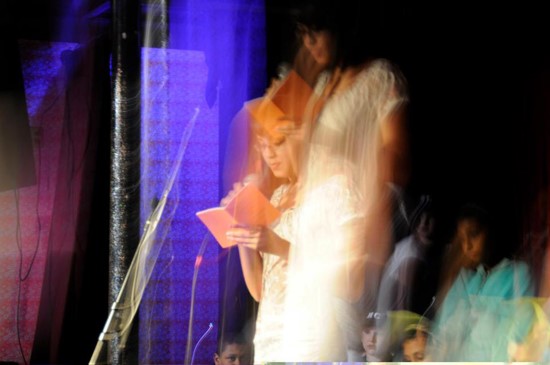
Literary arts can play a crucial role in developing students’ critical thinking skills, emotional intelligence, and sense of civic engagement. Tina Cane, former RI Poet Laureate
In a city rich with cultural history and a vibrant arts scene, the state of literary arts in Providence high schools offers a complex picture of both promise and disappointment. As educators, students, and local organizations strive to nurture young writers amidst attacks on creative programs by the current administration, questions about access, support, and the evolving role of literary arts remain. Tina Cane, who served as Rhode Island’s Poet Laureate from 2016-2024, is working to encourage writing, reading, and poetry in our schools.
Access and Discrepancies in Literary Arts Education
In Providence’s public high schools, access to literary arts varies dramatically. According to a recent report by the Rhode Island State Council on the Arts, 30% of public schools in the state do not meet the minimum arts access requirements established in Rhode Island’s Basic Education Plan (BEP). It appears that Classical High School is the only public high school that features a newspaper and literary journal. Private schools in the city often provide a more robust variety of creative writing opportunities.
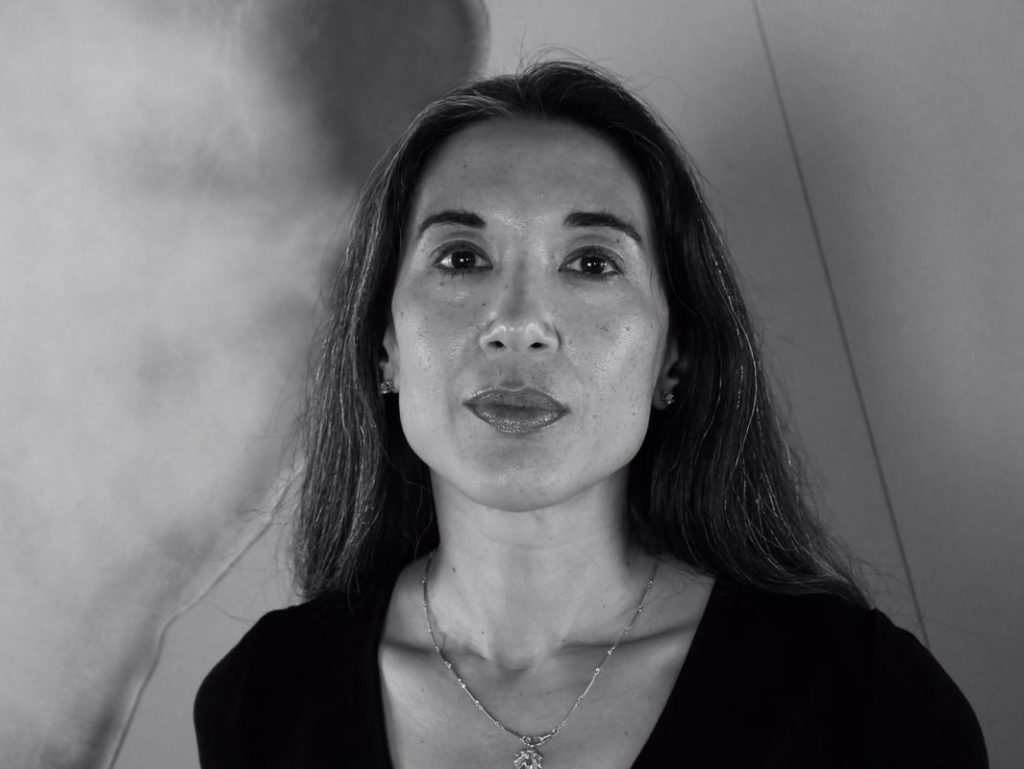
These disparities reflect a broader challenge: how to ensure that all students, regardless of their school or socioeconomic background or age, have access to meaningful literary arts experiences? For Tina Cane, founder of Writers-in-the-Schools, RI, this gap is both a professional challenge and a personal mission. Her organization works to bring poetry into classrooms across the state, offering young writers a chance to explore self-expression and creative thinking.
The Classroom and Beyond
Through Writers-in-the-Schools, RI, Cane has been active in RI classrooms, hosting poetry workshops and residencies with budding elementary school writers. As the former Poet Laureate of Rhode Island, Cane’s mission has been to bring poetry to each corner of the state, fostering community and passion wherever she goes. An alum of the New York literary scene, Cane has mentioned in earlier interviews that Rhode Island, and Providence in particular, invites opportunities for collaboration and deeper connections–something she values.
In keeping with her foundational beliefs, the program brings professional writers to the classroom and with them, comes a particular energy and expertise that awakens the intellect and the imagination and that supports curriculum and strengthens skills. Students learn how to read as writers and write as readers, and about process, craft and genre. Still, as with most public schools across the nation, access to a curriculum that is rich in creative writing, poetry, and other literary arts is limited.
Outside the classroom, access is an issue as well. One project she attempted to spearhead in the spring was a “Poetry as Witness to History” teen workshop. Such workshops aim to provide a safe space for young writers to explore their voices and respond to the world around them.
However, transportation, after-school obligations such as work and sports, and lack of awareness can prevent students from participating in literary events. Cane notes that with the “Poetry as Witness to History” workshop, teenage signups were scarce. “They’re busy with homework, taking care of family. It’s hard to reach them,” she says.
Literary Arts and Community Building
Despite these obstacles, Cane remains convinced about the potential of poetry to build community, especially in times of crisis. Her own experience as a poet and educator has shown her that creative self-expression can be a powerful tool for healing and community building.
She recalls a recent writing conference in Los Angeles where she was reminded of the larger community of writers and creators around the country. “It was a reminder that we are not alone,” she reflects. But in Providence, where Cane describes herself as a “small fish in a small pond,” there is a constant tension between feeling isolated and feeling a deep sense of responsibility.
This responsibility is not just to young writers but to the community as a whole. Cane hopes that by expanding access to literary arts, Providence can become a city where all students—regardless of background—can find their voices and tell their stories.
Cane has further looked to implement additional programming for poets of all ages, specifically a recent series called “Lunch Break Poems with Tina Cane: Let’s break bread and write poems.” Like similar initiatives, the aim is to engage with the greater community while also finding narrower scopes of hope, creativity, introspection, and joy.

Budget Cuts Threaten Literary Arts
Cane’s ability to maintain her programs—both in classrooms and in extracurricular settings—has been directly impacted by a wave of funding cuts and ideological attacks under the Trump administration. Federal support for the arts has been slashed, and grants that once supported her classroom visits and poetry workshops have become harder to secure—though she’s looking into new avenues of financial possibilities for the fall. “The arts are always the first thing on the chopping block,” Cane explains. “And it’s not just about money—it’s about a mindset that sees creativity as non-essential.” “Look at the history,” Cane continues. “Authoritarian governments always come after artists first.” Cane reflected that restricting students’ exposure to literature not only limits their understanding of the world but also stifles their ability to think critically and creatively.
Kate Lentz, Director of the Rhode Island Center for the Book, a state affiliate of the National Center for the Book at the Library of Congress, further commented on these systematic pushbacks: “The President’s proposed FY26 budget would completely defund and dismantle The Institute for Museum and Library Services (IMLS), [which administers The Center for the Book in various states] and if that budget passes as proposed we would lose 35% of our operating budget, which would be devastating.”
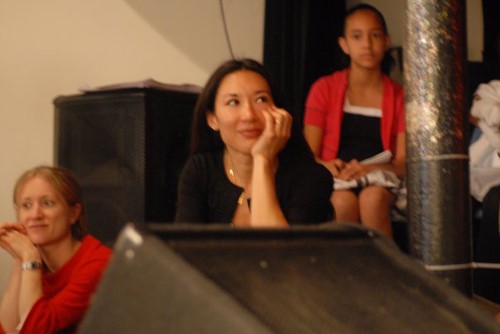
Beyond Cane’s work, hope remains, especially through the persistent policy efforts of arts organizations around the country. Within Rhode Island, in addition to Writers-in-the-Schools, organizations such as the Rhode Island Center for the Book, LitArtsRI, New Urban Arts, AS220, School One/Write RI, and others are advocating for the necessity of the arts in school.
Looking Forward
So, what does the future hold for literary arts in Providence schools? Cane envisions a city where creative writing is represented on the same scale as other academic subjects, where high school students have access to mentorship, workshops, and vibrant extracurricular programs. She believes that literary arts can play a crucial role in developing students’ critical thinking skills, emotional intelligence, and sense of civic engagement.
But for this vision to become a reality, Providence’s educational community must continue to advocate for literary arts funding, fight against censorship, and explore creative solutions to reach more students. Cane is currently seeking a donor to help revive some of her organization’s suspended programs, a task complicated by the constant struggle to avoid conflicts of interest. Such conflicts pertain to preserving subjectivity and authenticity within art, ensuring that investment is strictly financial, not curricular or creative.
For now, she continues her work, bringing poetry to students across Rhode Island, one classroom at a time. And for the young writers in her workshops, her message is clear: poetry is not just a subject to be studied—it is a tool for understanding the world and a voice for those who have been silenced.
“We have to take care of ourselves and each other,” Cane says. “Find solace and joy in the words we create.”
As Providence’s literary arts community grapples with these challenges, one thing is clear: the stories, poems, and voices of its young writers will continue to shape the city’s cultural landscape. The question is whether the city’s schools, policymakers, and organizations are ready to support them fully.
Julia Yakirevich is a high school junior and lifelong resident of Providence. She is a budding writer who recently authored her first creative collection.


Want to comment? Click!