



Providence recycles 2.6% of the city’s waste—the lowest rate of all municipalities in Rhode Island. Truck drivers use cameras to inspect trucks and hoppers to see if a recycling load is contaminated with non-recyclables, and to avoid additional fees, bring their trucks holding plenty of recyclable material directly to the landfill. Historically, this means most pickup days outside of the East Side have seen their recycling get trashed.
City officials said Providence tries to deliver loads of recycling every day, and are betting a new $7 million dollar investment will improve the City’s waste diversion. Providence is more than 75% through replacing residential waste containers used on the city curbs. Officials say the effort will save the city $2 million dollars each year. The investment costs $7.4 million dollars, including grants and a loan from a private equity firm backed by the beverage industry.
The reclaimed carts—both trash and recycling bins—are being shipped off to be recycled, but their fate depends on a recycling system that falls far from the ideal of zero waste.
Will the Carts Be Recycled Now?
As of May 6, 2026, crews have delivered 88,776 carts—just over 75% of the total. Around 80,000 of the older curbside containers have been reclaimed so far.
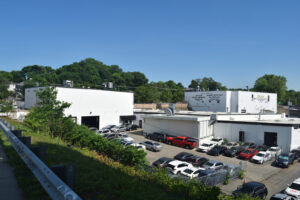
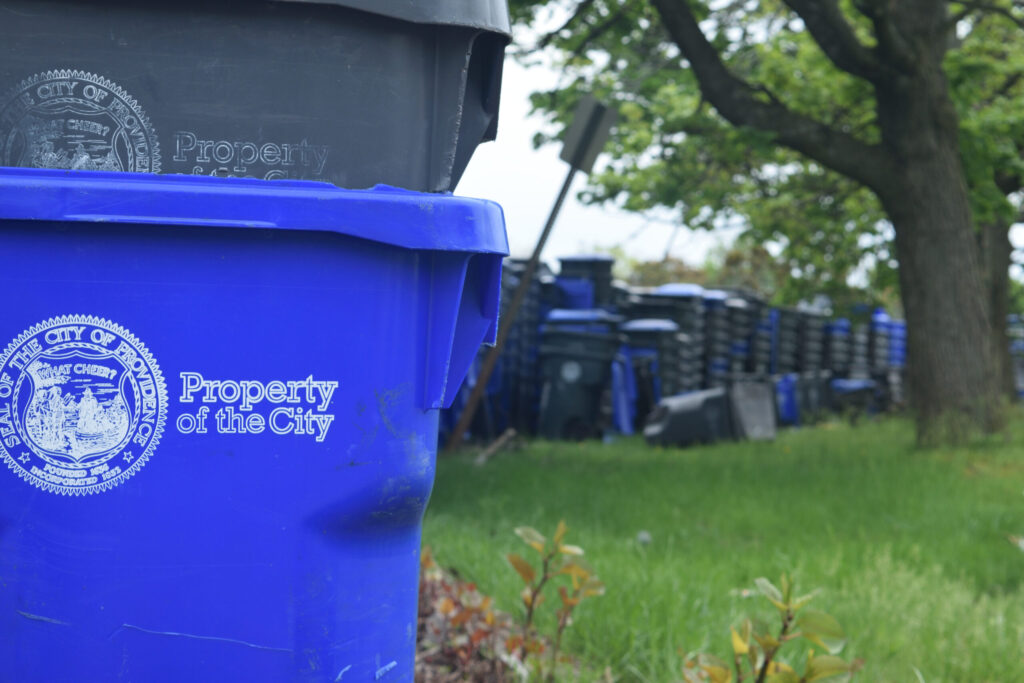
The swap happens between towers of recycling and trash bins in South Providence, where crews from Trio Environmental Solutions begin work early in the morning to collect the totes. Thousands of bins, both new and old, are currently sitting on the site of the former Urban League at 246 Prairie Street.
“That’s insulting to me to see that they think that’s a place for storage. They’re not putting it down in Fox Point, they’re not putting it up on Federal Hill,” said Deborah Moore, who grew up in the neighborhood before moving to the North End. “I don’t know if those are clean or dirty.”
This is the same site neighbors complained was used for excess snow storage this winter. State Representative David Morales went so far as to call it “environmental racism,” but scientists said the snowmelt’s impact would be minimal on local residents.
“Prairie Ave was the only City-controlled space large enough and available to stage the project from,” said City Spokesperson Josh Estrella. “To be clear, only completely empty carts are reclaimed.”
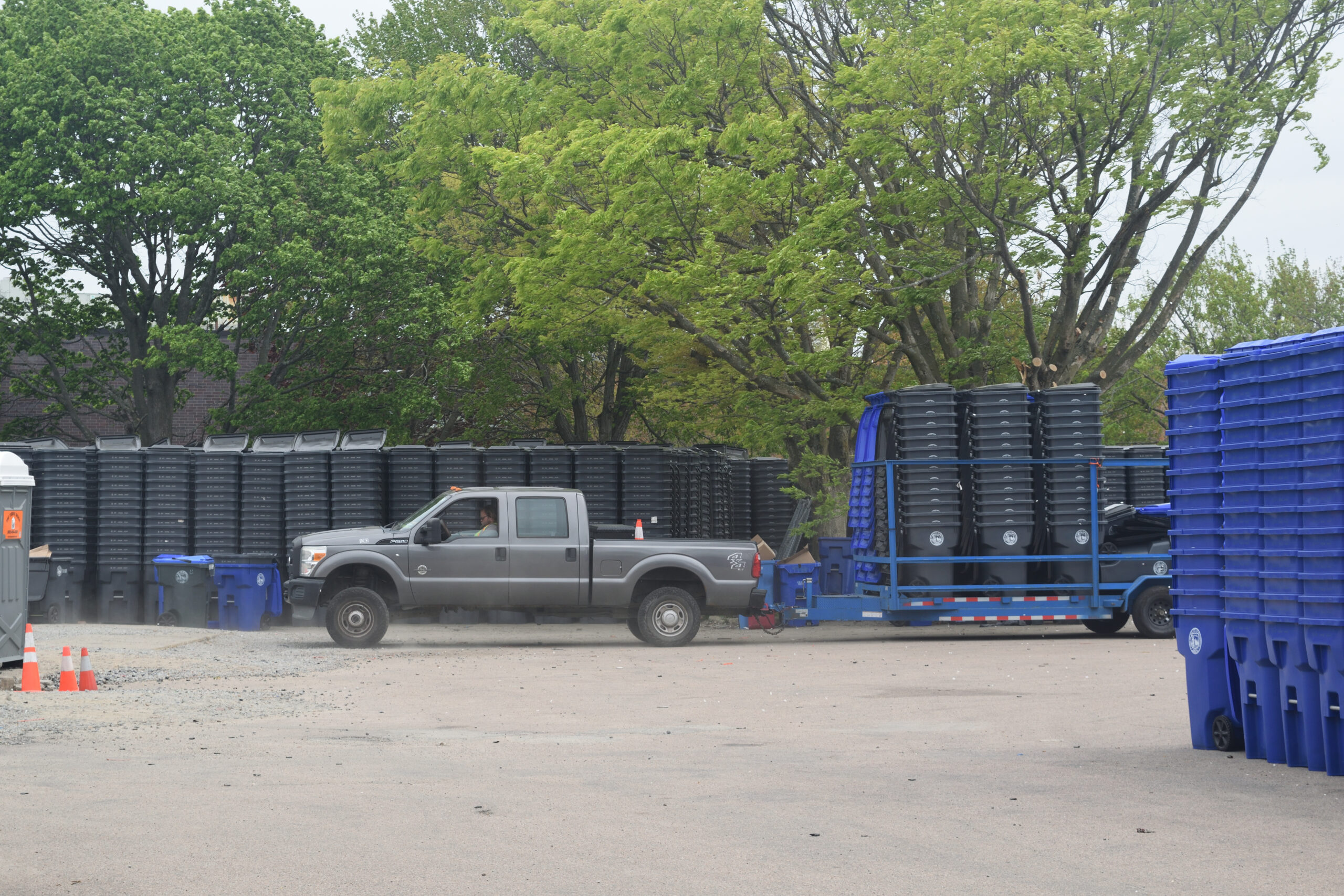
Once swapped out, crews separate the old carts into three pieces—the bin, the axle and the wheels. The quality of the plastic in the wheels is too low to be recycled, and those pieces are thrown away. However, the steel axles are collected by Mega Solutions and reclaimed for scrap. The plastic body of the cart is then recycled by the same company that is providing the new bins—Rehrig Pacific Company.
“We strip the metal and the wheels—anything that is not HDPE (high density polyethylene)— away from the cart,” said Stephen Mullis, a Rehrig Pacific Company sales representative. From Providence, carts are shipped to grinding facilities in Pennsylvania. “They regrind them, they process it, they pelletize them, and then we buy it [and] melt that down into our co-injection process and inject it back into carts.”
The majority of the project’s funding is a loan worth up to $5.5 million dollars with less than 2% interest from Closed Loop Partners, a private equity group focused on the “circular economy,” with backing from large beverage and consumer brands like Amazon, Walmart and Starbucks. The city will pay back the loan through 2032.
The Recycling Partnership, a nonprofit established by the Aluminum Association, also granted Providence $625,000 for the project through America’s Every Bottle Back Initiative. This initiative is a collaboration between Coca-Cola, Pepsi and Keurig Dr. Pepper to improve plastics recycling—one of the materials with the lowest recycling rates in the U.S.
“Providence is a major city that was looking to overhaul its recycling program. Residents were essentially using recycling carts as second trash cans,” said The Recycling Partnership Grant Development Manager Zoë Killian. “Now, new, larger, 95-gallon recycling carts that are all blue and trash carts that remain gray with a black lid will be coupled with a robust education and outreach recycling campaign to help lower the contamination rate and boost Providence’s recycling rate.”
The final piece of the funding puzzle is a $1.8 million Solid Waste Infrastructure for Recycling grant from the EPA, part of which funds Zero Waste Providence monitoring and education efforts of the curbside bins.
Before dawn, ZWP staff travel around the city inspecting curbside bins, taking pictures of the bins with the app Ecanvasser, and leaving residents feedback on how to avoid contaminating loads. If a route shows high enough quality recycling, ZWP asks WM (formerly Waste Management) to actually attempt to recycle what’s in that truck.
“We’re going to try and send this truck which has failed recycling inspection for the past 10 years… and we’re getting truckloads to pass,” said Zero Waste Providence Project Coordinator Carla Doughty. “So that’s saving the City money immediately.”
ZWP has gotten 14 non-Monday loads to pass since their outreach began October 20, 2025, saving the city nearly $6,000 to date, with $3,000 coming just in the past month.
Recycling Rates the Scourge of the State—and Providence’s Budget
The Municipal Recycling Facility (MRF) rejected 16,849 tons of recycling from Providence in 2025. That’s five times more than the next highest municipality in Cranston. Environmental advocates might be disheartened to know Providence only recycled 1,999 tons at the MRF last year, but that failure also costs the City money.
While accepted recycling is free, recycling loads more than 10% contaminated get hit twice by fees. The MRF charges the City for the cost of moving the rejected recycling to the landfill on top of the typical garbage fee.
“We care a lot about our environment and that’s a lot of why we want to do this work. However, day-to-day folks might not care about the environment,” said Doughty. “They’ll be shocked to learn that $1.5 million to $3 million a year of our tax money is just in fees and fines to the landfill. That money would be better spent on education or in our schools, or roads, you know?”
Estrella said the Special Commission for the Study of Providence’s Waste Management Services found rejected recycling loads cost the City of Providence $2 million per year due to the financial gamble of recycling at the MRF.
“Cities like Warwick and Cranston have pretty solid percentages of their solid waste being diverted towards recycling—really close to the state goal— and Providence is failing miserably,” said Doughty. “There’s no reason we can’t change our behavior individually to have this bigger collective change.”
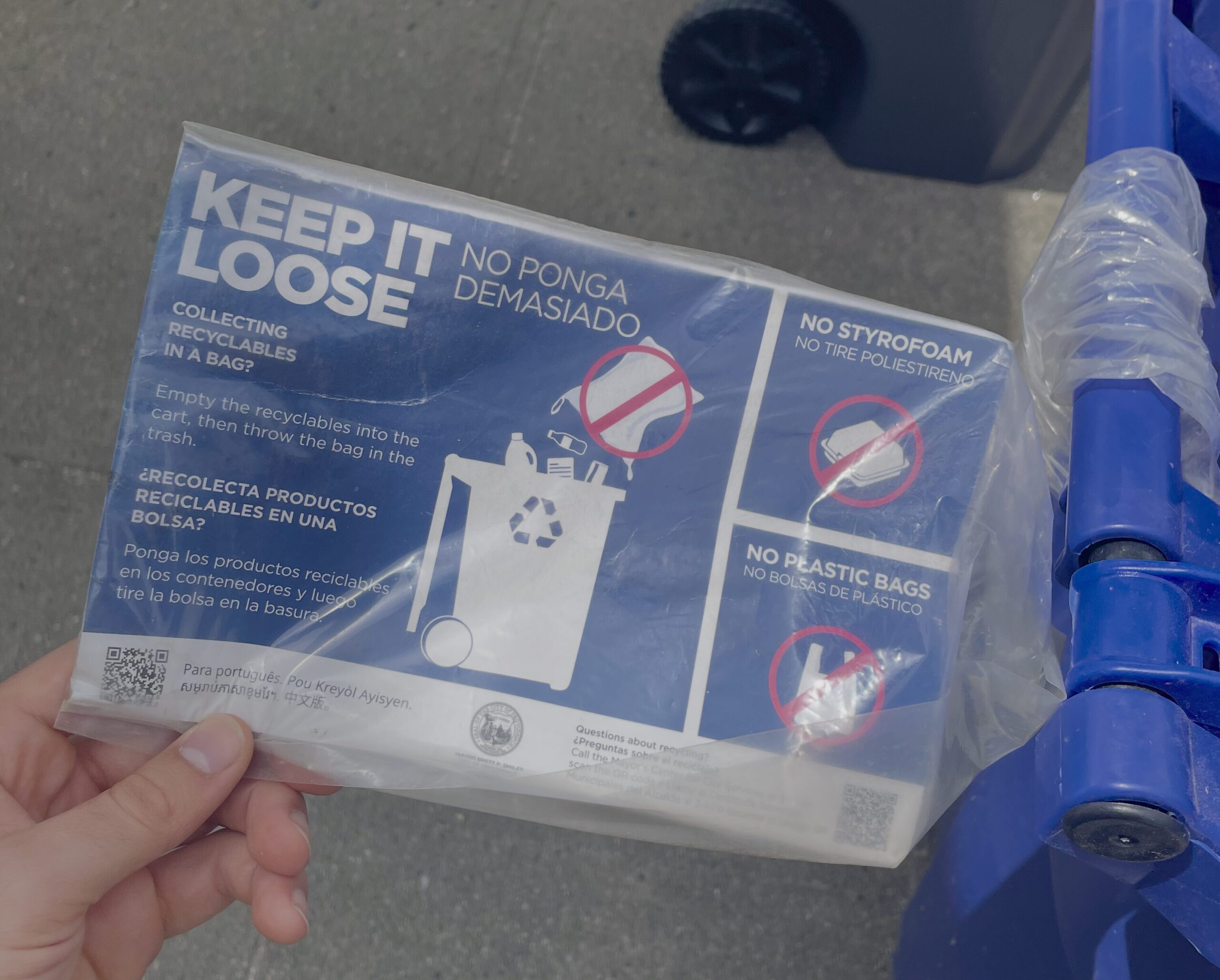
The Department of Sustainability is hoping that replacing the carts will not only improve recycling rates but also help avoid unnecessary tipping fees and prevent animals from accessing garbage. The new carts will come in standardized colors (blue for recycling and a combination of grey and black for trash) and hold 95 gallons of waste each. The old carts can handle 65 gallons. Plus, the new carts will feature labels explaining what should go in each waste stream.
Zero Waste Providence said confusing and broken carts are part of the problem, but the city must also invest in continued education and resources for residents.
“We’re one little slice of the pie of the bigger project,” said Doughty. “Other slices of the pie include the new carts and messaging from the City.”
Interested in seeing where the trash and recycling are taken after then are scooped up by the garbage trucks? Join The Providence Eye for TRASH TREK on May 30. Information and tickets here.
[CORRECTION: An earlier version of this article falsely stated that recycling is only delivered to MRF once a week. The Providence Eye regrets the error.]
Eric Halvarson is a City News Reporter for The Providence Eye.


Want to comment? Click!