





In May 2024, The Providence Eye published a story addressing recycling in Providence and the City’s failure to achieve the State-mandated recycling rate of 35%. At that time, the City’s 2023 recycling data revealed that Providence recycled only 7.8% of its waste. With 2024 data now available, we know that Providence has regressed in its efforts, recycling only 7.1% of waste in 2024. That’s a far cry from the State requirement and the City’s self-proclaimed goal to increase the residential recycling rate to 30% by 2020. Now, with the State’s landfill in Johnston drawing closer to reaching its capacity—the current estimate is that it will be full by 2046—the question of how Providence can improve its recycling rates is an urgent one.
Why Providence’s Recycling Rate is So Low
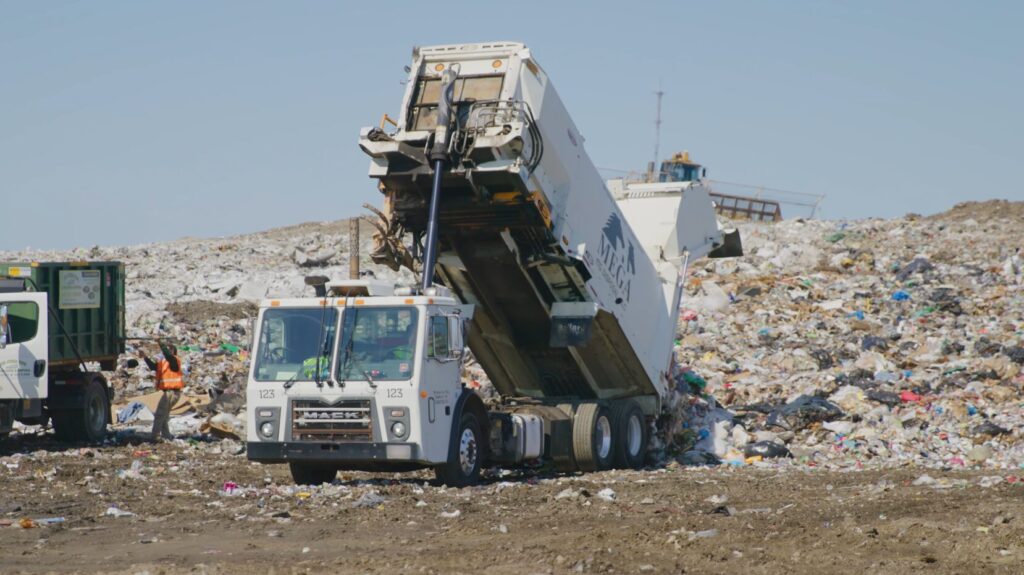
Providence’s recycling rate is so low because very little of its waste is actually recycled. Recycling that is brought to the Materials Recovery Facility (MRF) in Johnston by WM (Waste Management) trucks is inspected by MRF staff to check for non-recyclable materials like plastic, food, foam containers, and electronics. If MRF staff determine that a recycling load is more than 10% contaminated, it’s rejected and sent to the landfill, incurring a $250 fee per rejected load and counting against the City’s recycling record. In 2023, the MRF rejected 17,173 tons of Providence’s contaminated recycling and in 2024, this grew to 18,078 tons.
For reference, the Big Blue Bug weighs two tons—so last year, approximately 9,000 Big Blue Bugs worth of Providence’s contaminated recycling went to the landfill.
As a result of poor recycling practices, the City chose to route the recycling picked up on most routes directly to the landfill in order to decrease the amount of recycling that’s rejected, subsequently decreasing the number of fines. This practice, however, doesn’t help change behavior City-wide or help to improve understanding of what can and cannot be recycled.
Since 2021, the City has sporadically issued citations to households with contaminated recycling. This, combined with outreach and education initiatives was intended to improve resident practices around recycling. Data from the Rhode Island Resource Recovery Center revealed that in 2024, the City of Providence issued 4,337 tickets, totaling $608,775. These tickets were issued for improper storage, late removal, overflow, and contaminated recycling. It was also reported that in addition to citations, recycling literature was handed out to residents within a targeted route on the East Side “where we started to get load rejections.”
Historically, the East Side has been the only area of the City where recycling is actually sent to the MRF rather than the landfill. The futile focus to educate East Side residents on recycling, where loads are passed almost 95% of the time, has brought to light the need for a more comprehensive, city-wide strategy.
Door-to-Door Recycling Education
City Officials, including the Office of Sustainability, Department of Public Works (DPW), and the Center for Constituent Services, recognized this need. Zero Waste Providence (ZWP), a 501(c)(3) organization that focuses on minimizing Providence’s waste footprint through various initiatives and policy advocacy, has partnered with the City to address its recycling crisis. It was awarded about $220,000 in funding from the Environmental Protection Agency and Providence’s Department of Sustainability to implement a residential recycling initiative and “educate Providence residents about proper household recycling behavior”.
This initiative is going where past recycling initiatives have never gone — door-to-door and under the lid of recycling bins. The Zero Waste Providence “street team” of eight to 10 dedicated members hit the streets twice a week to inspect recycling. Their shift mirrors that of waste management drivers, 5 to 10 a.m., which allows them to target a particular WM route, inspect recycling bins before pick-up, and indicate through stickers whether a recycling load is fit for the MRF — all while educating residents.
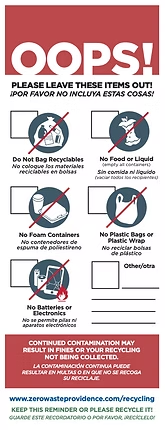
ZWP has implemented various procedures for reinforcing behavior change, and they’re constantly adapting based on trends they’re seeing in the City’s recycling bins. Their first step when identifying a contaminated load is to place an “Oops” tag on the bin, indicating to the resident that there was something in the recycling cart that was not recyclable.
You may also see bins marked with a yellow tag. This signifies to the WM driver that the load is contaminated and should not be brought to the MRF. It also encourages the resident to call 311 and learn why their recycling was not collected. On routes where most residents are following recycling guidelines, this is a helpful tool to ensure that contaminated recycling on that route is omitted from pickup, and increases the likelihood of a load being accepted at the MRF. The loads that are omitted are picked up the next day.
All of this information is logged in the app Ecanvasser, which allows ZWP to aggregate data and see the progress of their efforts. Aggregate data is shared with the City of Providence, which then may decide to send inspectors to certain routes and issue citations for consistent contaminated recycling.

Shawn Sellick, a long-term member and current Interim Executive Director of ZWP, has helped ensure the successful launch and sustainable trajectory of the recycling project. He says he’s “cautiously optimistic” about this initiative and its potential to spark behavior change in Providence. Since the Street Team began its work in October 2025, they’ve been able to successfully route four WM trucks to the MRF (in addition to trucks from the East Side routes). That’s four trucks that in the past, would have gone directly to the landfill. ZWP will continue its street canvassing through the end of 2026.
New Carts and Citywide Education
In addition to the grassroots education campaign led by ZWP, the City is taking additional steps to ensure that residents have the proper infrastructure to successfully recycle their waste. Beginning in March, the City will spend about $7.4 million to distribute new trash and recycling carts to 62,500 households. The City explains this investment on its website, citing the breakdown of old carts, confusion about which carts are for trash and recycling, and contaminated recycling fines as the motivations for the distribution of new carts. The City also plans to launch a comprehensive education campaign to educate residents about proper disposal and to reinforce ZWP’s work around the City.
The City says that new, bigger recycling and trash carts in standardized colors could help fix Providence’s recycling rates:
The new carts will all be 95 gallons – the larger variety. By providing larger carts, we hope to reduce incidents where overflow trash is placed in recycling carts. To limit confusion, cart colors will be standardized. New trash carts will be gray with black lids and the recycling carts will be all blue. Each cart will include a permanent label to help residents determine how to dispose of various items. Combined with heightened education and enforcement efforts we aim to reduce contamination rates and avoid unnecessary landfill fees.
New trash and recycling bins should be delivered by June 2026, with old carts removed on residents’ normal trash day. You can find the cart delivery schedule here.
What the City’s Recycling Numbers Don’t Show
It’s important to remember that recycling rates published by Rhode Island Resource Recovery reflect municipal trash and recycling only and do not take into account commercial recycling, government agencies, or multi-unit dwellings. Commercial businesses in Providence that employ more than 50 employees, residential dwellings with more than six units, and government agencies that produce waste are all subject to unique standards set forth by the Rhode Island Department of Environmental Management (DEM).
The current requirements for commercial waste are outlined in 250-RICR-140-20-1. The law indicates that multi-unit dwellings, commercial and government entities must submit a source reduction of solid waste and recycling plan, consistent with DEM requirements. This plan must include a waste audit, a description of the process by which recyclable materials are to be segregated and a plan for the reduction of solid waste and recyclables generated.
Despite the additional requirement to submit a report by March 1 of each year outlining recycling activity in the previous calendar year, the DEM could not share details on the number of entities that adhere to these requirements and could not reveal any data related to commercial recycling rates in the State of Rhode Island. And, the DEM is not actively issuing fines for commercial recycling violations, pending upcoming updates to the Solid Waste Management Plan.
According to Evan LaCross, Programming Services Officer of Public Affairs at the DEM, this new plan “will modernize the commercial recycling program by prioritizing communication, education, outreach, and technical assistance to more effectively collaborate with regulated entities to maximize recycling and minimize violations.”
Rhode Island Resource Recovery also does not track data related to recycling rates by commercial entities, but did reveal that of all materials processed by the MRF in 2025, about 94% of it was municipal and 6% was commercial. Commercial recycling in Rhode Island is not required to go to the MRF and may be processed at other facilities.
So, while the low recycling rates in the City of Providence are clear and easy to track year over year, they do not reveal the full picture of the City’s success in recycling across the board as government and commercial entities and many housing units are omitted from these numbers.
Improve Recycling Practices at Home
As a Providence resident, it’s important to know what can and cannot go in your recycling bins. Helpful guides provided by Rhode Island Resouce Recovery and the City of Providence will allow all of us to contribute to improving the City’s recycling record. RIRRC will publish the 2025 metrics for municipal recycling on April 1, which will reveal whether the increased focus on recycling in Providence has moved the needle.
Emily Smith has been a volunteer writer for the Providence Eye since 2023. She works in the field of social impact and lives in East Providence.


Want to comment? Click!