



On a warm Sunday in May, after a long and cold winter, several dozen people opted to be indoors at the Providence Art Club (PAC). They came to participate in the lecture series called Sunday Salon. This time, it featured a discussion with two members of the Club, David Franklin and Tsugumi Maki.
Franklin, a scientist and avid art collector, has been working to expand the Art Club’s Patron membership. Maki has served as director of the Rhode Island School of Design’s Museum for nearly two years, and their conversation focused on the evolving roles of these institutions and ways to increase their outreach.
Located only a few blocks from one another, both institutions were founded nearly a century and a half ago. The charter for RISD and its museum was signed in 1877, and by 1878 it had started teaching in a rented room on Westminster Street. Three years later, the Art Club rented the School’s space for its first exhibition. Were it not for dissenting votes from PAC’s original executive committee, the two entities would have become one. But they went their separate ways, each enriching the cultural life of Rhode Island and beyond over the following fifteen decades.
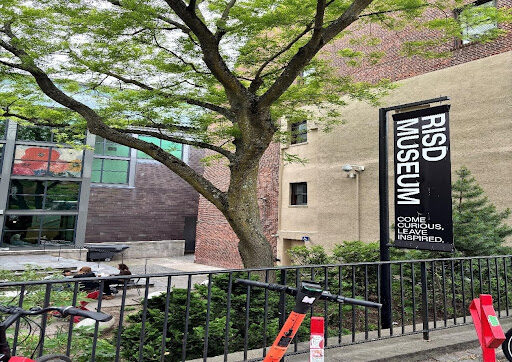
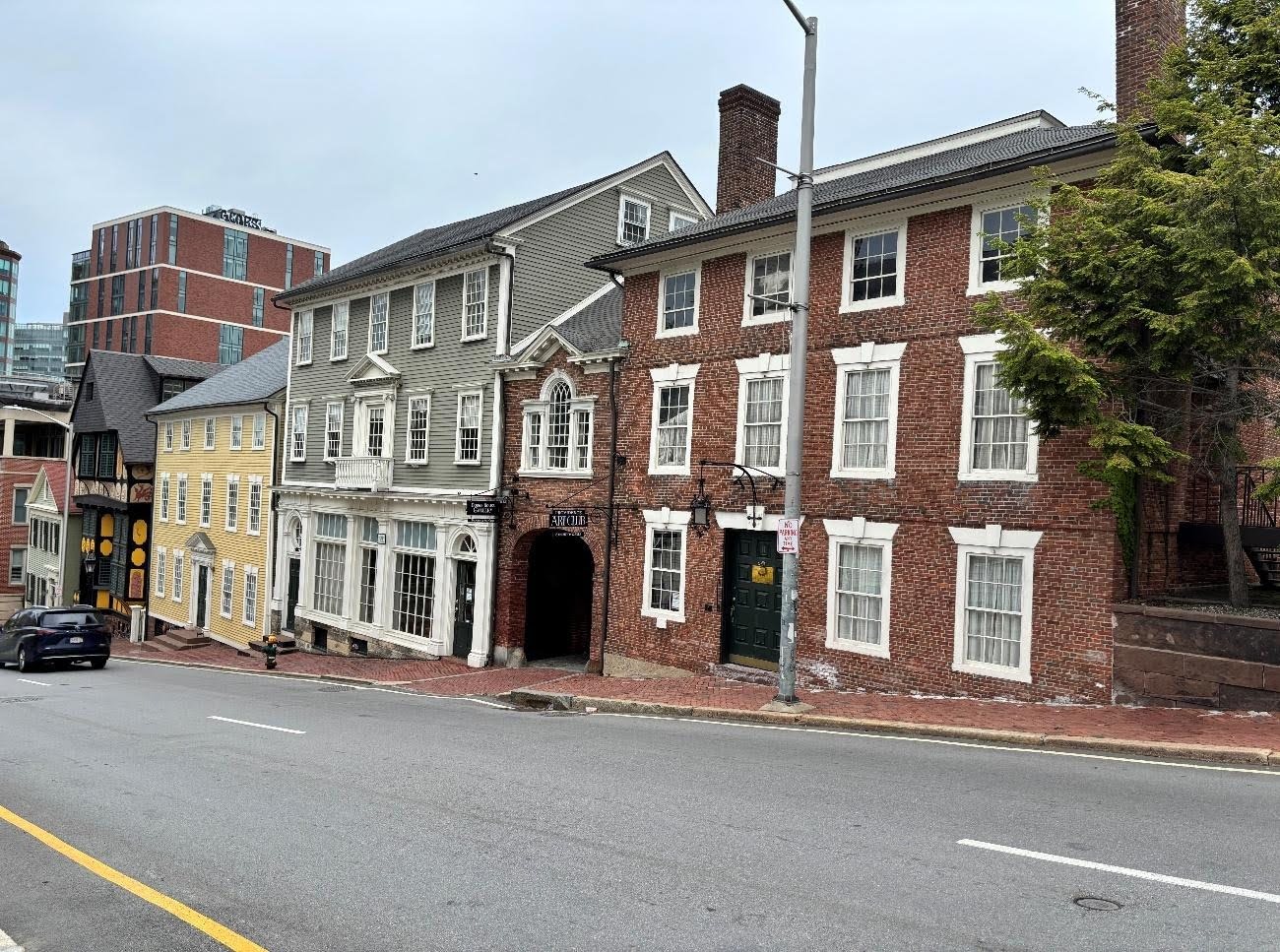
Times change, and so must museums. Maki pointed out that the primary mission of museums once was “to bring the world to you.” They created items such as plaster casts of sculptures and architectural elements to teach about the classical world. But now, with ample opportunities for many to physically travel, or to embark on armchair journeys via the Internet, the museum must adopt a different mission. In a time of sharp political divide and digital isolations, museums can provide a sense of community and public space rooted in the here and now.
Maki assumed her role as the Museum’s director in October 2023. Her prior career included positions at the San Francisco Museum of Modern Art, the Institute of Contemporary Art in Boston, the Davis Museum at Wellesley College, and Boston’s Museum of Fine Arts. Her past experience covers nearly every expertise needed to guide a museum: exhibition and collection management, museum infrastructure and expansion, gallery planning, staff development and operations. Upon her arrival, RISD President Crystal Williams lauded Maki for the way she “…brings an artist’s eye to her work and a deep appreciation for makers that will be an added benefit to the RISD Museum.” For the first six months here, she focused on the Museum’s policies. Since then, in tandem with RISD, she and her colleagues have been working on its Strategic Plan for 2025-2030. The planning process has involved 40 interviews with individuals both inside and outside the Museum, more than 20 workshops to obtain feedback, eight focus groups, and more than 840 survey responses.
One goal she stressed was to create a more inclusive environment so that all visitors could feel comfortable in the Museum. Her aim is to create more art lovers and museum visitors and to expand the public’s curiosity about art.
Franklin spoke movingly about this issue from his own family’s standpoint. He mentioned his two brothers who are both “keen observers of the world.” But unlike him, they did not attend college and somehow feel that “disqualifies them from understanding art.”
Maki noted that they are not the only ones: only 20% of Americans with a high school diploma/GED or less visit museums, according to the American Alliance of Museums. She addressed some of the challenges inherent in changing this attitude. Curators, she said, are basically trained as scholars. They learn how to conduct research, how to write, and how to find meaning in art. “But translating that to the public requires a different sort of skill set,” she said.
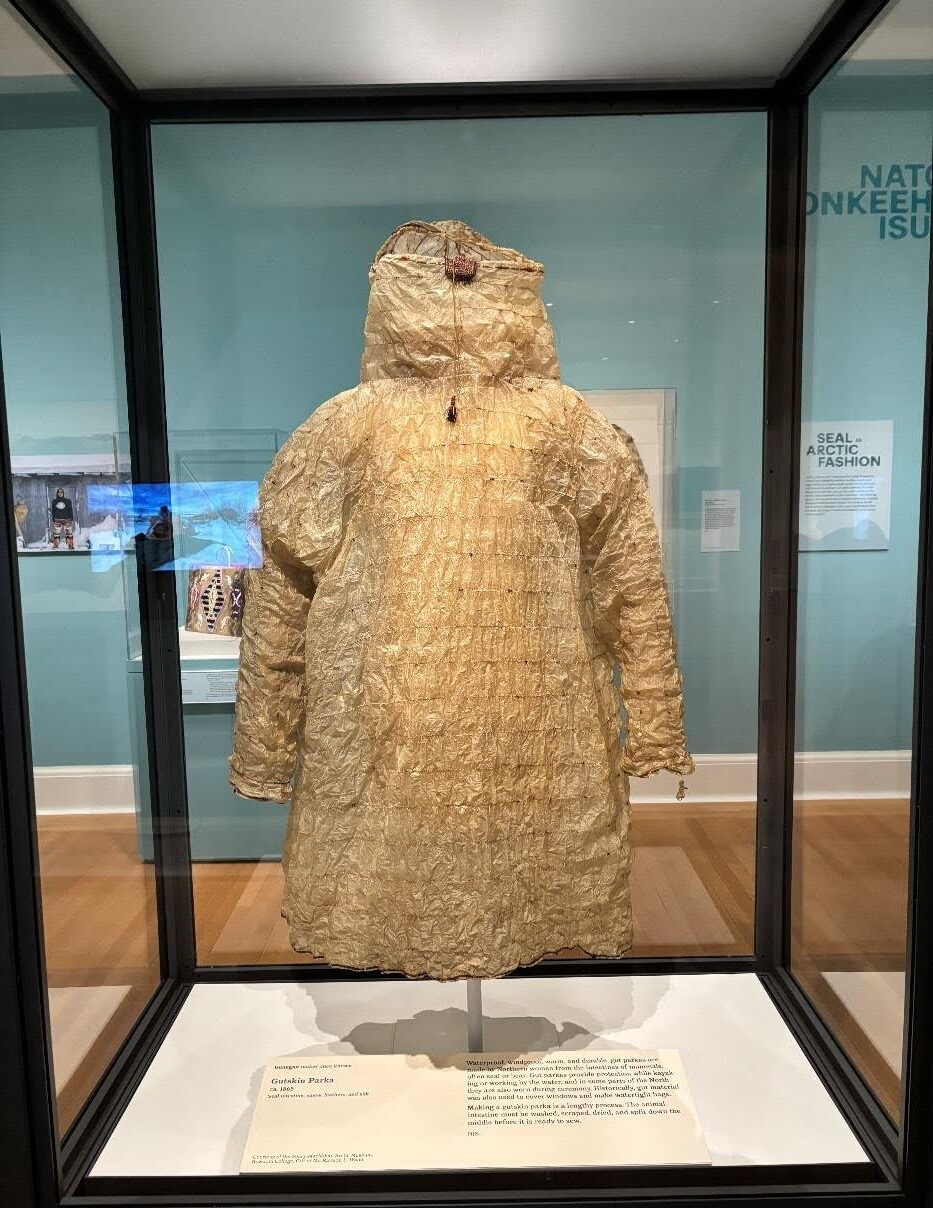
Also important is promoting an exhibition program that is comprehensive of different cultures and creative lenses.. In recent years, the Museum has shown Dine (Navajo) textiles, Japanese and Chinese art, contemporary fashion, French wallpaper design, Queer and feminist art, and Philippine textiles, among others. One of the current exhibitions features Alaska Native and Canadian Inuit artists honoring the seal. It’s a celebration of the ingenuity of these artists as they show their respect to the animal most important to their survival. One extraordinary example is a coat that once kept an individual warm and dry, made in 1865 from the intestines of a mammal. Now, 161 years later, it is here in Providence in very good condition. Could your North Face parka possibly survive so long?
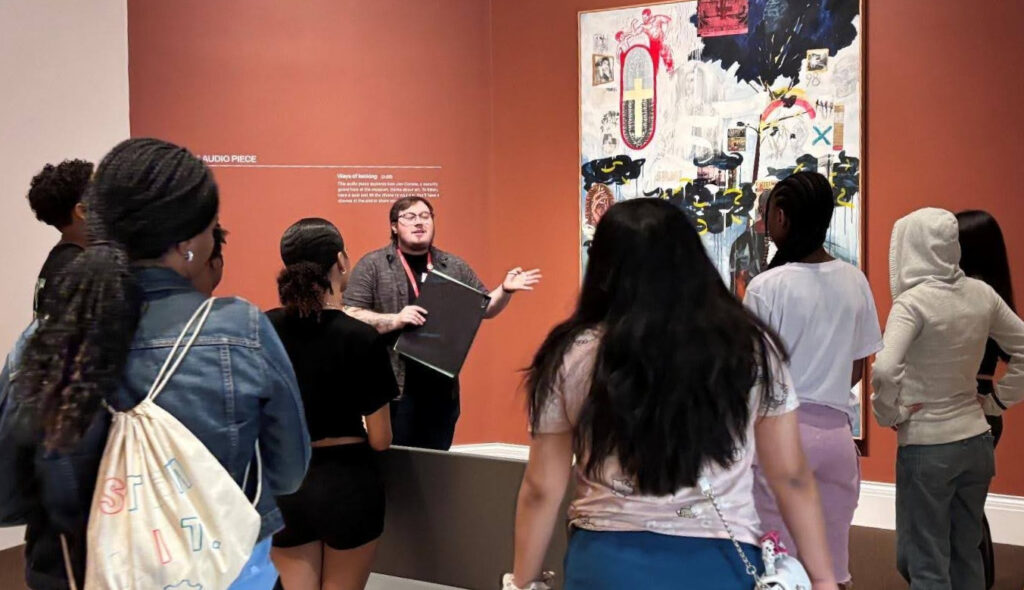
A lack of funding for the arts in schools has also taken a toll on museum attendance. Maki mentioned that in her schooldays, art was taught once or twice a week. Now, limited funding for public education has eliminated many of these programs. The Museum has a fund to bring schoolchildren from the city’s public schools, and they showed up in abundance on May 20, when I happened to be at the Museum. Every gallery I entered seemed to be filled with teenagers engaged in lively discussions with a Museum guide.
In addition to encouraging young visitors, since 2015 the Museum has offered a free membership to Rhode Island artists, designers and makers of all kinds for one year. It is its way of remaining “deeply engaged with its creative community.” It also offers a free membership to recent RISD alumni. Children and youth 18 and under also have free admission. Admission is free on Sundays and Thursday evenings, 5 to 8pm.
Feedback from the public has shown that people don’t want to visit a museum alone. They appreciate the opportunity to discuss what they see with others. To further visitors’ appreciation of its collections, the RISD Museum has devoted several galleries to countering what Maki has termed “the intimidation factor.” This new program, entitled Ways of Looking, provides prompts that don’t relate to any specific object but will make one look at any object in a new light. One exercise invites the viewer to look at a work for five minutes and then turn around and draw it. Another encourages the visitor to consider the origins of the artwork and to ask questions: Why did the artist make it? Why is it here in the Museum?
Franklin and Maki also spoke about another goal in the Museum’s Strategic Plan, namely to “promote collaboration, both within RISD and with external partners highlighting interdisciplinary work and community building.” The Art Club and the Museum are natural partners. While this issue is still in the formative stage, Tsugumi spoke of one possible project – a program to teach artists and the public how to take care of art. The artist needs to learn how to crate a work, how to ship it, how to conserve it. Tsugumi asked the audience “Do you know how to preserve your grandmother’s photo album?” This question provoked considerable anxiety in this writer, and I am sure I was not alone. The professional team at the Museum knows the answers and soon might be available to dispense their expertise.
Celebrations will be in order next year, when RISD and its Museum mark their 150th anniversary. Festivities will follow for the Providence Art Club three years later.
Although it is a private club, the public is always welcome at the Providence Art Club’s three galleries. Each year since 2019, the Dodge House Gallery has been named the Best Gallery in Providence in the Best of Rhode Island Awards. The Providence Journal has also recognized it as one of the leading three galleries in Rhode Island. Of particular note is PAC’s National Open Juried Exhibition. Artists from throughout the U.S. have submitted their works for consideration by this year’s juror, Leah Triplett, who serves as Curator of Contemporary Art at the Pennsylvania Academy of Fine Arts. Those works chosen will be on display at the Dodge Gallery from June 21 – July 18, with fourteen award prizes totaling $6,000.
Lynn Holstein enjoys looking at, reading about, writing about and collecting art. Her book ARTISANS OF ISRAEL: TRANSCENDING TRADITION focuses on the creative talents of all of Israel’s sectors and explores the question of whether their work has developed a national visual identity. She is a member of the RISD Museum of Art and recently joined the Providence Art Club as a Patron member.


Want to comment? Click!