


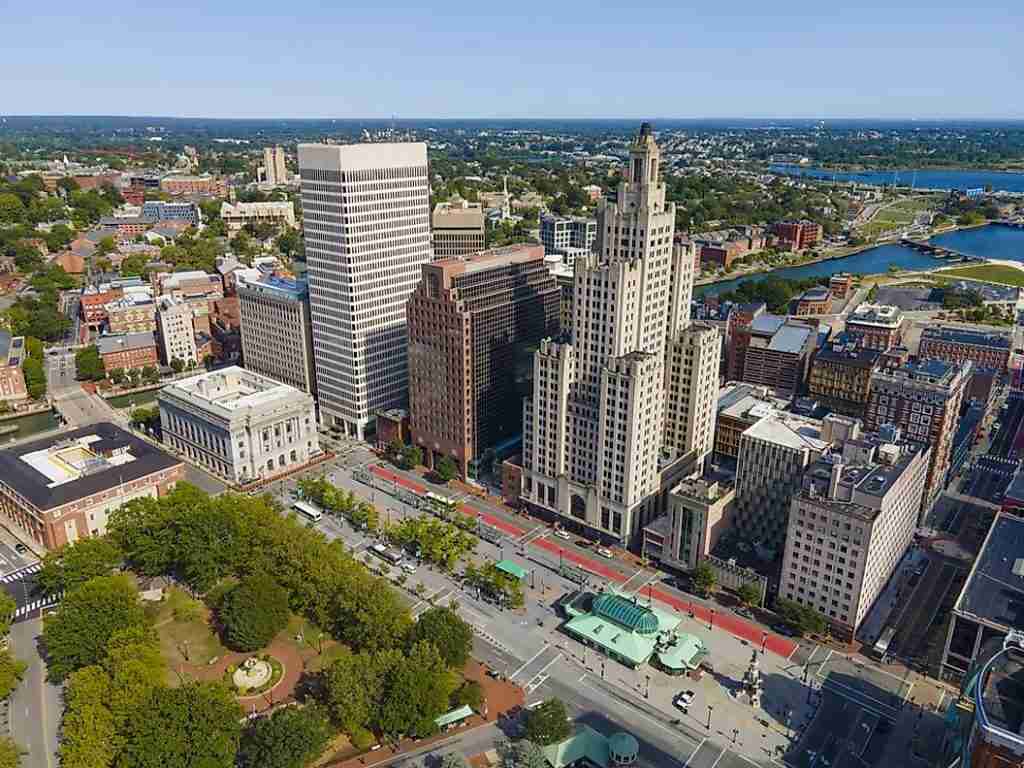
On May 30 and June 3, Providence Preservation Society (PPS) hosted community conversations about the city’s emerging Comprehensive Plan in the nonprofit’s second-floor meeting space on College Hill. In all, about 75 people turned up to hear short reflections on the Plan offered by advocates like Liza Burkin, Julian Drix, Monica Huertas, Dawyne Keys, Kari Lang, Shey Rí Acu Rivera Ríos and Clark Schoettle, among others, and to offer up their own thoughts about the process so far and what they were hearing from friends and neighbors. Both evenings were lively – when the AC broke on June 3 and the indoor temp hit 87, people stayed on, wiping their brows and drinking cool soda water, to participate. New England!
To back up for a minute – for those who have not been following this process closely (if you have, skip to paragraph 5) – Providence is required to publish a Comprehensive Plan to guide zoning, planning and growth every ten years. A new Comp Plan is being written now for adoption this year. This is a year-long process that is led by the staff of the Department of Planning and Development and it involves substantially revising the prior plan (which was drafted under former Mayor Angel Taveras), organizing community meetings to gather feedback, presenting iterations of the Plan at the City Plan Commission’s (CPC) meetings for discussion, and making revisions based on these discussions and community input. Right now, we are in the final stage of this process: nine draft chapters have been written by Planning Department staff and have been presented to the CPC with opportunities for public comment and feedback at five meetings between February and May, and the Planning Staff is in the process of writing a final draft Plan. A hearing on this final draft will be held on Tuesday, June 18 at 4:45pm at the regular monthly CPC meeting, and it is likely that the CPC will vote that day to approve it and send it on to the City Council for consideration and a subsequent vote.
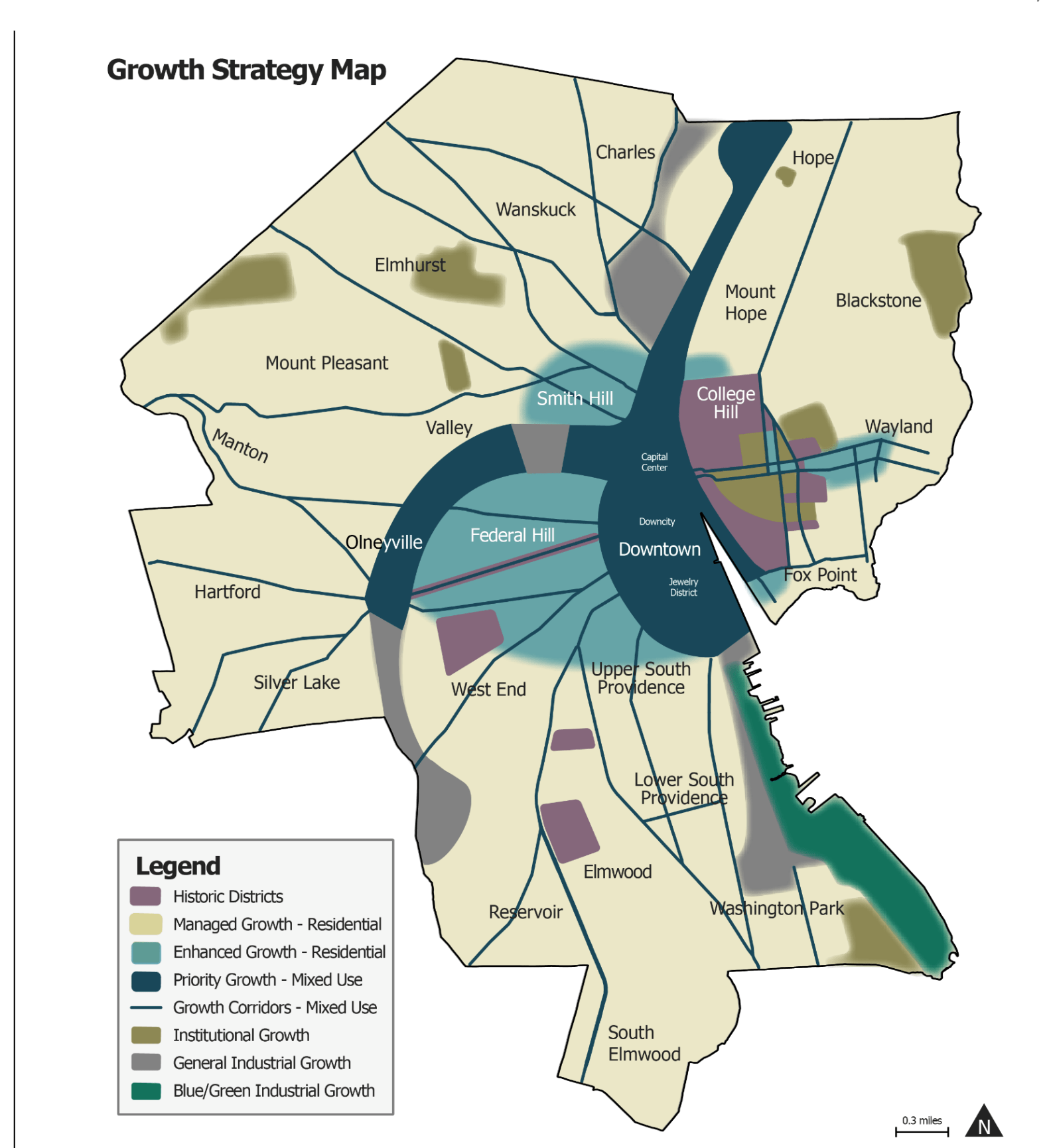
Here is why the Comp Plan matters: although the language may seem vague, specific passages and phrases will be used to substantiate zoning and policy decisions that will directly shape the city for the next ten years. This is the case for the language in the eight thematic chapters – Sustainability, Resilience and the Environment; The Built Environment; Economic Development; Housing; Mobility; Arts and Cultural Resources; People and Public Spaces; and Community Services and Facilities – as well as the last and most important chapter, Land Use. The Land Use chapter categorizes “growth” zones in the City, from the areas where growth will be most restricted (“historic districts”) to the areas will it be most strongly encouraged (“enhanced growth” and “priority growth”). If you live or work in Providence and are wondering what the future holds for your neighborhood, you should take a look at the Plan’s Growth Strategy Map.
To the Comp Plan newbies out there: if you want to get a sense of how different advocacy organizations are responding to the Plan, you can read the Providence Streets Coalition’s comments, which are focused on the Mobility chapter here; the City of Providence Sustainability Commissions comments here; and PPS’s comments relating to preservation, adaptive reuse and urban design in the Built Environment and Land Use chapters here. Many of the City’s neighborhood associations are or will be sharing comments with the Planning Department – reach out to your local neighborhood association to find out if yours has offered feedback or has plans to.
If you are still with me or you skipped down from paragraph two, you may be wondering at this point what was shared in the two community conversations about the Plan at PPS a few weeks ago. A lot. Here are some of the highlights:
- The Plan is too long. Rather than committing to a clear set of priorities, strategies and tactics, the Plan includes so many objectives across all nine chapters that it becomes impossible to achieve. The length also means that an enormous range of regulatory changes or new projects can be justified in the future as there is just so much language to draw upon. One participant said that if there is a single change that would make the Plan better from the point of view of accountability, it would be to shorten it drastically to about one tenth its current length (it is currently close to 90 pages, or about 140 pages including appendices).
- The language in the Plan is often vague or “soft,” which allows the Planning Department to signal support for various measures without committing to them. Almost every speaker made this point in their presentations across the two evenings, highlighting weak words like “encourage” “promote,” and “consider,” as opposed to stronger action-oriented words that could be used instead like “require,” “incentivize,” or “prohibit.” Advocacy organizations shared that in their comments to the Planning Department, many chose to submit redlined copies of the Plan’s chapters with these kinds of words deleted in favor of words that represent a stronger commitment to certain goals or strategies.
- “The Plan has no teeth.” This was a common refrain across both evenings as speakers pointed to specific passages in the Plan where an action or policy is called out but no specific way to execute it or enforce it is mentioned. Participants said that they would want to see language that explains how certain policies are to be “explored” or “considered,” such as a commitment to constitute a committee to study and report on them, or to develop a set of written recommendations.
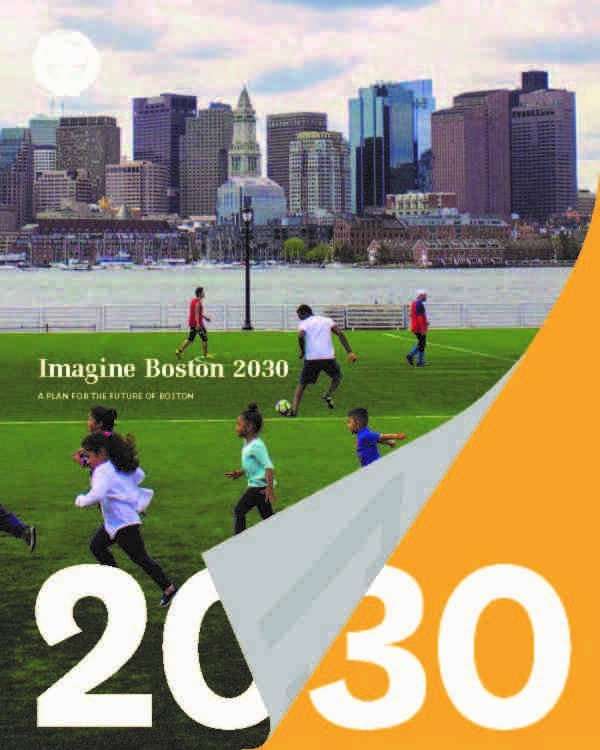
- Despite what was shared about its length, a few critical things are missing from the Plan. The most important word that is nearly absent is the word “equity,” which many people felt should be the guiding vision word of the Plan, but appears infrequently (a word search of the most recent draft of the entire 140-page Plan indicates that it appears only eight times: three mentions of the word occur in the Arts and Culture chapter, two can be found in the People and Public Spaces chapter, and one mention each occur in the Sustainability and Mobility chapters, while “equitable” appeared an additional nine times). By contrast, Boston’s plan, adopted in 2017, mentions the word “equity” 42 times and the word “equitable” 21 times and headlines its plan as a vision for a more equitable city. Some participants noted that when a plan like this one does not use equity as its north star, the default position of the systems we have is that benefits most often accrue to those who have more resources than others.
- On a related note, people commented on what they felt to be the technocratic vibes of the Plan, its lack of “humanity,” as one person put it, and the feeling that this is a plan for a peopleless city. “Residents” are not often segmented here into children, families, the elderly, or any of the other myriad social groups that have specific ways of interacting with place. This was felt to be the case in all of the chapters except one: Arts and Cultural Resources, which paints a picture of this part of the City’s population that is dynamic, lively and embodied. As one person put it at the end of the conversation on June 3, “The Plan should address the humanity of Providence.”
- The Plan doesn’t do enough to intervene into existing spatial disparities, but continues to “burden the same neighborhoods” as in the past, as one speaker said, particularly when it comes to continuing to encourage industrial growth along the Providence waterfront and into the neighborhoods that about it.
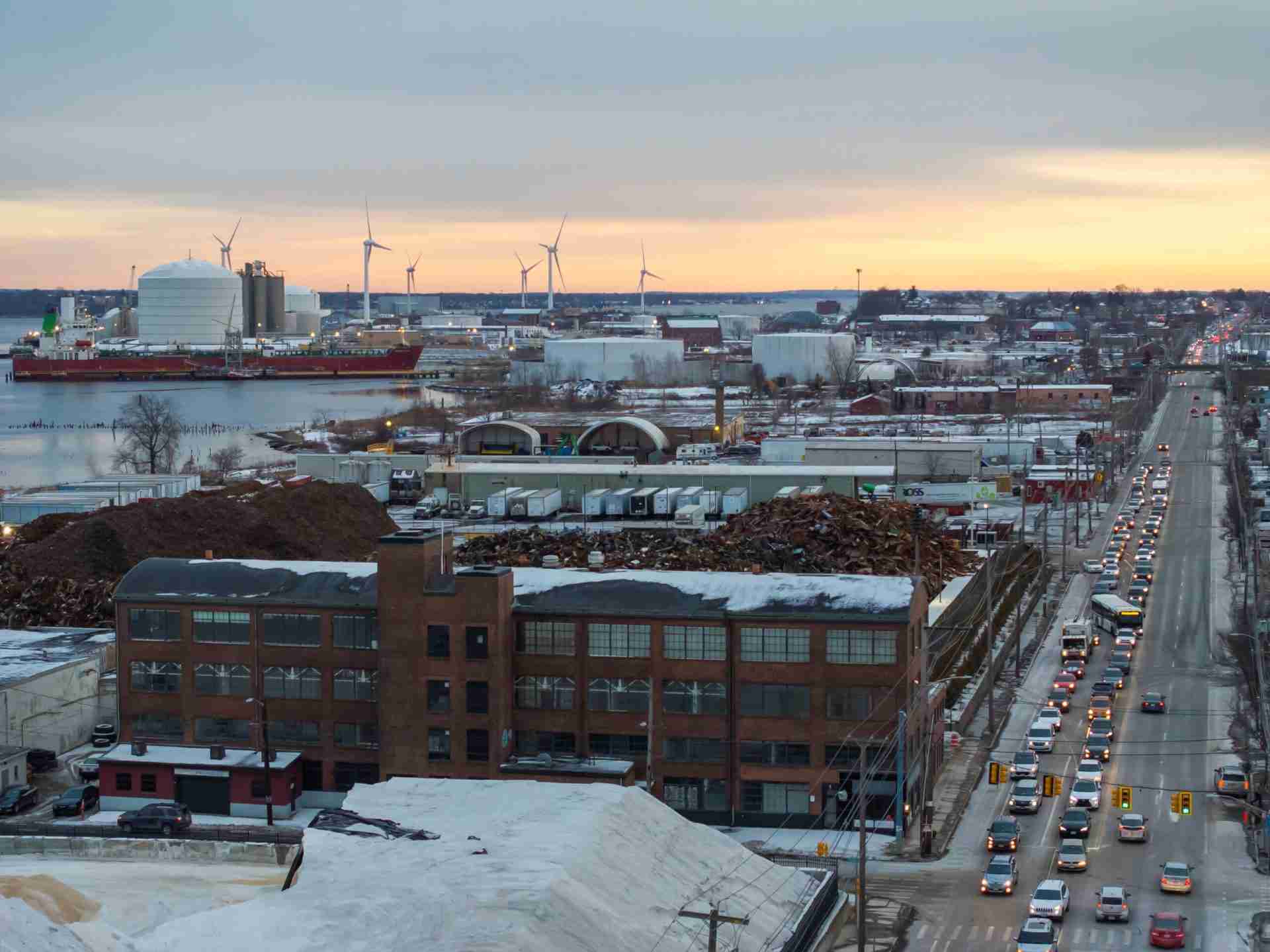
A participant added that the growth strategies seem to be driven more by historical precedent than by current data, and argued that more visionary and ethical interventions are needed as we move into the next decade or the Plan could continue to magnify existing disparities. One other added that she has heard that the City has a goal of returning Providence to a population of 250,000, and if this is the case, it would be helpful to see a plan (even if it’s not “the Plan”) that gets us there so that decisions are made more strategically: “Can we plan towards a number?” she asked.
In addition to these main points, so many other thoughts were shared. One person suggested that the Plan should be very clear about which objectives can be accomplished by the City, and which objectives require state support. Another recommended that the Plan should do more to limit demolition as the upzoning that is being proposed (increasing allowable densities in every zone) could lead to a demolition spree and massive displacement in those neighborhoods that are not in local historic districts (about 90%) as single-family houses and duplexes might be replaced by more profitable multi-family dwellings. Another wondered whether the Planning Department will be able to manage “what they’re about to unleash,” and will have adequate staff and capacity to conduct a design review process without something that PPS is recommending – a newly constituted design review committee. And many shared that the Plan felt less like it was geared to improving life for current residents than to attracting new ones – specifically, “higher asset folks who might be wooed into relocating to Providence.”
The issues covered in the Comprehensive Plan are by nature some of the most difficult ones that a city or community faces, and they almost always involve balancing competing interests. As the convener of these conversations, I was happy to see people who disagreed share opposing points of view in respectful and generative ways – in one case, two such attendees found each other at the end of one evening and sat deep in productive conversation for twenty minutes as the event wrapped up.
What’s next? If the CPC votes to approve the Plan on June 18, it moves to the City Council where it will be considered this summer. City Councilors may have community meetings about the Plan in their wards and may hold one or more hearings to gather input from advocates and experts in the fields that are touched by the Plan. Many advocates at the Comp Plan conversation series shared that they did not think the Plan would get a vote in the City Council until as late as September or even October and that the City Council might ask for substantial changes. The window for change is still open, as one advocate put it, and in fact may even widen considerably after June 18, as City Council members take up the Plan. If there are issues that you care about that will be impacted by the Plan and you have suggestions that you think would strengthen it, June and July would be the time to connect with your City Councilperson.
Marisa Angell Brown is the Executive Director of Providence Preservation Society. She has a PhD in architectural history from Yale University and has written for the Journal of Architectural Education, Places Journal, Perspecta, Buildings and Landscapes, and the Journal of the Society of Architectural Historians. She can be reached at [email protected].


Want to comment? Click!