




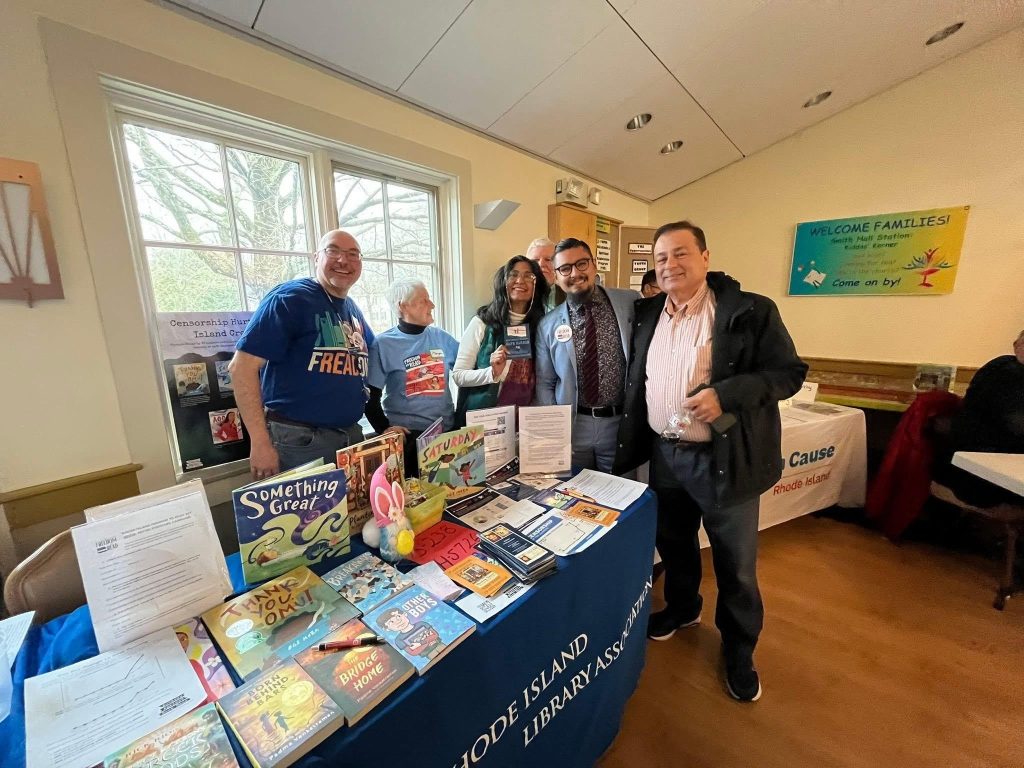
“Our public and school libraries are more than just buildings with books. They’re spaces where kids can grow and learn, students find the resources they need to succeed, and community members of all ages and backgrounds can explore different ideas and perspectives,” said Representative David Morales (Providence, District 7), on Thursday, April 3rd to the House Committee on State Government & Elections.
Representative Morales was opening testimony for House Bill 5726, the Freedom to Read Act. He is the lead sponsor in the House, with Senator Mark McKenney (Warwick, District 30) sponsoring the Senate’s version.The bill is designed to protect school and public libraries, their staff, students, patrons, and creators from censorship and book bans.
A Washington Post analysis studying 1,065 book challenges, filed across 153 school districts in 2020-2021, found that “[n]early half of filings — 43 percent — targeted titles with LGBTQ characters or themes, while 36 percent targeted titles featuring characters of color or dealing with issues of race and racism.”
“Unfortunately,” Representative Morales continued in his testimony, “the freedom to explore different ideas and perspectives is under threat, because in recent years libraries have been facing increasing pressure to censor materials and restrict access to information… Not because they’re inappropriate or obscene, but because some seek to silence certain perspectives.”
Creators Facing Censorship
“This bill…protects a lot of the people who create the items on our shelves: authors and illustrators,” said Aaron Coutu-Jones, Director of the Warwick Public Library and Vice Chair of the Library Board of Rhode Island in his testimony. “Like librarians, they are facing an onslaught of challenges across the country.”
Rhode Island Authors Against Book Bans (AABB-RI) has documented twenty books by Rhode Island-based authors and illustrators that have been targeted for challenges, bans, or soft censorship across the United States since 2020.
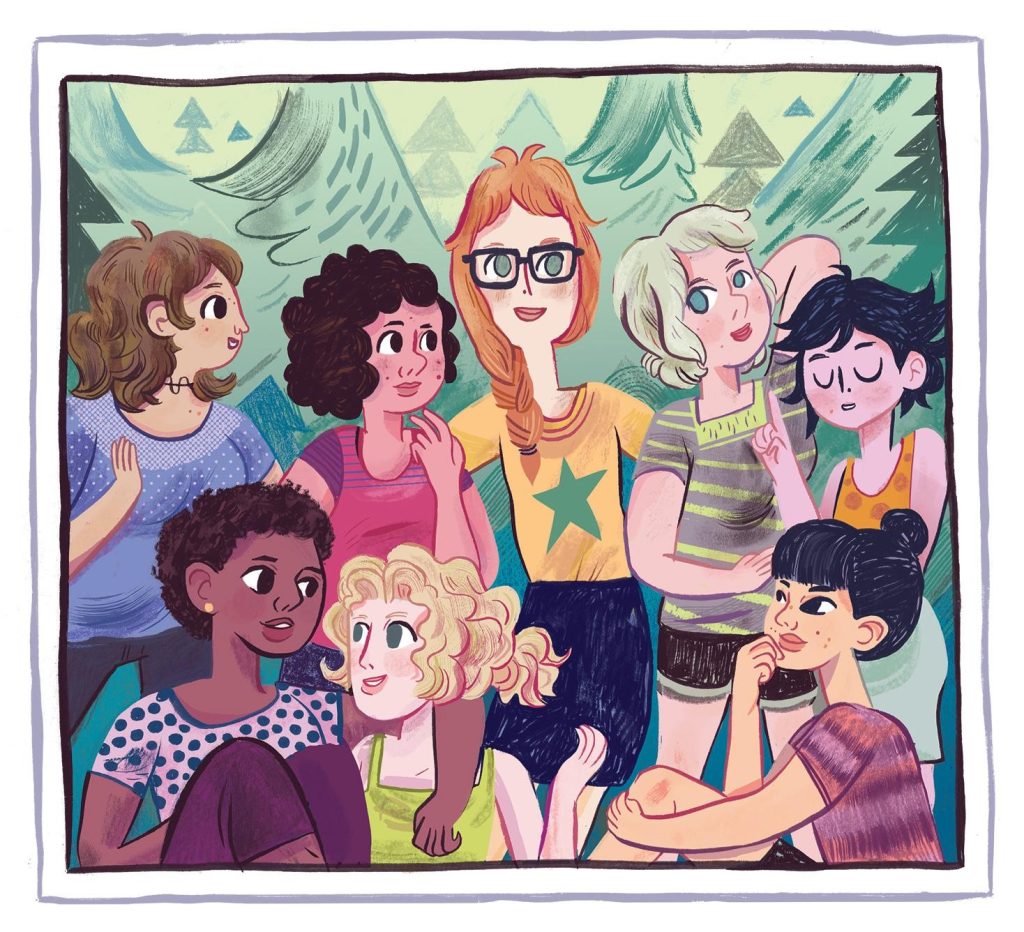
Meg Hunt is a Providence-based illustrator and author who illustrated 2017’s Bunk 9’s Guide to Growing Up, a nonfiction guide to puberty for ages 8 to 12. “The book has been challenged in multiple states–but I only discovered this earlier this year. Often book bans and challenges can fly under the radar–and this pernicious mindset closes off opportunities for readers to learn, question, and develop their own opinions.”
Book censorship has expanded beyond secondary schools and public libraries. In early April, the U.S. Naval Academy in Annapolis, Maryland removed 381 books from its collection in response to President Trump’s executive order regarding materials related to diversity, equity, and inclusion. These books include works by at least five Rhode Island-based authors.
Nicole Gonzalez VanCleve is an Associate Professor in the Department of Sociology at Brown University. Her book, Crook County: Racism and Injustice in America’s Largest Criminal Court, was one of the titles removed from the Naval Academy. “That book was instrumental to [building] awareness around a major national news story: the shooting death of Laquan MacDonald and the abuse of power by police and prosecutors,” she said in a phone interview on May 16th. “…It was very much absorbed in the mainstream. It was read by voters. It was read by activists….This was a book that was used to expose injustice and abuse of power, and now there is this abuse of power banning that very book.”
Locally, AABB-RI has compiled a list of thirty-five books that were censored or challenged in Rhode Island between 2020 and 2024.

A Model for Library Collections
“This legislation assures that our professionally trained librarians have clear, consistent, and fair standards for selecting and maintaining library collections,” said Representative Morales in his House Committee testimony.
The bill requires libraries to set a policy for collections and book challenges, and includes a minimum model policy. Representative Morales continued: “It would prevent and protect libraries from political interference and ensure books are not removed just because someone does not like them. It also creates a transparent, consistent process for people to share their concerns about library materials.”
The model policy also requires any person challenging material in a library to live within that public library’s municipality. In the case of a school library, the person bringing a challenge must teach at the school, be a student at the school, or be a parent or guardian of a student at the school.
In supporting the Freedom to Read Act, AABB-RI and library groups including the Rhode Island Library Association and the Rhode Island Center for the Book are a natural match. “Libraries are essential to book creators!” says Jeanette Bradley, author, illustrator, and AABB-RI co-leader. “Before any of us were authors or illustrators, we were readers who fell in love with books. As creators, libraries are key purchasers and distributors of our books. As an author and illustrator of nonfiction picture books, the school library market is a big part of my audience.”
But authors and librarians aren’t the only ones throwing their weight behind this bill.
Community Support In Providence and Beyond
The Freedom to Read Coalition is a broad coalition that includes the Rhode Island ACLU, Alliance of RI Southeast Asians (ARISE), Pride in Aging, Jewish Alliance of Greater Rhode Island, Rhode Island Council of Churches, and Rhode Island Atheists.
While it may seem surprising, the breadth of the Freedom to Read Coalition reflects national sentiment. According to an American Library Association (ALA) survey, in the United States, 71% of voters polled oppose book bans in public libraries. The position holds regardless of party: 75% of Democrats and 70% of Republicans oppose book bans. 67% of respondents oppose book bans in school libraries.
The same position was reflected by Rhode Islanders during the House testimony in April. Of the 26 in-person testimonials and the 372 testimonials submitted online to the House Committee on State Government & Elections, every single one was in support of the Freedom to Read Act.
AABB-RI co-leader and author Padma Venkatraman has found that same support during local events. “I recently had the honor and pleasure to be invited by FirstWorks to do a PechaKucha event in Providence.” PechaKucha is a storytelling format where the presenter shows 20 slides, each for only twenty seconds.
“What stood out to me about that experience was the amazing level of support the audience provided. It was inspiring and wonderful to see that so many of our fellow-citizens in RI are strongly in favor of protecting free speech, including readers’ and writers’ freedoms.”
Attempts to censor books have increased dramatically, from 246 attempts in 2019 to 821 attempts in 2024, according to Censorship By the Numbers by the ALA. However, the ALA also reports that most of these challenges do not come from library patrons, or even individual parents: “Pressure groups and government entities that include elected officials, board members, and administrators initiated 72% of demands to censor books in school and public libraries.”
When analyzing 1,065 book challenges made in 2020-2021, the Washington Post found that over half of these ban attempts were made by just 11 people.
With no testimonials against the bill in person or submitted online to the House committee, resistance to the bill seems to be thin on the ground.
Regarding S0238, the Senate version of the Freedom to Read Act, Senate Minority Leader Jessica de la Cruz (North Smithfield, Burrillville, Glocester, District 23) said ““Republicans are all for freedom to read any book you want, but I would say that when it comes to school-aged children, there needs to be some oversight.”
The Freedom to Read Act outlines collections policies for both public libraries and school libraries. “[T]he Rhode Island Department of Education would be directed to collaborate with the Chief of Library Services on a model policy on the curation and selection of library materials within school libraries,” said Representative Morales during his testimony.
S0238 passed the Rhode Island State Senate on May 13th.
What Comes Next
With broad support from Rhode Island voters and representatives, the next challenge for the Freedom to Read Coalition is bringing House Bill 5726 to the floor for a vote.
Lewis Seifert is a Professor of French and Francophone Studies and Director of Graduate Studies at Brown University. His book, Fairytales, sexuality, and gender in France, 1690-1715: nostalgic utopias, was removed from the Naval Academy Library in April.
“The Freedom to Read Act is vitally important for all Rhode Islanders, but it can only be the beginning,” he said. “Our basic freedoms of expression are under threat across the country and at the federal level as well. Building on the momentum of the Freedom to Read Act here in RI, we will need to work with partners in other states to create alliances so as to resist the broader threat to our freedoms.”
AABB-RI will be tabling at the North Kingstown Pride Parade on June 1, 2-4pm in Wickford, and at Teach Truth June 7, 2-4pm at Knight Memorial Library. Padma Venkatraman will be presenting a talk about censorship at Rochambeau Library on Monday 2nd June at 7:00 p.m.
Eloise Narrigan is an illustrator, member of Rhode Island Authors Against Book Bans, and the Olneyville Friends of the Library representative on the Community Libraries of Providence Board. She lives in Providence with her husband and half a dozen hearty houseplants.


Want to comment? Click!