





Dr. Molly Richard is an academic usually focused on studying homelessness, and she had never watched the Real Housewives franchise. But as an assistant professor at the University of Rhode Island, she tuned in when the reality TV show came to the Ocean State.
“This is the first time I’ve actually watched the show and all of a sudden, it’s just connecting to my research,” said Richard. “When I talk to advocates and policymakers in Rhode Island, [I can] say, ‘Have you heard of doubled-up homelessness? Maybe some of you have heard of it, because it came up as an experience on The Real Housewives [of Rhode Island].”
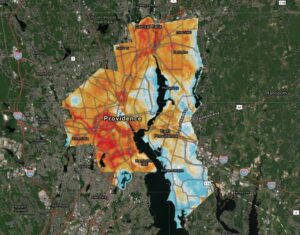
Richard is an expert on “doubled-up homelessness,” a term used when people share housing due to economic hardship or the sudden loss of a home. Richard said the story of Alicia Carmody, a cast member on the Real Housewives of Rhode Island who lost her childhood home suddenly, reflects the experience of up to 10,000 Rhode Islanders. According to new research, approximately 2,832 people in Providence are doubled-up—without permanent housing, but uncounted by traditional homelessness metrics.
Housewives Debate the Definition of “Homeless”
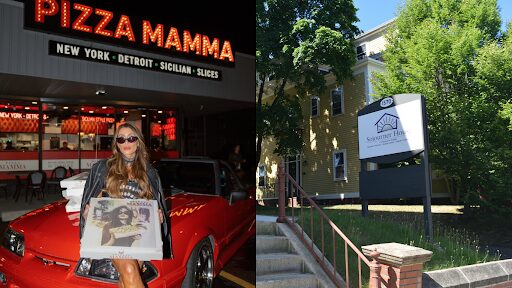
In episode six of the new Bravo show, the wealthy ladies attend a masquerade ball at a Newport Mansion. The housewives “drop their masks” and reveal a secret about themselves. Alicia Carmody, who helps run the Cranston restaurant Pizza Mamma, reveals she was “homeless” as a child after her father sold their home, forcing her to move in with her grandparents. Another castmate Liz McGraw, the “Cannabis Queen,” yells in response “You were never homeless!”
“That’s how she felt, and that was the word that came to her mind to describe her experience,” said Jake Gogats, a union barista with UFCW local 328 at Seven Stars Bakery. Gogats and fellow Providence resident Zack Kligler created the podcast Gays in Your Phone to review Housewives episodes and offer their local perspectives. “And Liz continued to say that she was not homeless, and then it became a sort of fight about how Alicia responded to her.”
The argument between Liz and Alicia is revisited later in the season, with Liz stating “The country thinks of ‘homeless’ in a different way.”
Dr. Richard teaches the different definitions of homelessness on the first day of her classes, because each version can have large impacts on measuring the scale of the crisis and the funding dedicated to it. The U.S. Department of Housing and Urban Development has four categories, with the number of category one, “literally homeless” individuals determined by point-in-time counts of people in shelters and seen living on the streets.
People experiencing “doubled-up homelessness” fall under category two, “Imminent Risk of Homelessness.” If a mother and her children fleeing domestic violence stay with a sister or a friend rather than a shelter, this means they would not qualify for category one programs.
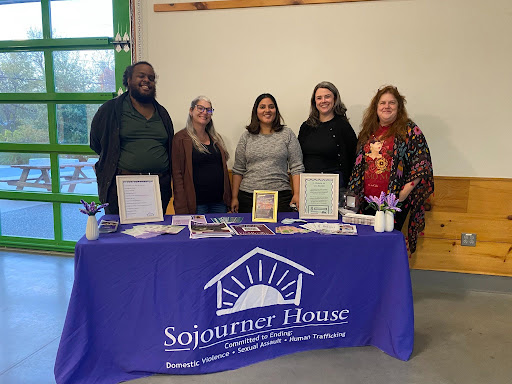
“So it’s like this terrible catch-22, right? Nobody wants children on the street,” said Sojourner House Vice President of Housing and Residential Services Kelly Henry. “And yet, in order to be category one, you have to be in a shelter or ‘literally homeless.’”
Sojourner House runs three shelters and offers transitional housing, rapid rehousing and permanent supportive housing. In 2025, the organization supported more than 5,000 survivors of abuse. In the same year, 32% of their new clients noted on their intake form that they were staying temporarily with a friend or relative because they lacked a permanent residence. More than half of those individuals had children with them.
According to the federal McKinney-Vento Homeless Assistance Act, children sharing other people’s housing or living in motels because of financial hardship or housing loss can qualify for extra resources. At every school district, there is a liaison to connect youth with service providers like Sojourner House.
“A lot of them either have exited from foster care or they’ve been maybe kicked out of their family’s house because they are LGBTQ,” said Henry. “The average kid is facing, like, ‘Which dorm do I want to stay at my college?’ They’re facing, ‘Literally how am I going to feed myself? Where am I going to stay?’”
For the 2024-2025 school year, Rhode Island educators and liaisons identified 1,251 children experiencing “doubled-up homelessness.” Families in this situation can contact state officials to access resources for students experiencing homelessness.
“In Alicia’s case, she’s very clear that it was the result of a crisis,” said Richard. “And so I think if she was in a school system where it was functioning as the law intends, she would have been identified as homeless and offered those resources.”
Over 7% of Providence Residents in Poverty Are Experiencing Doubled-Up Homelessness
“Everyone in Providence knows that housing is a huge issue and is perhaps the number one issue on the ballot for the mayoral election,” said Gogats. “They could have used it as an opportunity to educate the public about this type of homelessness.”
According to the 2026 point-in-time count conducted in January, there were 2,236 people experiencing homelessness in Rhode Island. The method depends on counting shelter beds, which frequently do not meet demand. In addition, the count is held at night and does not count people sleeping in “not-visible” places.
Using responses from the Census Bureau’s American Community Survey, Richard projected that 5,641 individuals are experiencing doubled-up homelessness in the state at any given time over the last five years. In the most recent available data from 2024, the projections jumped to 9,998 individuals.
“If we only have a narrow definition, we’re really seeing the tip of the iceberg, and we might be building systems that intervene too late, rather than those that can prevent unsheltered and sheltered homelessness earlier,” said Richard. “50% of the people who are living unsheltered or in a shelter [said] their last living situation was a doubled up situation.”
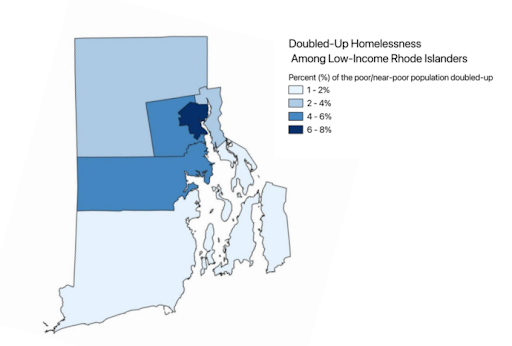
In Providence, 1.6% of residents are doubled-up, about 2,832 individuals. Among people living in poverty, that rate jumps to 7.63%.
“Providence has a higher rate of doubling up, and to me it aligns with what we already know about the cost of housing in the area,” said Richard. “Shelters are not always the most inclusive places for everybody, and language is one aspect of it.”
Henry said Sojourner House often supports families with children who face shelters without capacity or strict rules. From 2024 to 2025, Sojourner House’s hotline calls for victims of domestic violence increased 125%. Only 11% of people looking for shelter were able to get shelter that night. Henry said economic pressures like the increasing rents in Providence may be raising the likelihood of violence.
“We’re looking at rents now for a 2 bedroom [at] 1,800, two grand, and unfortunately, a single parent doesn’t have enough income to support a market rate apartment,” said Henry. “You’re creating a situation, especially for DV survivors, where they either stay with their partner who’s abusive because there’s nowhere for them to go, or a lot of times, they double up.”
Gogats believes the show could have revealed more about the state’s housing crisis, and the struggles of people experiencing doubled-up homelessness.
“They’re often talking about what’s ‘So Rhode Island,’ what’s going on in Rhode Island, and they’re willing to talk about issues like menopause that are connected with their money-making schemes,” said Gogats. In episode 11, McGraw visits the State House to raise awareness about menopause health while promoting gummies designed for menopause symptoms. “But they’re not willing to talk about something as common as homelessness… [which] is quite pervasive and ever present in our state..”
Richards hopes the televised argument will shine a spotlight on those sheltering with friends and family out of sight.
“I think we see that in this show, where our experience is not validated because people have a narrow definition of homelessness, and that same thing could happen in different contexts for families every day,” said Richard. “I’m hopeful that maybe some of that conversation can improve our identification of children and the resources for them.”
Eric Halvarson is a City News Reporter for The Providence Eye.


Want to comment? Click!