



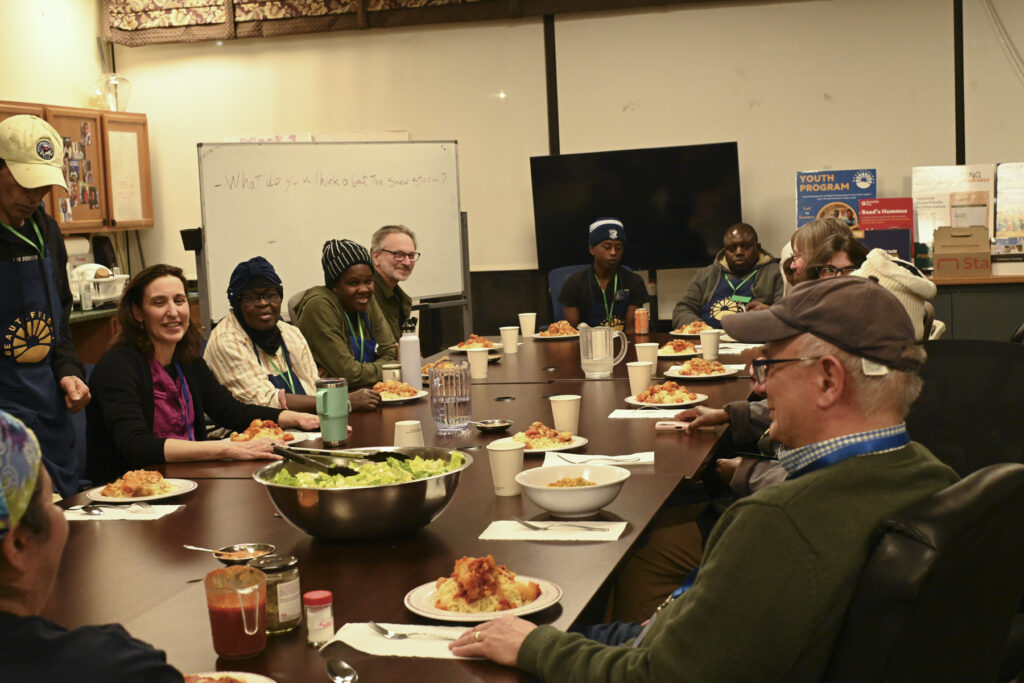
A bowl of pasta moves slowly down the table as someone laughs and another person searches for the right English word.
On Tuesday evenings at Beautiful Day in Providence, the kitchen quiets down, and the long tables begin to fill. Staff, trainees, volunteers, and visitors gather for a communal meal. Plates are passed. Languages mix together in soft conversation.
A few people are still learning English, and in subtle ways, even this dinner becomes part of the learning process. Everyone is encouraged to say hello and share a bit about themselves. It’s not always comfortable—especially for those navigating a new language—but food has a way of bridging the gap between people.
The meal is a simple ritual, but it reflects the heart of Beautiful Day—a Providence-based nonprofit that connects refugees with a supportive community through job training, workplace preparation, and public engagement. Participants are paid for their work and able to learn on-the-job as they find their footing in the American job market.
What might look like a small food business on the surface is actually something much larger: an employment social enterprise, where products are made not simply to generate profit, but to create opportunity.
“We’re really preparing the person,” explains Rebecca Garland, associate director of Beautiful Day. “The products are a means to an end.”
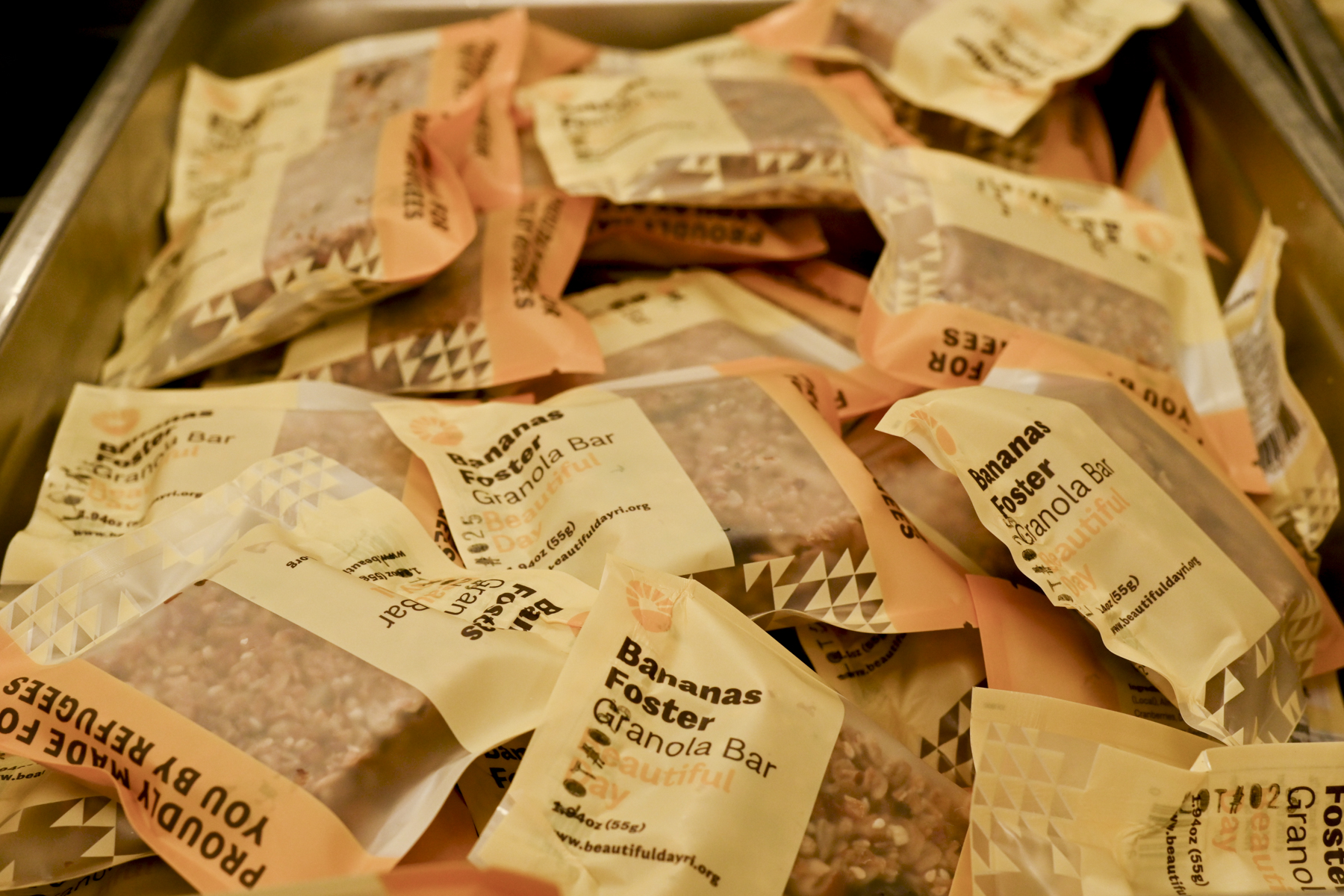
Beautiful Day operates like a small food company. In its kitchen, trainees produce a line of products including granola, hummus, coffee, mixed nuts and seeds, and energy bars as part of adult job readiness training. Afghan women participating in one of the organization’s programs also prepare Afghan lunch boxes, sharing dishes from their culinary traditions. Many of these products can now be found at farmers’ markets and retail locations across Rhode Island.
But the goal isn’t simply to build a food brand. The real focus is preparing refugees—many of whom arrive in the United States after years of displacement—for employment and independence. “People often assume that the product is the end goal,” Garland says. “But it’s really about building skills, confidence, and experience so people can find meaningful work.”
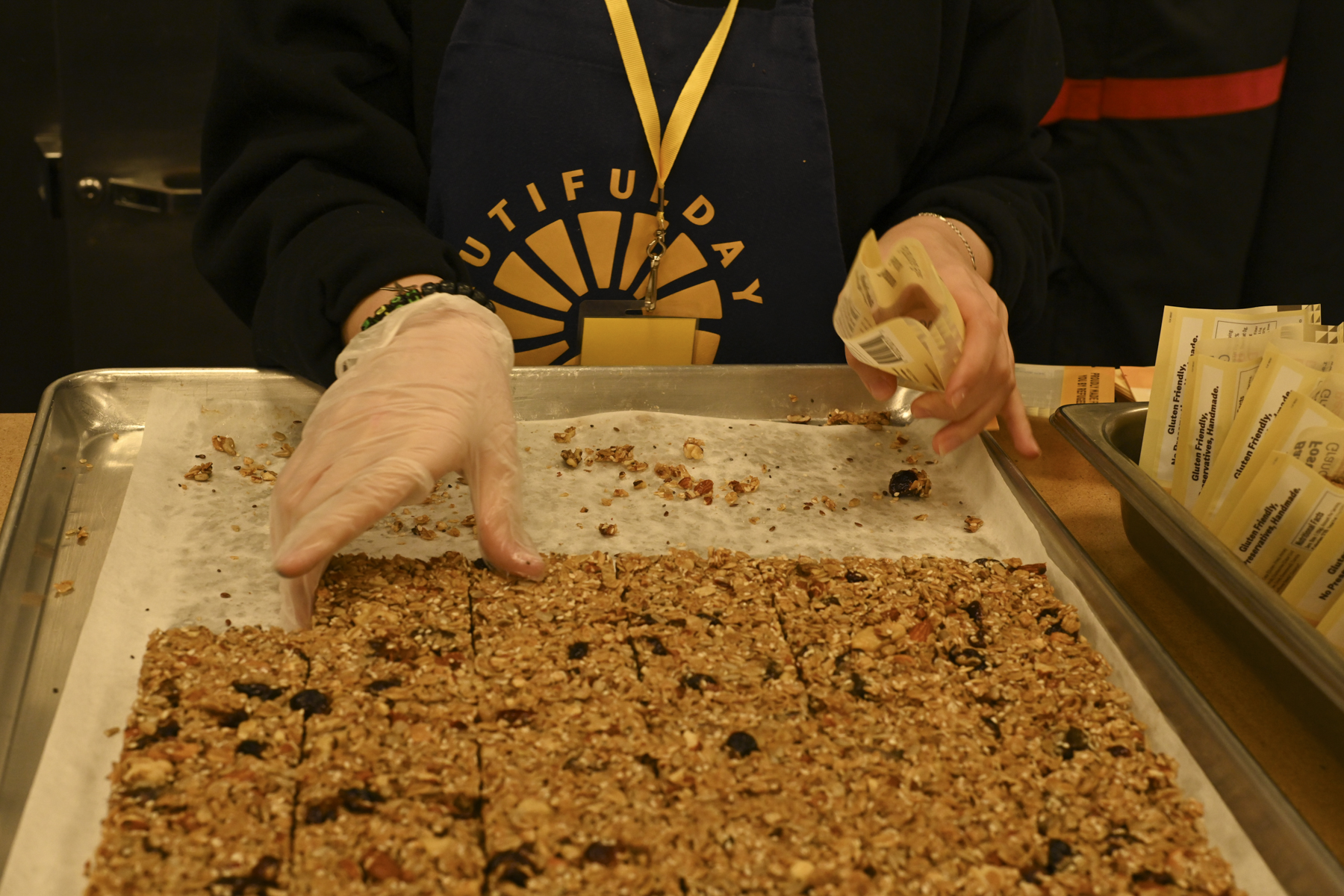
Beautiful Day focuses on practical job readiness, such as learning workplace expectations, understanding paychecks and banking systems, and developing communication skills. These lessons happen not just in the classroom, but through real-world experience. If you want to sell granola at a farmers’ market, you need to talk with customers. If you’re demonstrating a product in a grocery store, you need to engage with the public. Each interaction becomes part of the learning process. And slowly, confidence grows.
Organization’s Programs Provide Different Ways to Learn
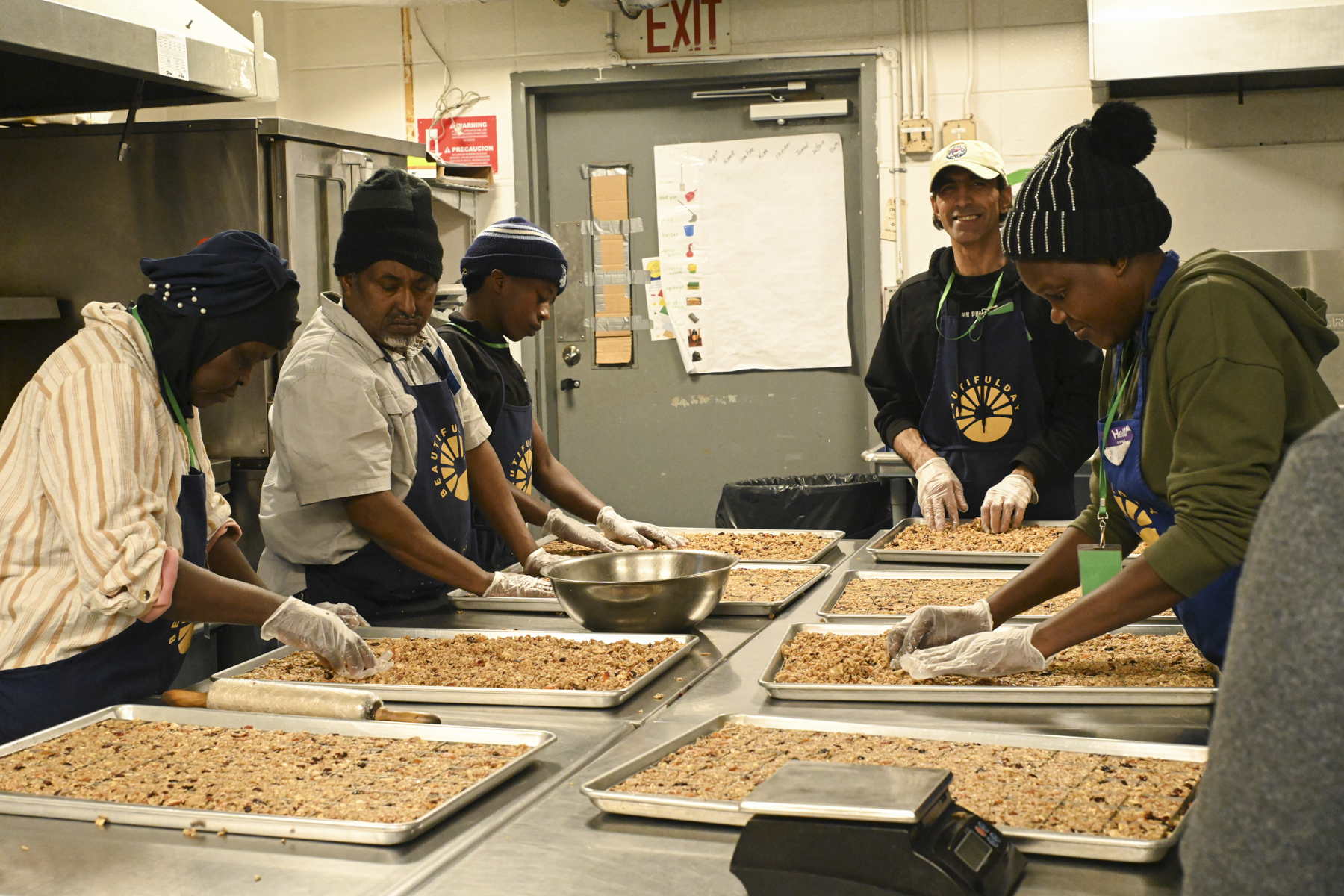
Beautiful Day currently operates four primary programs designed to meet participants where they are. The granola production is the organization’s flagship initiative under the Adult Job Readiness and Job Training program. Adult trainees work in the kitchen producing Beautiful Day’s food products while learning the rhythms and expectations of the American workplace. A Youth Internship Program connects refugee teenagers with internships at local businesses, giving them hands-on experience and exposure to career paths they might not otherwise encounter. The Farmers Market and In-Store Training Program teaches customer service, product knowledge, and sales skills. Participants interact directly with customers while developing communication and business skills, all while supporting Beautiful Day’s presence in the community.
One of the most unique initiatives is the Afghan Women’s Entrepreneurship Program, which creates social connections for women who are newly arrived and often isolated. Over time, it has grown into something much more dynamic. The group now prepares Afghan lunch boxes and catering dishes, sharing their culinary traditions with the broader community. On Fridays, the kitchen becomes a lively space of experimentation and collaboration as the women cook together, developing recipes and ideas that may eventually become new products.
Long-term Work Opportunities
Training, however, is only part of the equation. Employment is the real goal. Beautiful Day works with a growing network of employer partners across Rhode Island—organizations willing to provide welcoming workplaces and opportunities for advancement. Among them are Hope & Main, Farm Fresh RI, Urban Greens, Ocean State Job Lot, Brown University Health, the Providence Children’s Museum, and Roger Williams Park Zoo.
These partnerships help bridge the gap between training and long-term employment. Many refugees arrive in the United States with tremendous resilience and work ethic, Garland says. But they can also encounter challenges that are difficult to overcome alone— language barriers, cultural misunderstandings, or a lack of professional networks. Sometimes those challenges can leave people stuck in low-wage jobs without opportunities to move forward. Beautiful Day is working to change that by preparing both employees and employers. “We ask our employer partners to make a commitment to creating welcoming workplaces,” Garland says. “Places where people have an opportunity for growth and success.”
The People Behind the Products
Beautiful Day’s products are the result of hard work and inventiveness by team members. One example is the hummus created by Production and Training Manager Saad Mark Awad, who developed the recipe having grown up in Damascus, Syria, where he perfected this creamy, lemony, super-fresh, and completely authentic Hummus. With support from Beautiful Day’s kitchen and market access, the product has begun gaining recognition locally. Prior to working for Beautiful Day, Awad owned his own restaurant and catering business that he started after arriving in the US in 2005.
Many of the organization’s team members previously worked for Beautiful Day as job-trainees or have worked with the organization from early on to help shape its footprint—for example, Granola Chef Evon Nano, “born in Baghdad, Iraq, has been with Beautiful Day from the very beginning” and “has coached nearly every trainee in our kitchen. If you think our granola is perfect—well you can bet it’s because of her,” according to the organization’s website.
Organizations like Beautiful Day have become increasingly important as the refugee support landscape continues to shift. Recent federal funding cuts have reduced the resources available to many resettlement agencies, making community-based programs even more vital. Beautiful Day has managed to remain resilient by diversifying its funding sources through grants, donations, and revenue from product sales. But the broader challenges that refugees face in America—including employment discrimination—remain significant. Despite obstacles, Garland remains hopeful. “Refugees are incredibly resilient people,” she says. “They’ve already overcome so much before they even arrive here.”
Back at the Tuesday communal meal, those larger challenges feel momentarily distant. People are sharing a meal. A conversation begins in English, shifts into another language, then back again. Laughter moves easily through the room. For many of the people gathered here, this is more than dinner. It’s a place to have conversations, build friendships, and feel part of something larger. It’s also a rare opportunity for the broader community to sit down with people whose stories they might otherwise never hear. “Many people have never met a refugee,” Garland says. “These meals are one way for people to connect.”
And in that simple act—sharing food, learning names, telling stories—the mission of Beautiful Day becomes clear. The products coming out of the kitchen are very good. But the real work happening here is something deeper. It’s about creating a place where people who have lost so much can begin again. One meal, one skill, and one opportunity at a time.
Margaret Rizzuto is a photographer with over 15 years of experience capturing the beauty of food, places, and people. Margaret relocated to Providence in 2020 and quickly fell in love with the city—especially its vibrant food scene. When asked how she enjoys life in Providence, her response is always the same – “It’s so easy to be here!” which is a reflection of the city’s welcoming nature, its people, and the incredible foods. www.margaretrizzuto.com @aprovidencepalate


Want to comment? Click!