





On any given morning in Providence, hundreds of people enter our courthouses seeking justice — they include: survivors of crime, witnesses, families, jurors, and defendants exercising their constitutional rights.
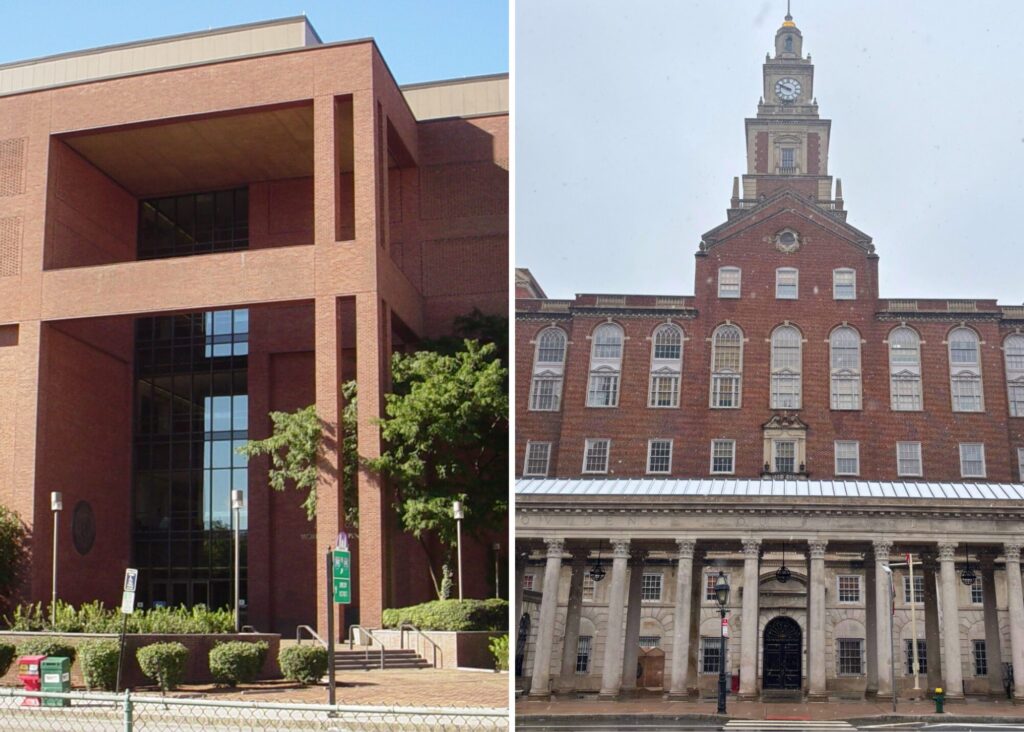
Providence County courthouses such as the Garrahy Judicial Complex on Dorrance Street or the Licht Judicial Complex on South Main Street serve cases originating from Providence, Pawtucket, Central Falls, Woonsocket, East Providence, Cumberland, Burrillville, Bristol, and Barrington. Together, these nine municipalities are home to roughly 470,000 residents — nearly half of Rhode Island’s population. About half of those residents identify as minorities, and roughly a quarter identify as Latino.
Increasingly, many of the folks attending court are afraid.
That fear is not theoretical.
Last November, federal immigration officers detained a teenage judicial intern outside the Licht Judicial Complex while attempting to locate someone else. The intern was a high school student. The individual they were actually seeking was in his thirties.
The incident drew condemnation from officials across the political spectrum, including U.S. Senator Sheldon Whitehouse, who called the conduct unprofessional during a Senate hearing.
Just two months later, another incident occurred when federal agents reportedly bypassed security inside the Garrahy Judicial Complex while pursuing individuals they sought to detain.
Events like these send a troubling message to the public: that courthouses may no longer be neutral spaces.
More and more often, people are choosing to avoid court altogether — even if it means deciding not to report crimes or pursue justice.
The growing presence of federal immigration agents near Rhode Island courthouses has created real fear among many people who must enter those buildings. Immigrants, witnesses, and even family members worry that simply showing up for court could lead to detention outside the courthouse doors.
When people begin to believe that entering a courthouse could put them at risk of detention without judicial oversight, they stop coming. Witnesses become reluctant to testify. Victims hesitate to report abuse. Families question whether appearing for a scheduled hearing is safe.
We are already seeing the consequences. Attorneys report cases stalling because parties are afraid to meet constables to receive legal papers, fearing that even routine steps in the legal process could expose them to deportation.
That undermines the functioning of our justice system.
Courts depend on participation. Justice cannot work if people are afraid to walk through the door.
That is why we have introduced legislation – H7360 (for which a hearing was held in the House Judiciary Committee on March 4) and S2045 (for which a hearing has not yet been scheduled) – requiring federal agents to obtain a judicial warrant before making civil arrests at Rhode Island courthouses.
The bill does not prohibit federal immigration enforcement. It simply requires that if someone is going to be arrested in or around a courthouse, that decision must first be reviewed and approved by a judge.
That principle lies at the very foundation of our legal system.
This legislation also sits squarely within constitutional boundaries. A nearly identical law passed in New York was challenged by the Trump administration and upheld by a federal court last year. The ruling affirmed that while states cannot interfere with federal law, they do retain authority to establish rules governing their own courts — including requiring judicial warrants for arrests carried out within those spaces.
When the government takes away someone’s liberty, there should be judicial oversight — not simply an internal administrative order or a supervisor’s approval.
Courthouses are unique institutions in our democracy. They are places where people defend themselves against criminal charges, seek protection from abuse, resolve disputes, and fulfill their civic duty through jury service.
Allowing civil arrests at courthouses without judicial warrants erodes public confidence in those institutions.
Regardless of where one stands on federal immigration policy, we should all agree on one point: our courts must remain places where the rule of law is respected.
Requiring a judicial warrant does not prevent federal authorities from enforcing immigration law. It simply ensures those actions occur with appropriate legal oversight.
At a time when trust in institutions is fragile, protecting the integrity of our courts matters more than ever.
People should enter our courthouses with confidence that justice will be administered fairly — not fear what might happen outside the courtroom door.
Requiring judicial warrants for courthouse arrests is a modest reform, but an important one.
Because in Rhode Island, our courts must remain places of justice — not places of fear.
Jose F. Batista is a licensed attorney and member of the RI House of Representatives. He represents District 12 which includes the Washington Park and South Providence neighborhoods as well as the Port of Providence.
Meghan Kallman is a professor and member of the Rhode Island Senate. She represents District 15 which includes Pawtucket and Providence.


Want to comment? Click!