




On Thursday July 2, 2026, Providence saw 99 degree heat—the highest temperature ever recorded in the city on that calendar date. The previous record was set in 1941 at 98 degrees.
Despite news headlines focused on a strong El Niño weather pattern developing in the Pacific, climatologist Abby Frazier said last week’s New England heatwave had more to do with climate change. According to Climate Central, an independent climate change research group, the fossil-fuel driven climate crisis made Providence’s July 1 to July 4 heatwave three times as likely to happen.
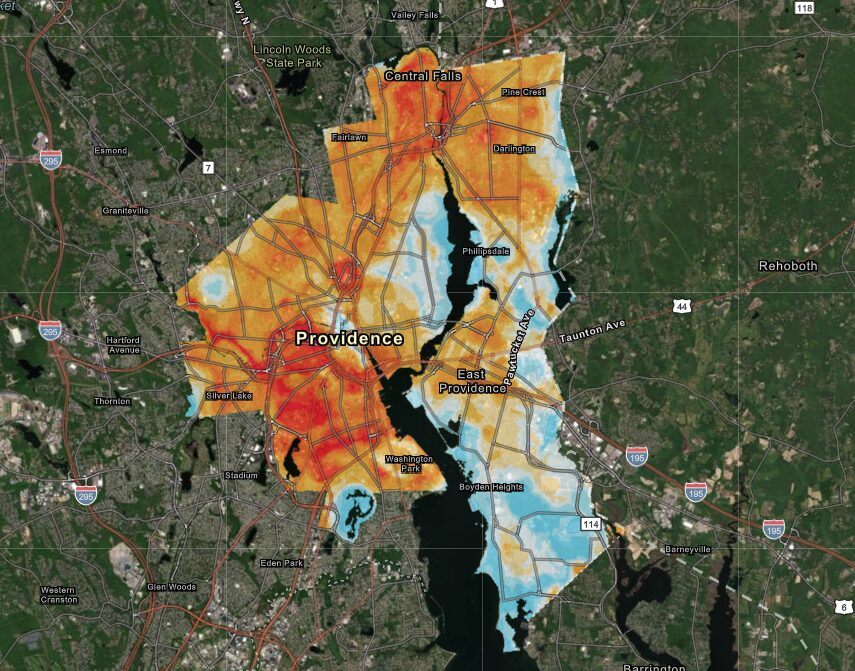
During the heatwave, Providence saw a dozen heat-related emergency department encounters. Studies show that spikes in temperature cause negative health impacts, especially for some lower-income communities in Providence that experience heat 10 degrees warmer than surrounding neighborhoods, often reflecting patterns of redlining in the city. As Providence sees increasing heat from the climate crisis, residents are searching for ways to stay healthy and save money from high utility costs.
El Niño Impacts New England With Warm, Humid Winters. Climate Crisis Adds Fuel.
In the Pacific ocean, scientists are warning that this year’s El Niño-Southern Oscillation could be the strongest since the mid-1900s. The naturally-occurring weather pattern warms waters in the Pacific around the equator, which can change global climate forecasts around the world. In New England, those impacts are felt typically in the winter.
“Typically with an El Niño, we can expect warmer winters, more humid conditions, and less snowfall… the impacts of El Niño in summer are not as strong,” said Dr. Frazier, who works as an assistant professor of geography at Clark University in Massachusetts. “We have this oscillation, this variability that happens naturally, but it’s happening on top of human-caused climate change.”
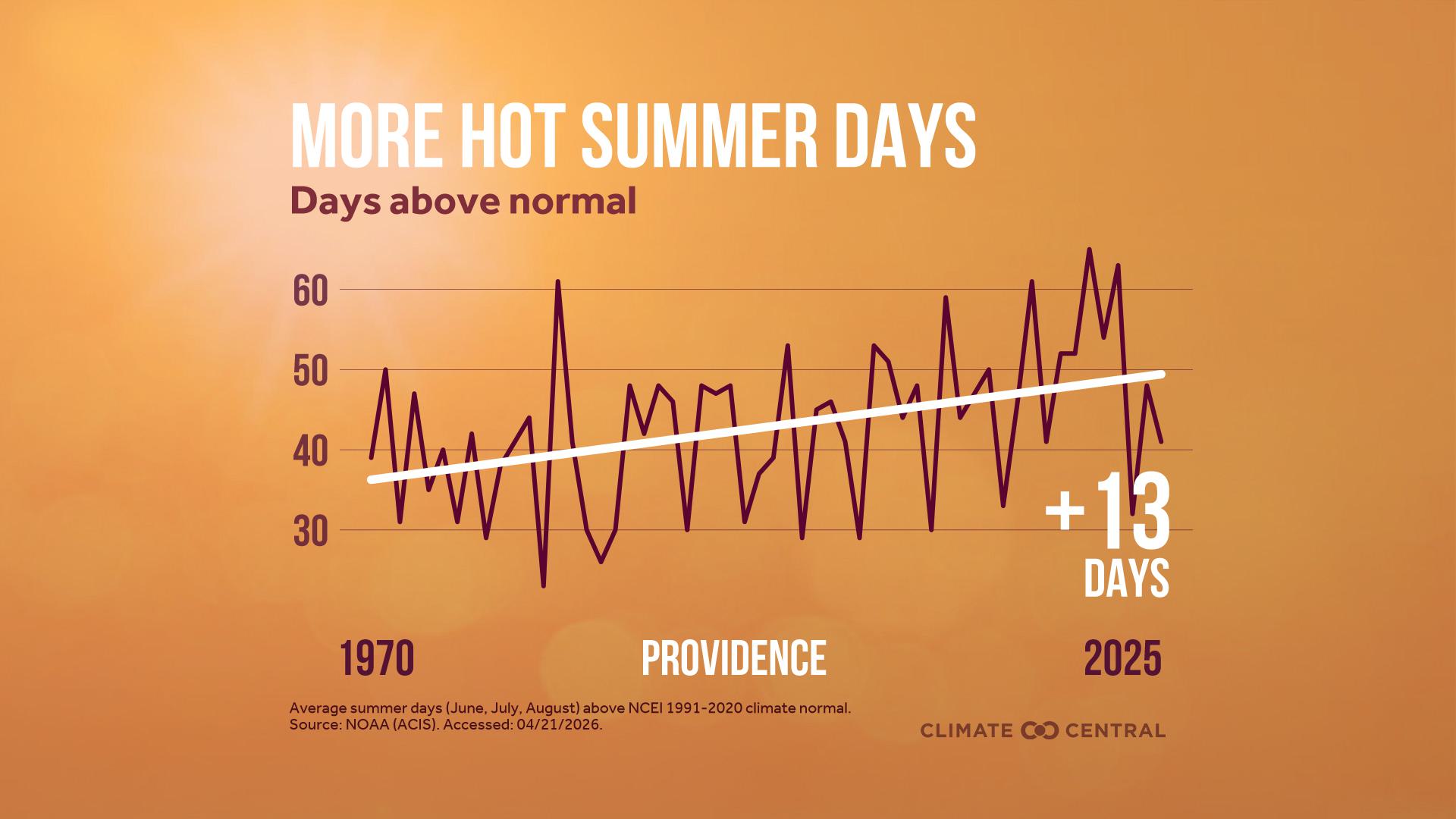
Dr. Frazier said that New Englanders should keep an eye out for El Niño’s impact on farm production, which can lead to inflated food prices around the world. However, she clarified that last week’s heatwave is indicative of the general patterns of warming related to the climate crisis. In Rhode Island, temperatures have risen almost four degrees since the beginning of the twentieth century. According to data from NOAA compiled by Climate Central, Providence experienced 13 more abnormally hot days in 2025 than the city did in 1970.
“Temperatures over land here in Rhode Island are warming at a faster rate than the global average temperature,” said Dr. Ambarish Karmalkar, an assistant professor of geosciences at the University of Rhode Island. “During the heat wave that you just had, if you were to compare temperatures in urban areas versus temperatures in nearby rural areas, you would find a pretty big temperature difference. It could be as high as eight to 10 degrees Fahrenheit.”
And this heat can have serious consequences. Last week’s heatwave saw a major spike in heat-related emergency department visits, according to the RIDOH data. On the days it reached over 90 degrees in the state, an average of 14 people each day visited the emergency room because of the heat. In Providence, there were a dozen cases, with the busiest and hottest day on July 2, when five Providence residents visited the emergency room due to the heat.
Heat is the leading cause of weather-related deaths in the United States, causing more than three times as many fatalities as flooding in 2024. Karmalkar said that local infrastructure, including medical responses to avoid heat-related deaths, must keep up with the warming climate.
“If we have cooler nights, then people get that chance to sort of cool down and recover a little bit, but if the nighttime minimum temperatures also remain high, that’s when vulnerable people are affected by heat-related illnesses,” said Karmalkar. “These things are even more problematic because of urbanization. Where those vulnerable populations are, they might be exposed to even higher temperatures.”
In 2017, a study from Brown University researchers found that when the heat index reached 95 degrees, there was a 7.5% increase in hospital visits and 5.1% increase in deaths from all causes across Rhode Island, Maine and New Hampshire. But these health impacts show up differently across the City of Providence, and for different vulnerable populations.
Across the City, the Same Heatwave Could Feel 10 Degrees Hotter
In 2021 while earning a Master of Public Health degree, Caroline Hoffman found that areas of Providence targeted for disinvestment through the practice of “redlining” saw less tree canopy and higher temperatures. The research was not peer-reviewed but reflects other studies that found nationally, land surface temperatures in redlined areas are at least four degrees Fahrenheit hotter than non-redlined neighborhoods.
In the 1930s, the Home Owners’ Loan Corporation (HOLC) labeled low-income, and usually Black and Hispanic neighborhoods, as “hazardous” to investors, forcing those communities into loans with higher interest rates or blocking them from receiving mortgages to purchase homes. The racist policy contributed to the ongoing racial wealth gap in the United States.
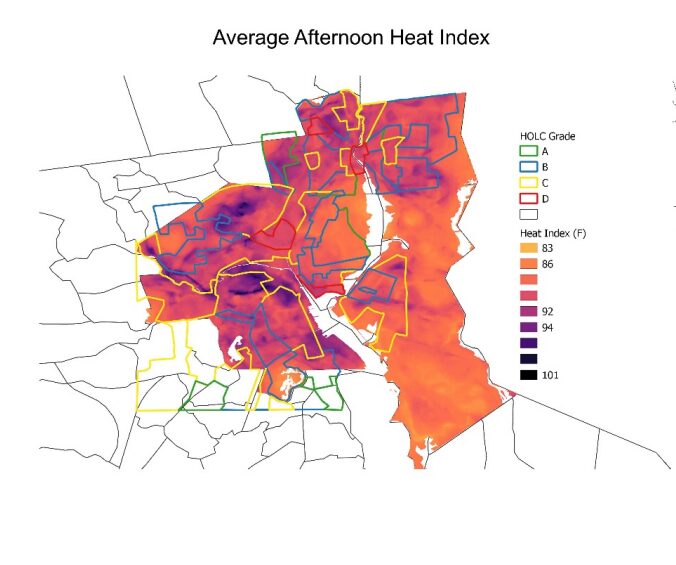
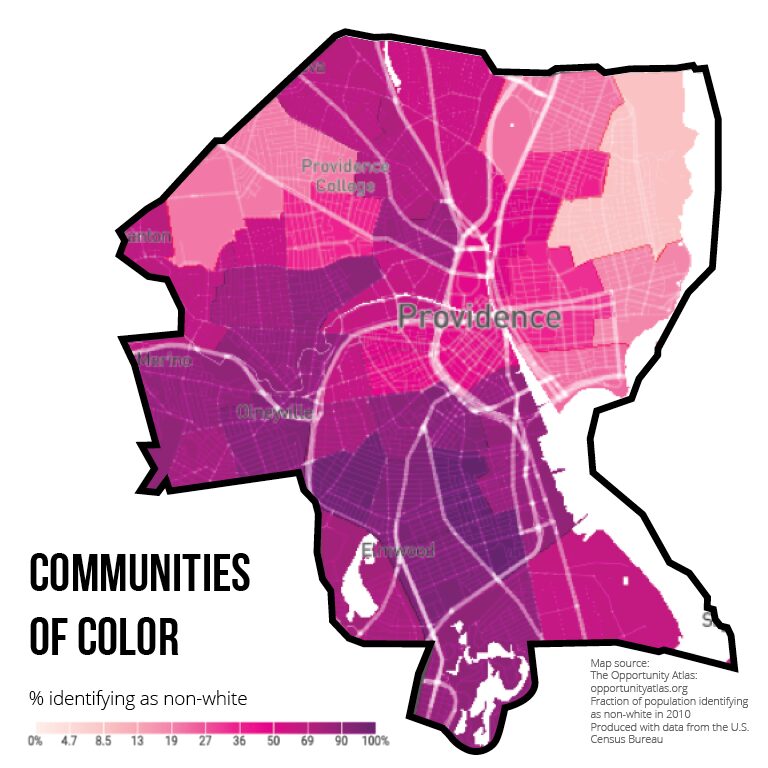
Hoffman’s research indicated “similar patterns of spatial clustering” between high temperatures and low HOLC grades. Some neighborhoods in the city experienced an average afternoon heat index that was 10 degrees Fahrenheit warmer than the coolest areas of the city. In areas without investments in green space and tree maintenance, structures and impervious surfaces absorb and re-emit heat into the environment.
“Climate change can have significant impacts on human health, from increases in deaths and illnesses associated with heat stress, to increases in injuries and illnesses due to extreme weather events, to rising rates of respiratory and cardiovascular illnesses related to smog,” said
Joseph Wendelken, spokesperson for the Rhode Island Department of Health. “These effects are often experienced disproportionately by populations in urban communities. The recognition of climate change-related disparities is at the heart of our public health work to prepare for the human health effects of climate change, and to create a more sustainable, resilient future for all Rhode Islanders.”
These urban heat islands not only impact public health, but reveal ways low-income, older and higher-risk communities are forced to navigate public health resources that are inaccurate or inaccessible. During last week’s heatwave, independent journalist Steve Ahlquist detailed how public resources about cooling centers were not updated to reflect holiday hours for the Fourth of July. [Editor’s Note: Check out this week’s Readers’ Voices article from Robert Diamond, who developed a free app with information for people seeking shelter and other services—while sleeping in shelters himself.] Researchers at the Information Futures lab studying Rhode Islanders aged 65 years and older found that people may not trust cooling centers to accommodate their health needs or welcome them into a comfortable environment.
“Folks that are most at risk of extreme heat face their own unique barriers… Information that doesn’t address those isn’t very helpful,” said Daisy Winner, program manager at the Information Futures Lab. “I saw once that one of the cooling centers was the lobby of a police department. And I get why that would become one, but that’s not any place that anybody wants to hang out.”
Winner also said for older individuals, some of whom live on a fixed income, higher utility bills are a major concern. Data from the U.S. Energy Information Administration’s Residential Energy Consumption Survey shows that New Englanders still have lower rates of air-conditioning use and central air-conditioning compared to the rest of the country. As people use more air-conditioning and the energy grid feels the demand, energy prices could rise as well.
A 2016 study of the top 48 cities in the United States found that Providence had the second-highest energy burden in the country for Latino populations, and the fifth highest percentage of energy-burdened people in general.
Energy efficiency programs are available through Rhode Island Energy, but a 2022 study found that 40% of survey respondents were not aware of those resources. People can learn more about these programs on Rhode Island Energy’s website and learn more about the effort to make them accessible here.
For more resources on beating the heat, visit Providence Emergency Management Agency’s website for a list of heat wave resources, including a list of active cooling centers, splash pads and pools. For those across the state, make sure that cooling centers and resources are updated regularly.
Eric Halvarson is a City News Reporter at The Providence Eye.


Want to comment? Click!