



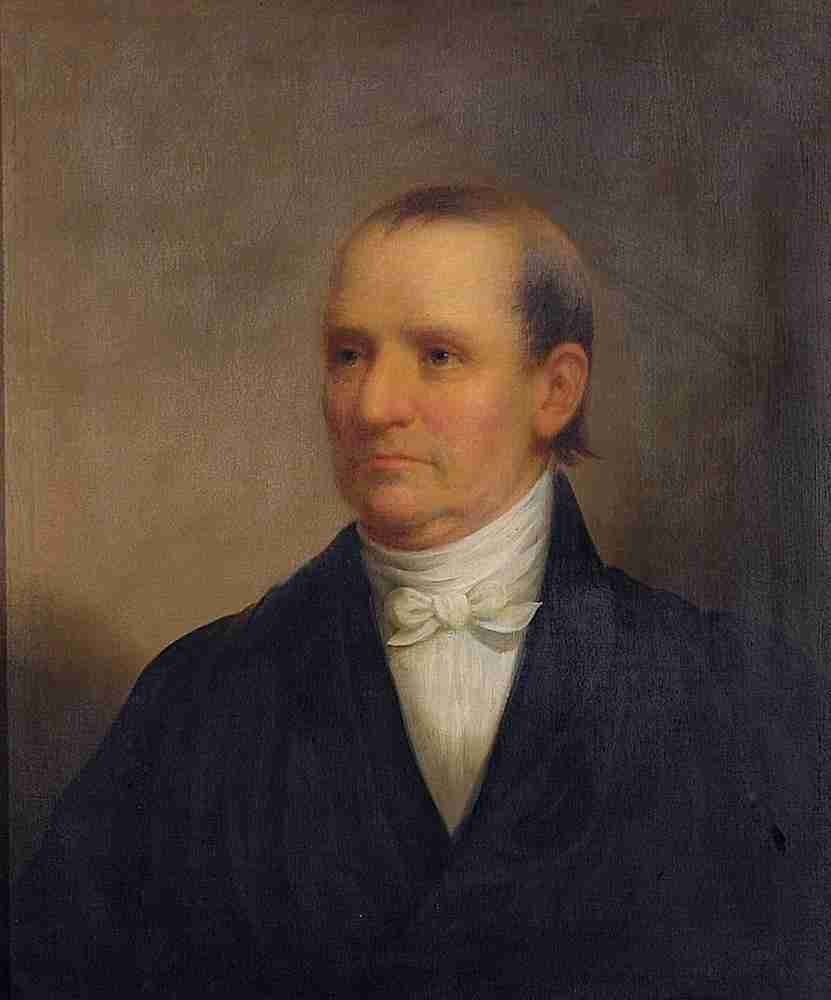
Asa Messer’s name has been attached to two Providence school buildings. Few people today would know the reasons: he was active in Providence for almost half a century, two hundred years ago, an educator inspired by the open mind of Providence founder Roger Williams.
He lived from 1769-1836 during the American Revolution and the disruptions of the Early Republic, and served Brown University for almost forty years; Messer was also a jack of all trades and master of some. He was a consultant on the proper height for lighthouses, the inventor of “Messer’s Pneumatic Engine, or Philosophical bellows,” a farmer, a Providence alderman, and in 1830, an unsuccessful candidate for governor of Rhode Island.
He was also, arguably, a victim of religious persecution in a state where toleration was established from the beginning: “God forbid that a Spanish Inquisition should ever stand on a soil sanctified by the bones of Roger Williams,” he complained. “A storm of bigotry is now raging around us.”
Messer was born in Massachusetts and educated at the College of Rhode Island and Providence Plantations, as Brown University was called until 1804. After serving as tutor, and as professor of Latin and Greek, (learned languages) and of science (natural philosophy), he was installed as president in the year the college was renamed Brown. In that year, the Corporation of the college offered to name the institution after anyone willing to donate $5000 within a year’s time. Nicholas Brown, Jr., stepped forward, specifying that the money should be invested to establish a professorship of Oratory and Belles Lettres–literally public speaking and beautiful writing. A grateful Corporation promptly named the college Brown. The donation might not sound like very much, but if invested as directed, it would be worth millions today.
Brown was a small college attracting the sons of the “middling sort” –the wealthy went to Harvard or Yale. The curriculum in Messer’s time was heavy on the classics, with some more modern studies such as geography, chemistry, government, international law, and practical subjects such as trigonometry, surveying, and navigation. Tuition was sixteen dollars a year until 1822 when it was raised to twenty. Board was around two dollars a week. Messer was paid a thousand dollars per year and the two professors who lived in the college just over eight hundred, while tutors were paid five hundred, comparable to male teachers in other schools.
Students were far from well-behaved, and college rules suggest the kind of problems Messer faced:
- No student shall keep any kind of firearms or gunpowder in his room.
- All students are forbidden to make indecent, unnecessary noise…either by running violently, hallooing, or rolling things in the entries or down the stairs.
- If any student shall wilfully [sic] insult any of the officers of government or instruction, if he shall strike them, or break their windows, he shall be immediately expelled.
Messer sometimes enforced the rules through “rustication,” that is, sending the offender out into the country to study with a clergyman until he mended his ways. Some of the offenses were both juvenile and imaginative. Students managed, for example, to transport a cart and its load of wood onto the roof of University Hall, and another group led Messer’s horse up four flights of stairs and left it there overnight. The ringleader of the horse event was Samuel Gridley Howe, class of 1812, who later traveled to Greece to fight in the Greek War of Independence, where he may have met his hero, the poet Byron. According to his daughter, Howe often told her “how funny the old horse looked, stretching his meek head out of the fourth-story window, and whinnying mournfully to his amazed master passing below.” Howe went on to a distinguished career, and his wife, Julia Ward Howe, wrote the Battle Hymn of the Republic.
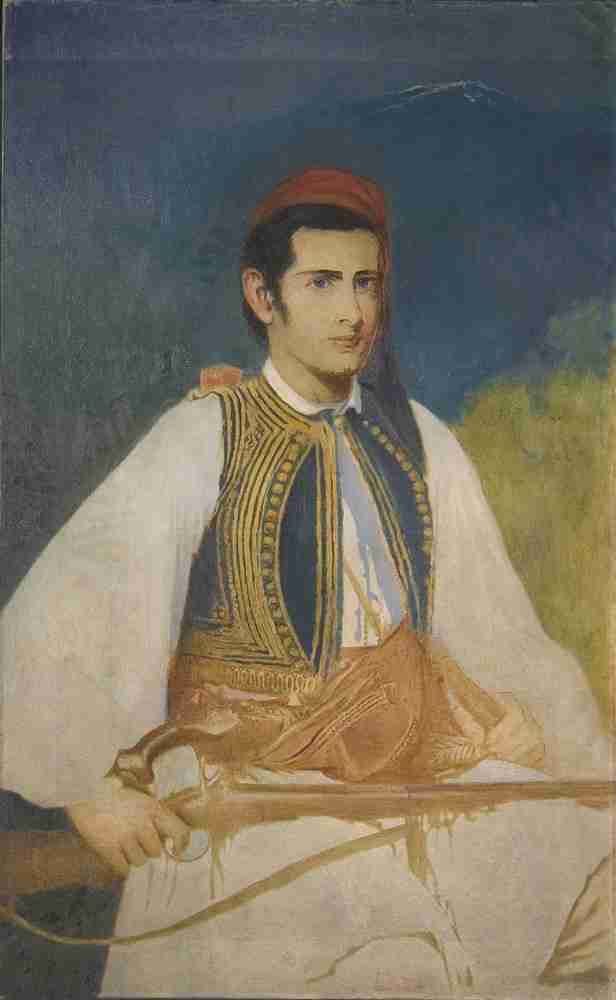
Other incidents were more dangerous. In 1817 students filled an old wooden building with hay and corn stalks, carried it to the middle of the campus, and set it on fire. The blaze, Messer complained to the father of one of the perpetrators, “rose as high as the college edifice.” In 1819 students broke the window of one of the tutors and put a shovel full of ashes in his bed. The same year, members of the so-called Hellfire Rummaging Club broke down the doors of the chapel and dining room. Messer wrote to the father of one of the culprits, “that the furniture was carried from the latter and some of the seats and even the Pulpit from the former.”
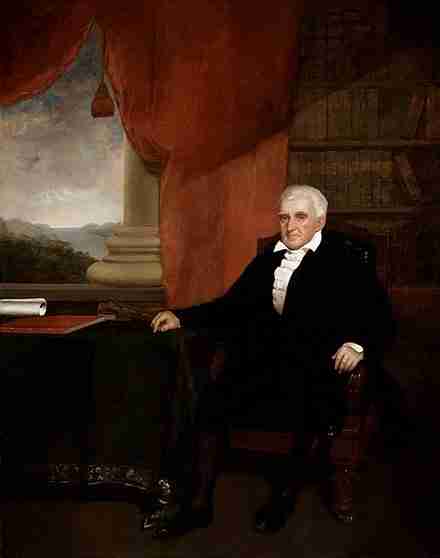
Messer remained president until 1826, though not without problems, which came to a head when some members of the Baptist-dominated Corporation thought he wasn’t conforming sufficiently to Baptist beliefs. While Messer was an ordained Baptist minister, as was every president of Brown University until 1937, he also believed in the college’s charter which said “into this liberal and catholic institution shall never be admitted any religious tests: But, on the contrary, all the members hereof shall forever enjoy full, free, absolute, and uninterrupted liberty of conscience.”
The charter gave a majority of seats on Brown’s Corporation to Baptists, and although any number of possible “heresies” were held by other members, certain leading Baptists became annoyed when Messer attended the First Congregational Church on Benefit Street, which had been openly Unitarian since at least 1815. Unitarians were under suspicion as deniers of the Trinity: God was God, but Christ and the Holy Ghost were not. Then Harvard awarded Messer an honorary Doctor of Sacred Theology in 1820, a time when the Unitarians dominated that college.
None of the earlier problems with the students were fatal to Messer’s job, but his religious opinions were. Messer suspected that an upsurge of student misbehavior in 1824 was instigated by his opponents, members of the Corporation. Describing the disorders as “unusual,” he wrote, “They broke open the Library; they beat down the Pulpit; they prevented or disturbed for several weeks a regular recitation; they even assailed our house, in the night, and broke the windows.”
By September 1826 Messer had had enough, and he resigned. He wrote that he’d been connected with Brown for thirty-nine years and leaving was like “breaking up long, dear friendships.” He couldn’t, however, resist adding one last (heretical) clause, hoping “I may be enabled to serve my GOD as faithfully as I have served Brown University; and I also pray that He, who was the God of Abraham, and if I may be allowed to utter a little heresy, the God of Jesus, may have that seat of literature and all its Patrons, as well as you and me, in his holy keeping.”
Messer retired to the western outskirts of Providence and bought a small farm near the street which now bears his name. He lived there with his wife, the former Deborah Angell, and their unmarried daughter Mary; their son Manning had died at the age of one. Their daughter Charlotte married educational reformer and Brown graduate Horace Mann in 1830 but died of tuberculosis two years later. Messer died in 1836 and is buried at North Burial Ground. His widow survived until 1862.
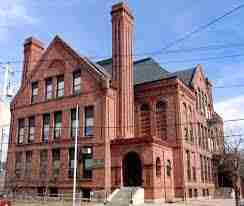
Messer’s small farm was not far from the land that Roger Williams’ descendants continued to farm until it was donated to the city in 1873. By the end of the nineteenth century, farmlands were giving way to Roger Williams Park, residences for new populations, and manufacturing sites. Messer Street School, built in 1890, still stands today; it is owned by the city but is no longer a school. The imposing structure was designed by prominent architects William R. Walker & Son, who also designed the Cranston Armory in the same part of the city. The school’s asymmetrical Queen Anne style was hugely popular at the time, though whether that eighteenth-century monarch would find it familiar is doubtful.
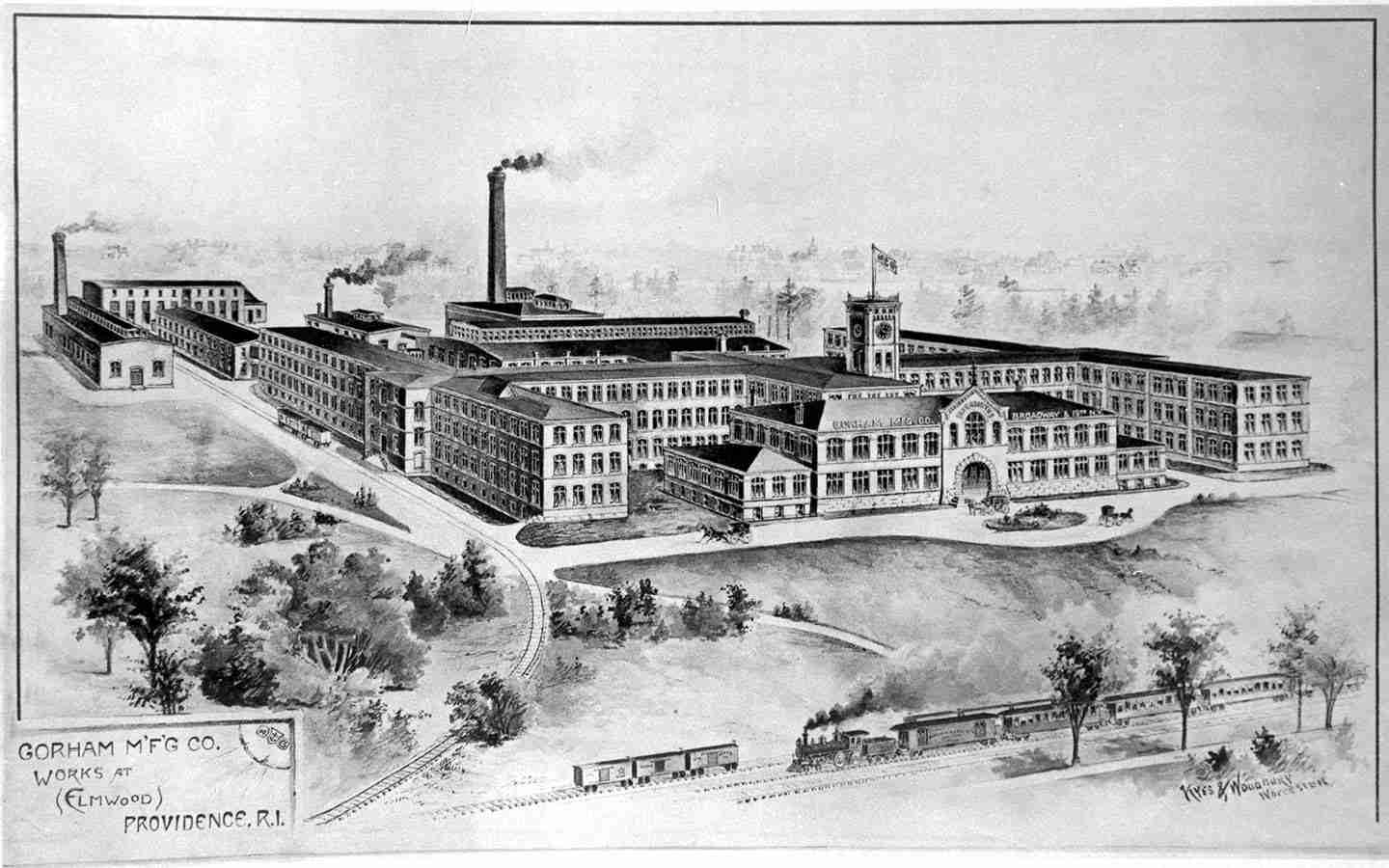
The school’s size reflects the teeming population it served, including the hundreds of families supported by jobs at the Gorham Manufacturing Company, whose new and expanded site opened in 1890. The school was used recently by the Trinity Academy for the Performing Arts (TAPA) but was abandoned after part of the roof fell onto a teacher’s desk. It has been on the Providence Preservation Society’s Most Endangered Properties List for some years, moving to second place in 2023, behind only the Superman Building.
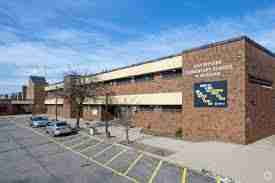
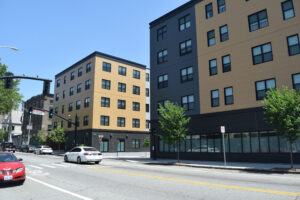
Asa Messer Elementary School today, a modern building, sits between Broadway and Westminster Street in the West End, near Olneyville Square. Over five hundred students, pre-Kindergarten through fourth grade, attend Asa Messer from the diverse neighborhoods of the West End, Federal Hill, and Olneyville. Students continue to West Broadway Middle School, thus can learn together through eighth grade.

Teachers connected to one of the schools named for Asa Messer can, perhaps, admire his contribution to education in nineteenth-century Providence, sympathize with his struggle to tame unruly students, and surely recognize his struggle with the administration.
Source: A History of Brown University 1764-1914 by Walter Bronson
Jane Lancaster PhD is a historian and former public school teacher (in the UK) who lives in Providence. She is an award-winning historian and has taught at RISD and Brown, and even (once) in Taiwan.


Want to comment? Click!