



Dear Michael Townsend,
My name is Julius Cavira.
Most people don’t know me. Some may even dislike me.
I’m a disabled Operation Iraqi Freedom (OIF) veteran, raised in inner-city Chicago, where art is alive and gallery openings and socials happen every week. I don’t have much—only an obsession to make art, both conceptually and commercially.
I’m like you —an ideas man. A big city cat. A RISD graduate — Heather Rowe and Taylor Baldwin know me there! I’m also a graduate of the School of the Art Institute of Chicago (SAIC), if that matters.
I’m still broke.
Most days, it feels like no one really cares.
I had this idea – big enough that could potentially support artists and businesses in Providence, with you as a focal point —a trigger— for the spirit of art to thrive here. Providence remains the so-called “Creative Capital,” yet visual artists are facing a fiscal cliff due to rising housing costs, uneven pandemic recovery, and shifts in federal funding. The National Endowment for the Arts (NEA) is facing a potential shutdown and significant downsizing.
Yeah, big surprise: artists being broke.
But my idea is more than that: it’s about healing.
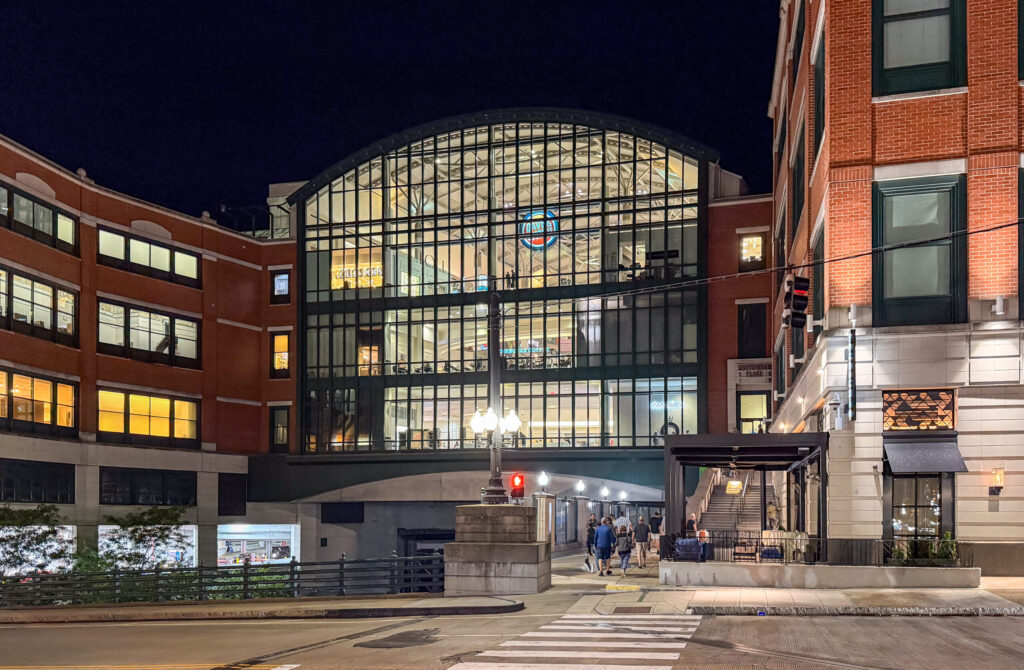
I was recently pitched to watch Secret Mall Apartment, a documentary about how, in 2003, eight artists discovered a 750-square-foot void inside the Providence Place Mall. They didn’t just visit—they moved in. You were their ringleader. You turned an empty mall cavity into an evolving apartment, a transgressive performance art piece, a secret clubhouse of manifestos and a middle finger to developers who had displaced your previous studio.
Bravo, bro! Any GenXer would be proud!
Before the credits, the film mentioned that the mall is now facing legal and financial conflicts. The owner defaulted on their mortgage and has been open to putting housing inside it. As of today, the mall has been in court-ordered receivership for over a year.
This is where my idea comes in.
What if you returned — not for revenge, but for repair?
To prove that Providence can thrive through the arts—commercially, like a mall, and conceptually, like an evolving critique?
Imagine yourself actually “opening mail” at the Providence Mall. As you once said about the place (as quoted in the documentary), “it would be nice to be able to receive mail here.”
This connects to conversations I’ve had with my mentor, Candita Clayton, a local advocate for artists who offers portfolio reviews and business audits to help creative folks build sustainable careers. She was inspired to build an artist residency—a sacred pilgrimage for people who own too many sketchbooks—here in Providence. I suggested she think bigger, to an artist commune.
Imagine it: an artist commune inside the mall.
Creative people living and working together. Saving money. Inspiring each other instead of struggling alone. Sharing rent. Sharing tools. Sharing big ideas. One kiln. Many opinions. Part budget plan for starving artists, part support group. An intergenerational creative Mecca supporting working artists— not dead ones.
We live in a world where living artists are being trained endlessly to work around the clock on art restoration and conservation behind lock and key in many upper echelons of the fine art institutions. If the finest art of society is locked away, when does society learn from it? And when do today’s artists have the money and time to create new perspectives, portray the evolution of the human condition, impart the lessons of today?
In my vision, artists at the mall would produce work on-site. They would learn through an apprenticeship with other artists living on-site. They would sell their art on-site. Shops, exhibitions, residencies would all run by the same cohort. Commercial and conceptual work would exist side by side.
It would be sustainable. Visible. Public. Artists could pay for their rent and food. Live comfortably together.
Not symbolic. Functional.
Ordinary people—the waitress, the mail carrier, truck drivers, high school students, professors, social elites—could frequent the space. Art would be seen, heard, felt, and lived with while on-site, not separated behind ivory columns and marbled walls, heavily guarded and adorned with collegiate rhetoric and authority.
The commune would be sheltered and guarded in a mall that people normally shop at: a cavernous, tacky monument to conspicuous consumption—like the bazaars in the Middle East, as well as my time with Camphill Communities California, an inclusive “life-sharing” residential community for adults with intellectual and developmental disabilities. It would be about holistic nurturing synergy.
I currently live at Lorraine Mills, in Pawtucket, which already has the bones of this idea. It houses Pawtucket Artist Collaborative, Mixed Magic Theatre (run by a SAG-AFTRA Hollywood actor), Lorraine’s train-car diner, Rhode Island Monthly Magazine, The Escape Room, The Crooked Current Brewery, A Guy and His Pie Pizza, and several RISD and NYC visual artists’ studios.
It took ten years to become what it is. It’s getting better. I just hope the rent doesn’t rise.
I still move between art spaces and events: Mudstone Ceramic Studios, Drinks With Artists (Michael Rose), LitArts RI, East Manning Projects Gallery, Providence Improv Guild (PIG / AS220), John Perrotta’s Comedy Factory, Skip The Small Talk, The Cocktail Club, Toastmasters,etc..
That’s why a commune makes sense. Hand-picked artists would live there, some permanently, others temporary or seasonally. They would learn practical materials and hands-on techniques, just like an artist’s apprenticeship or internship. They would help maintain the building. They would create work on-site and produce objects for sale. The same cohort would manage shops, galleries, exhibitions, and residencies. Everyone would contribute according to their strengths.
Think of it like the U.S. Army: it’s hard to get fired when there’s always a role for you.
Meanwhile, the mall becomes what it once was for you—a site of living art.
Providence needs to heal. It needs to move on from a period that stifled artists and blue-collar workers through gentrification. Rhode Islanders see urban renewal projects across the state overwhelming traffic, raising our rent and taxes. We see vacant bulldozed lots of industrial building sites, mill-building conversions, and rising Structural-Minimalism luxury loft apartments, leading to mass evictions of artist tenants. It sometimes feels like art initiatives are used as a development tool to increase property values, which leads to displacing the very artists and residents who created the culture.
A commune would handle the finances in unison for the sustainability of the community.
Just imagine merging conceptual art—often unsellable—with commercial art—often decorative—in the very place where you made art and faced judgment.
This idea has longevity.
It could bring world-class talent. It could attract collectors—something many Rhode Island artists, myself included, are struggling without.
Right now it’s just neighbors buying each other’s art. That isn’t the trajectory many artists want unless we all lived on Billionaires’ Row.
Julius Cavira is an Iraq War veteran, conceptual sculptor, oil painter, and memoirist. Born in Chicago to a single-parent household of Spanish and Filipino immigrants, he is now based on the East Coast. His interdisciplinary practice spans painting, sculpture, performance, design, and writing, transforming lived experience into materially driven works that engage figuration, landscape, and surrealism. He holds an MFA from the Rhode Island School of Design and a BFA from the School of the Art Institute of Chicago.


Want to comment? Click!