


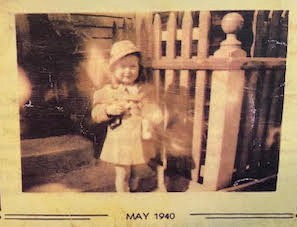
At this uncertain moment in history, I find myself turning to a time long ago and recalling a young, Jewish girl growing up in Providence. An address on Mulberry Street, near our synagogue first comes to mind for me.
I loved the sound of that street name—it evoked trees, berries, wind and blossoms. Words—their sounds and colors—have always come alive for me from the time I first heard language spoken: my mother whispering “I love you,” into my infant ears; my dad lullabying me in his cracking, emotional voice with Schubert’s Serenade.
But first there was Orms Street. The sounds of English mixed frequently with those of the Yiddish that filled the home of my Baubee and Zaidee (my maternal Grandma and Grandpa) on Orms Street where we lived during the first year of my life. At the time, my dad was struggling to find an enterprise with which to support us.
His parents, whom we visited regularly, lived in South Providence, and theirs was another home of Yiddish speakers. I learned that Yiddish was Mama-loshen (our mother tongue), and the sounds of these formative languages so filled my young heart and brain that on entering kindergarten I was bilingual.
Both sets of grandparents had traditional orthodox households where Sabbath candles were kindled each Friday at sunset and Hebrew blessings were chanted over the wine and challah. At Baubee and Zaidee’s their voices often mingled with those of my three sweet and raucous uncles who would descend regularly—with spouses, kids and dogs in tow.
They were my mother’s larger-than-life brothers—Morris, Dave and Izzy–who received me into their lives with unconditional adoration. The sounds of their baritone voices belting out the holiday hymns still echo boisterously in my memory.
There I spent many idyllic hours with Baubee, wrapped in her fierce embrace, and with my Zaidee bestowing ah kish un kopp (a kiss on the forehead). Later, I came to understand that his formal act of affection signified that love could be deeply felt even if not always ostentatiously delivered.
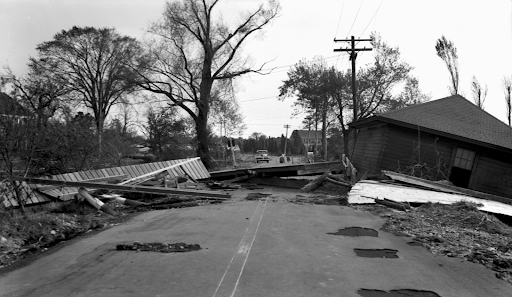
At the end of my first year, we moved to a second-floor flat on Prospect Street, which became the site of my earliest memory. I was in my dad’s arms as he stood before a window when suddenly a huge tree toppled over shattering cars, other trees and structures in the neighborhood. We remained unscathed as only some smaller branches scraped along our windows and walls.
My father held me tightly while jumping back, and I may have cried out, but recall only his cradling arms around me. Is the memory mine or was it later told to me? I feel it was mine—only waiting hidden to be called up later. Reflecting now, the ear-splitting sounds of crashing trees and huge objects flying toward us must have been terrifying—especially for a baby.
In fact, that memory records a significant event in the history of Providence: the crashing trees were part of the 1938 hurricane which devastated Providence and much of New England.
When I was four, we moved to Mulberry Street, into a two-family home in a neighborhood of mixed ethnicity, with many Jewish neighbors. Living upstairs, the owners were an elderly Jewish couple, Mr. and Mrs. G, and their two adult daughters.
Stocky, gentle and always smiling, Mr. G would frequently address my tiny self as shaynah punem (pretty face). And the women of the family would often come down to scoop my infant sister Cynthia and me upstairs. My sister and I lived in what I later recalled as an idyllic childhood, in which everyone loved us.
Close by was the Smith Hill Library on Candace Street where my mom and I spent many magical hours. There sitting on little wooden chairs at small, round tables we pored over picture books. Reading in her own imaginative way, she would weave worlds of whimsy and wonder—chirping, clucking, quacking and mooing her way through a menagerie of animal characters that I came to treasure.
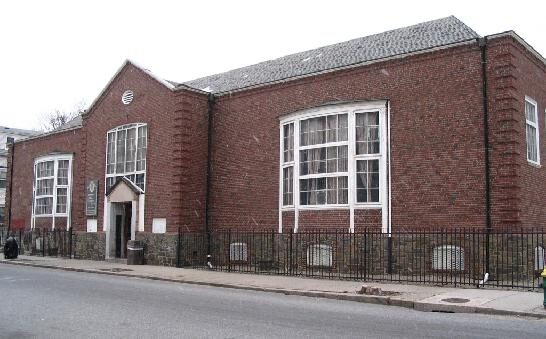
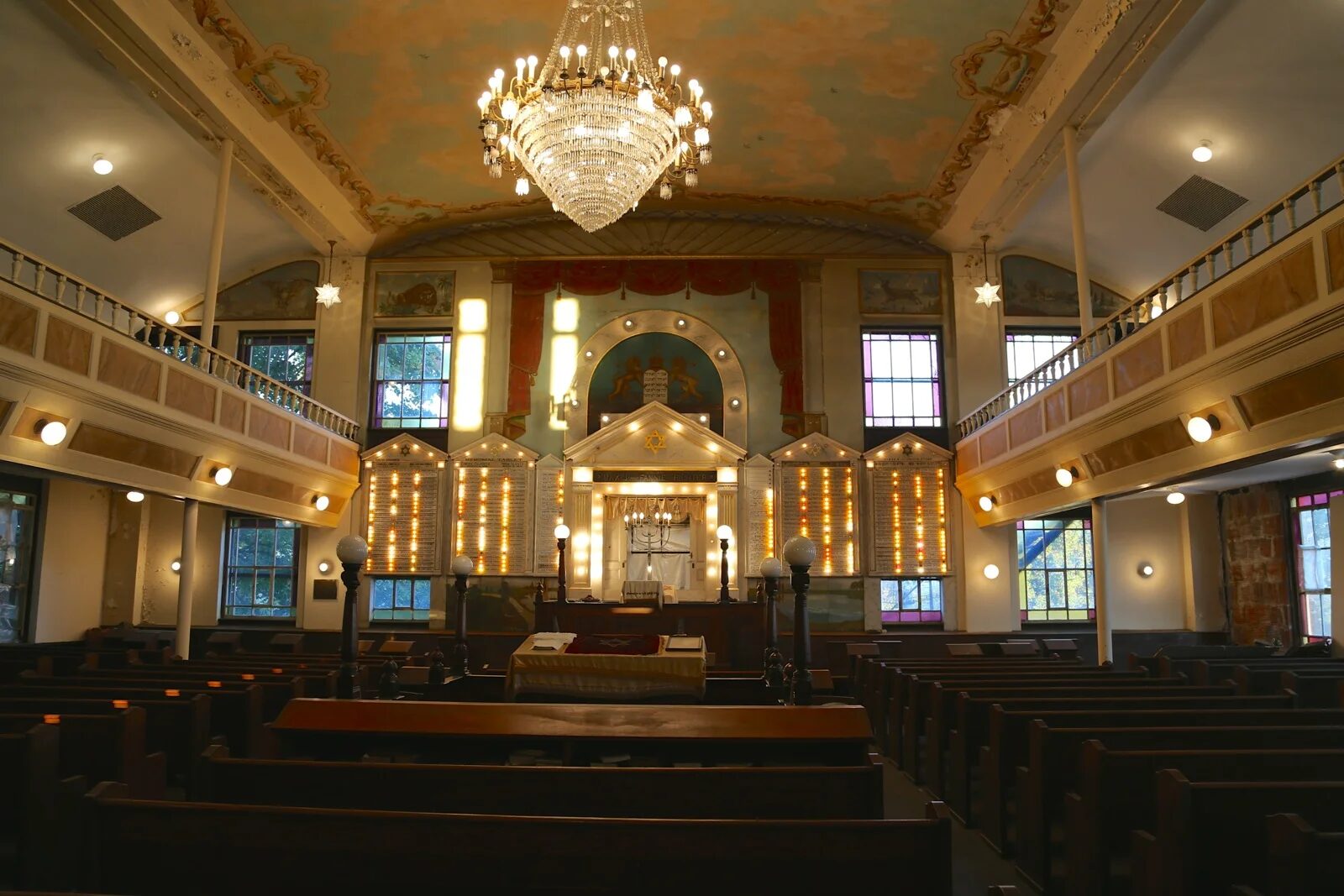
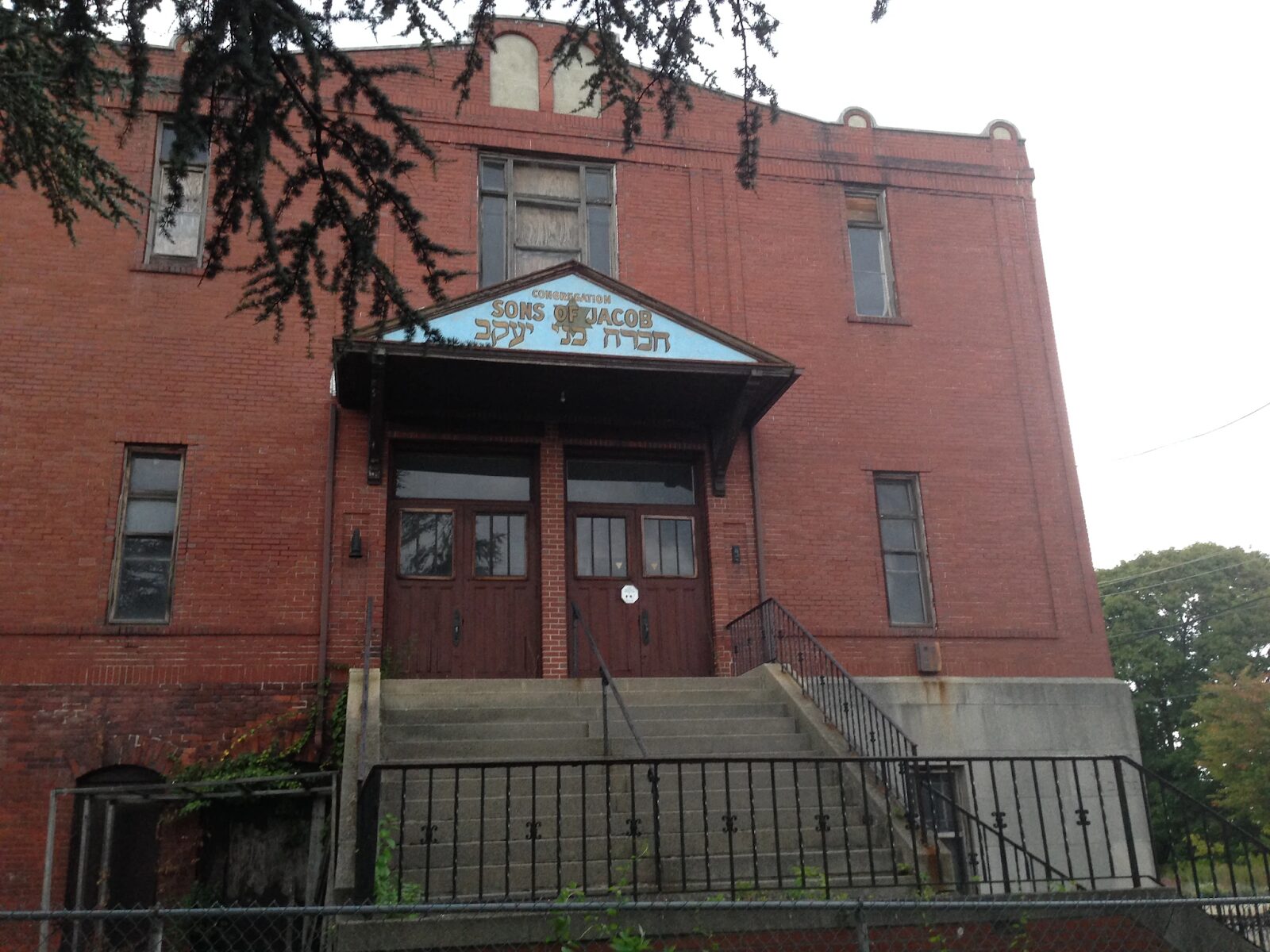
The library, along with our synagogue, the Sons of Jacob, on nearby Douglas Avenue, became favorite destinations for a little girl who for some reason was drawn to each as a house of books. Though more solemn, my visits to the Congregation with my Baubee for Sabbath services were deeply comforting for I adored being with her.
We would climb the long staircase to a balcony set aside “for women.” Taking front-row seats, we could see Zaidee below as well as the ark in which the Torahs were stored. We could also see the imposing figure of the Rabbi, in his white yarmulkeh (skull cap) and ornately embroidered tallit (prayer shawl) leading prayers entirely in Hebrew. I was enchanted by the sounds of the poignant nigunim (wordless melodies) as they rose up to us in the balcony.
Though mine was a protected enclave carefully constructed by my two amazing parents, the sounds of war (World War II) penetrated our bubble, at times frightening me. I remember the huge, black headlines streaked across our local newspapers—The Providence Journal and Evening Bulletin. As their concern for our family in Europe grew, my parents and grandparents’ whispered conversations also brought layers of tension into my childhood world.
However, I was soon distracted by the exciting adventure of school, at Henry Barnard—an experimental primary school developed by the Rhode Island Normal School, later Rhode Island College. An aspect of the program was the introduction of oral French into the curriculum of elementary grades.
During kindergarten and first grade, the sounds of French were added into the mix of languages my classmates and I were immersed in. However, no doubt because of budget cuts, the program was abruptly curtailed as we entered second grade. French would have to wait for high school.
When I was eleven, after my Zaidee died, we moved to Nelson Street, a neighborhood of Italian and Jewish families—settling onto a street full of flower and vegetable gardens. Our Italian neighbors across the street would frequently provide us with fresh veggies and blooms.
From that house, I peered out through a small bedroom window at sunsets over the neighbors’ rooftops. As a youngster, I could often be found on the sofa with a book, or as a teenager, a short distance away, sitting and reading in a circle of bushes on the Providence College campus.
I spent my high school years at Classical, where the study of literature, writing, Latin and French fed my lifelong passions for books and writing. It was there that two of my best friends, Bev and Carole and I were dubbed “The Unholy Three,” by Mr. F, our favorite English teacher. He was intrigued by three quirky kids who asked endless questions and seemed so “taken” by his class.
My dad would drive us each morning, but after school, we would walk to Shepard’s Tea Room on Mathewson Street where we would either have a half grapefruit—if we were on diets—or a dish of French fries—if we were not.

It was from the Nelson Street house that I first started to date—though somewhat reluctantly. In fact, for a time my mother lamented that I spent most of my weekends curled up on the sofa with a book, rather than going out with friends.
However, she needn’t have worried for barely a year after high school graduation, I met, fell in love with and married a sweet guy also from Providence, who piled my books and me into his Studebaker and drove us out of the city and literally into the sunset to the land of Colorado and points west.
Though many years—even lifetimes—have passed since then, and I have lost my sweet guy, our experiences of Providence, the place of both our births, remain, and to this day those memories continue to inspire me.
Gloria (Berlinsky) Redlich was born and grew up in Providence to a family that nurtured her love of books and writing. This led to many years of teaching literature and writing for The Block Island Times. She now divides her time between a small town in Connecticut and her home on the Island where she is currently engaged in a writing project.


Want to comment? Click!