




Rosa Parks, who famously resisted segregation on public buses in Montgomery, Alabama, was born on February 4. So this time of year has come to be associated with celebrating “Transit Equity.”
While of course today’s Rhode Island buses are not segregated, we have not achieved equity. For those who use the bus, or more generally do not drive, transportation equity remains an issue in countless ways.
Rhode Island’s transit system today is such that many without cars cannot reasonably access jobs, schools, medical appointments, shopping, social events and other activities important to life. And it has gotten worse since last year, when Governor McKee and the legislature failed to fully fund transit, forcing the Rhode Island Public Transit Authority (RIPTA) to make the largest service cuts in the agency’s history. About 15 percent of its service was lost. This is not equitable.
RIPTA faces another deficit in the next fiscal year starting July 1. As a result, those who use transit still cannot plan their lives knowing that the buses will be there for them. Even larger deficits loom in the coming years as the revenue from the gas tax continues to decline. RIPTA’s share is not even indexed for inflation as RIDOT’s share is. Yet the state has found over a billion dollars for massive highway capacity expansions in hopes of speeding up trips for those who drive. This is not equitable.
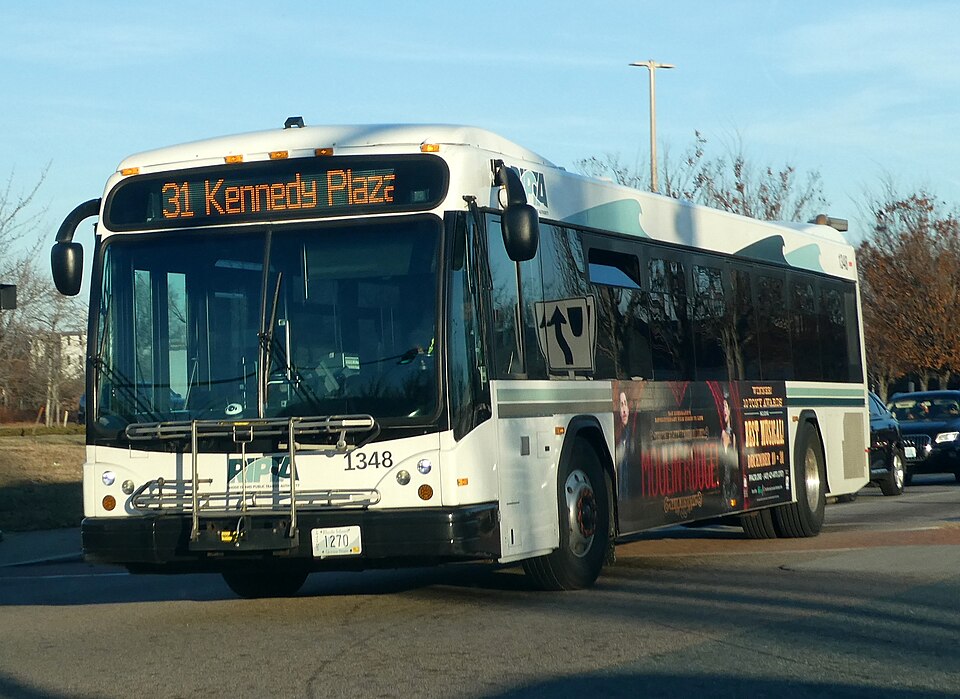
As bus riders are disproportionately low income and people of color, politically connected downtown real estate interests want to send them away from Kennedy Plaza, even though it is where most riders want to go, due to its proximity to the Post Office, City Hall, URI, the mall, banks, cafes, hotels, and more. While Kennedy Plaza has its problems, these can be addressed at vastly less cost than moving the hub which can increase operating costs and cripple RIPTA with debt for years to come. This is not equitable.
It’s worth noting that even in winter the Kennedy Plaza terminal building closes at 5 p.m. leaving passengers to wait in the cold and dark even at a peak period. It is unimaginable that an airport would leave passengers to wait outside at 5 p.m. Even Providence’s train station is open until the last train of the day. This is not equitable.
Another example: The state allocates almost $240 million every year from the general fund to eliminate property taxes on private motor vehicles. This mostly benefits those with expensive cars and/or lots of cars, the very households that contribute the most to pollution and congestion. But this policy is of no benefit to the many households without cars, or perhaps one older vehicle. The car tax, which had exempted the first $6,000 of vehicle value from the tax, was one of the few taxes on wealth. Its elimination may be politically popular as most households have cars, but it is not equitable.
After snowstorms, the state goes to great expense to promptly remove snow from state roads for drivers, but makes almost no effort to remove the snow from its sidewalks to help those who want to safely access bus stops or otherwise want to walk. The recent storm shows this all too well, including in Providence where the city tries to take care of the streets but leaves the sidewalks for others. This is not equitable.
Though state law says the Governor shall achieve a “diverse” Board of Directors at RIPTA, the board has seven men and one woman, and one person of color. It is a board that does not at all reflect the ridership it is supposed to help serve. This is not equitable.
Look no further than our own State House where the state has expanded parking for motorists, even paving over part of the State House lawn for them. But though three busy bus lines – Routes 50, 56, and 57 – stop there, and there is an army of state workers, lobbyists, rally goers, even tourists, who go there, there is still no bus shelter in the area. The same goes for about 90 percent of bus stops in the state that offer riders nothing more than a sign. This is not equitable.
Yet there are positive developments!
RIPTA’s new CEO, Chris Durand, who took over in 2024, seems determined to make improvements. Already much progress has been made on workforce development at RIPTA so there are now enough drivers to virtually eliminate missed trips. The Governor’s budget proposal does cover RIPTA’s FY2027 deficit, though there is no provision to restore the lost service. Kennedy Plaza conditions have started to get better and the Pawtucket transit center is open.
A broad coalition including riders, unions, community groups, environmental, heath, housing, and equity advocates is growing to save RIPTA and see transit grow because of all the potential good that it can do, and they have some wonderful legislative allies. They can make our state more equitable!
To help, check out the Providence Streets Coalition’s “Save RIPTA” campaign.
And one final bit of inspiring news?
RI Transit Riders has been told by RIPTA staff that a Rosa Parks-themed bus shelter will finally be coming to the State House area later this spring.
Be on the lookout for it!
Barry Schiller is a retired Rhode Island College Math Professor and a lifelong transit user and advocate. He served on the RIPTA Board of Directors from 1995 to 1999, as well as the state’s Transportation Advisory Committee. He lives in North Providence, with wife and cat. He uses RIPTA’s #57 line.


Want to comment? Click!