



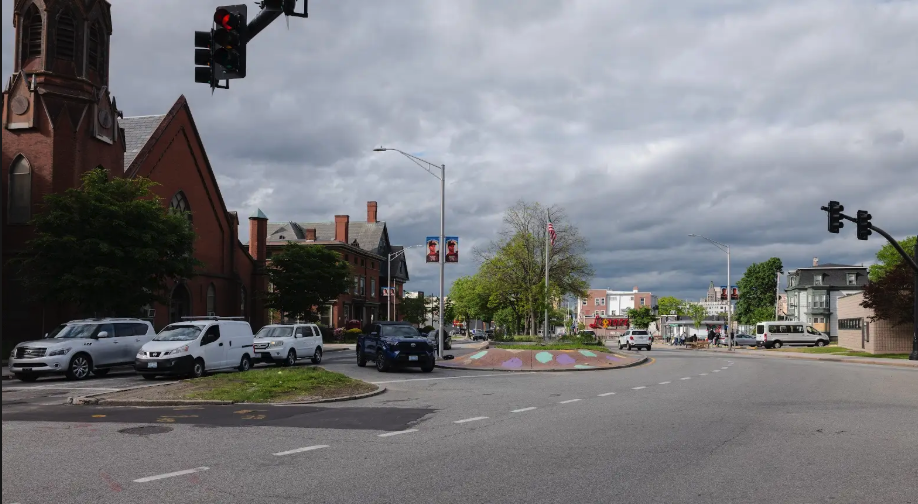
Trinity Square is a historic gateway to South Providence, known for its vibrant mix of cultures — lower Broad Street is often referred to as the “Latino Cultural Corridor of Providence.” Today, the diverse culture of Broad Street continues even as the area faces various socio-economic and infrastructural challenges. To help better understand Trinity Square’s rich history, it’s necessary to consider the changes in Providence’s public transportation systems over time. These routes, after all, helped shape Providence’s modern neighborhood streets.
Trolleys First
By the end of the nineteenth century, electric trolleys traveled on major routes along Broad Street and Elmwood Avenue, converging at Trinity Square. These streets connected the area to the rest of the city’s neighborhoods. Parts of the Elmwood neighborhood adjacent to Trinity Square were built with the city’s rapidly expanding public transportation in mind, which allowed the area to begin manufacturing goods and industrializing. These new opportunities helped the neighborhood quickly develop housing.
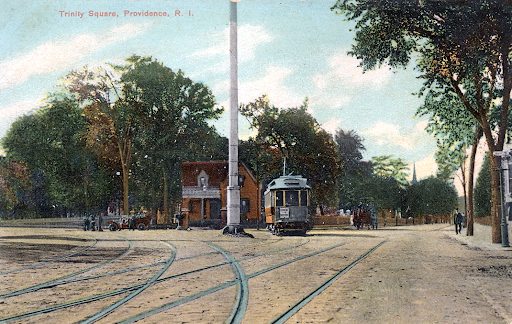
In New England, trolleys achieved an all-time high annual ridership of 154 million in 1926. A decade later, the 1936 expansion of Elmwood Avenue indicated that the city was interested in maintaining the trolley system. When the avenue was widened, new trolley tracks were installed, as opposed to reserving the extra space for cars. Expansion continued along the newly widened avenue, featuring many new businesses which could now be easily accessed by car or through the city’s trolley lines.
By the 1940s, city officials had begun to prioritize cars over public transport. The last streetcar journey took place on May 14, 1948, marking the end of an era in Providence’s public transportation history. Among other factors, car dependence increased, causing ridership rates to decrease. Despite the introduction of cars, the Trinity Square intersection has maintained an almost identical layout, dating back to when the trolley system operated almost 100 years ago.
When the Cars Arrived
In the 50s and 60s, Trinity Square’s history reflected the community that surrounded it. It was first built as an affluent residential area, but then the neighborhood saw the construction of new highways. Interstate 95, which borders the south of Elmwood, created traffic congestion throughout the neighborhood. These factors led to something that’s best described as economic collapse, preventing further growth. By the 1970s, certain houses were simply being demolished, leading to further economic losses. During those times, there has been a lack of attention to the improvement and revitalization of Trinity Square.
The roads converging at Trinity Square were designed to promote through-traffic, but did not take into account the lives of local pedestrians and residents. The road design in the area suggests that whoever created it only knew the people driving through the neighborhood, but not those living in it. The layout of the crosswalks does not incentivize using them: Zig-zag patterns make pedestrian footpaths indirect and, on occasion, dangerous. Cars drive at high speeds through an area populated by pedestrians. Trinity Square and similar neighborhood hubs would greatly benefit from proper pedestrian access, in turn increasing business in the area and helping to draw people in.
Patchwork of Transportation Confusion Today
Today, Trinity Square struggles with additional upkeep issues:
- The Providence Preservation Society has listed the Square’s Grace Church Cemetery as one of Rhode Island’s “most endangered properties” — vandals frequently target it, leading to many toppled and broken gravestones.
- The most traveled bus line in Rhode Island is the R line, which passes through Trinity Square. These bus lines are a vital mode of transportation for residents, so the buses must operate correctly, safely, and efficiently. RIPTA (Rhode Island Public Transit Authority) remains severely underfunded, contributing to issues in Trinity Square, such as broken bus shelter glass, which makes for unsafe conditions.
- Street signals are limited and unclear, making it difficult and sometimes even dangerous to cross the road. On the other side of the road, the sidewalks are in poor condition, and the bike lanes are hazardous and unprotected.
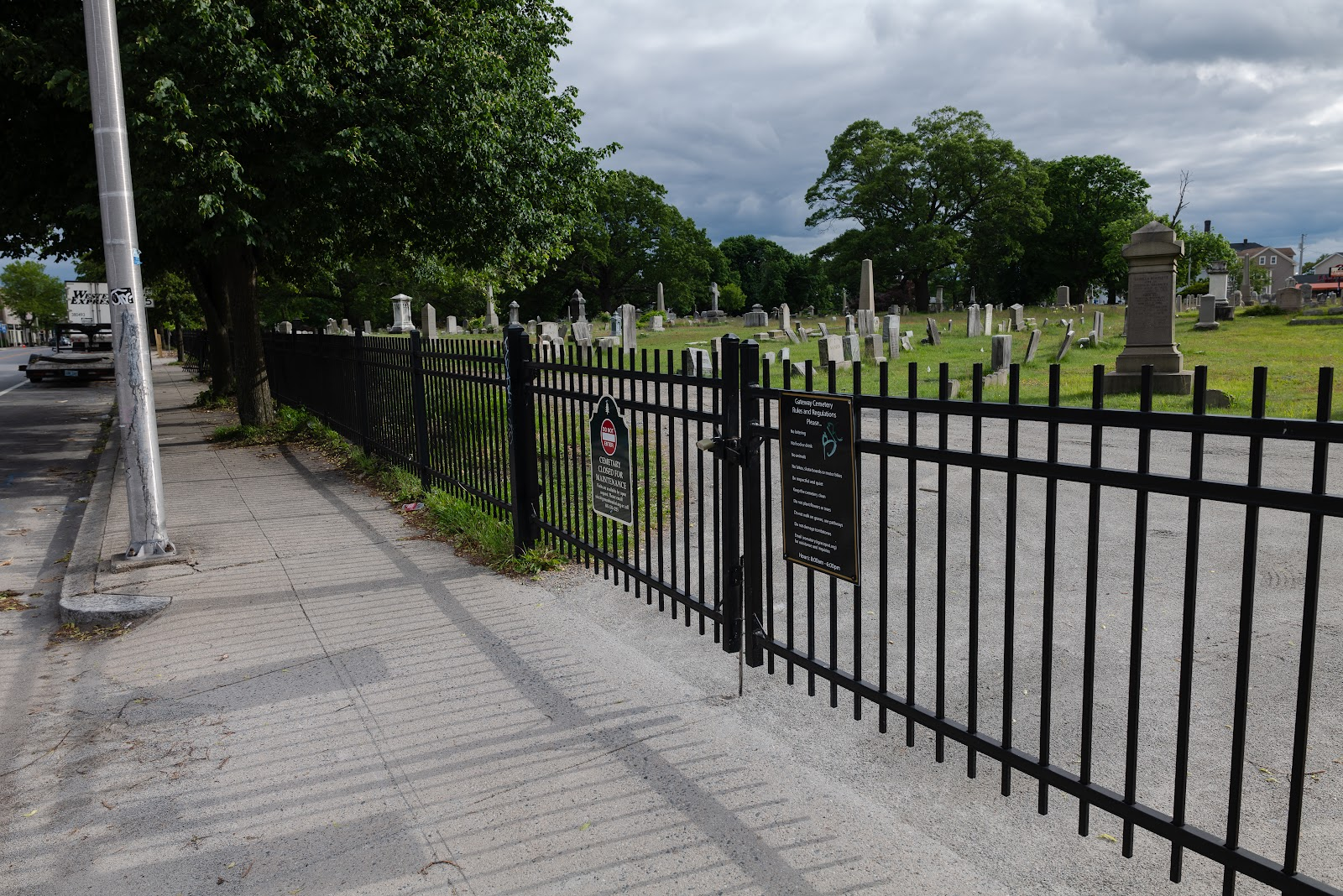
The overall impression of Trinity Square is that it was not designed with pedestrians and cyclists in mind. Trinity Square Together, a community-driven coalition of residents and local leaders, is working to make a difference addressing these issues by advocating for “changes that can help make the area safer, more attractive and functional for all.”
Coalitions like these help with what is perhaps the most important structural problem with Trinity Square: Its oversight falls to several agencies that operate separately from one another. For example, the city oversees the sidewalks, RIPTA owns the bus stops, and the state controls Route 1, which runs from the airport down Elmwood Avenue, and Broad Street to the highway. Previously, the maintenance of Trinity Square has been deferred or poorly coordinated.
Trinity Square’s streets were built with the trolley system in mind. With the area’s modern problems, the area will require policies with an awareness of the problems residents and pedestrians face, in order to help achieve the mission of safety, beauty, and functionality for all.
Jackson Bahr is a student at The Wheeler School who bikes a lot. Writing this article has given him a better understanding of community development and transportation safety.
Emad Muzaffar, also at The Wheeler School, has a strong interest in urban planning and architecture. He enjoys biking through Providence in search of coffee while thinking about the transportation details of the city.
Byron Gonsalves studies at The Wheeler School and lives in Cranston. His curiosity has taught him how to stay positive and, when looking at challenges, to ask himself how he can make a difference.


Want to comment? Click!