



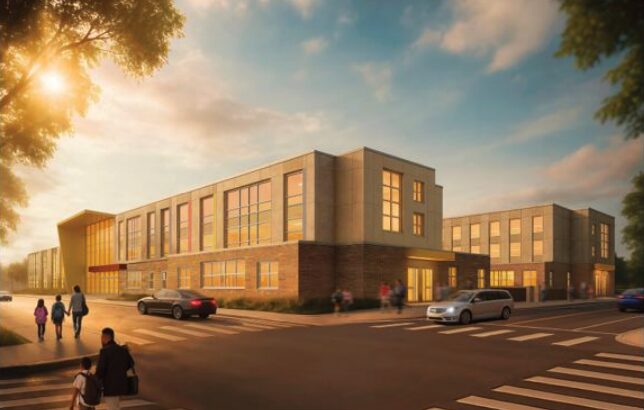
The Providence Public School Dept. (PPSD) and the city of Providence will spend about $1 billion, give or take a few tens of millions of dollars, to build at least 16 new or like new school buildings and extensively overhaul most other buildings in its current portfolio of 39 mostly aging and historically neglected school properties. (See previous related story here.)
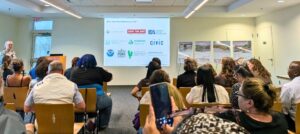
At a November 4 meeting PPSD’s new Chief of Operations, Dr. Dexter Moore said this scale of capital investment in an urban school district with declining enrollments is unique in the United States. We could find no comparably sized city in the Northeastern US making even remotely similar investments in school buildings.
Which raises the question: Does spending so much on schools put Providence far ahead of other cities or just dig us a deeper fiscal hole? And, either way, does this investment significantly benefit students and the community?
Can Providence afford $1 billion for schools?
One billion dollars is more than the cost of moving Rt. 195. It’s an investment on the scale of moving the rivers and creating Waterplace Park.
Two things make this $1 billion investment at least feasible for Providence taxpayers.
First, we don’t pay up front. Just as homeowners borrow the cost of a house from the bank and make mortgage installments over 20 or 30 years, Providence uses money borrowed from investors, through municipal bonds, to pay building contractors today. The city repays those investors from annual revenues, typically over 20-year terms.
Unlike a mortgage, we don’t borrow the whole amount at one time. Over the course of each year, the city borrows only enough to pay for currently approved and active projects. The Debt Obligations section of the city’s 2026 budget lists 38 bonds for school construction and other city capital projects in different stages of repayment.
Still, the city couldn’t afford to finance the $1 billion cost without very generous state subsidies for school construction. The state reimburses school districts for approved capital costs based on their community’s ability to pay. Ordinarily, Providence would get a reimbursement of around 80%.
But under time-limited enhanced state incentives for projects meeting certain state preferences, that rate goes up to 91%. By meeting those preferences, Providence only has to meet 9% of the total cost, rather than the normal 20% local share.
That school debt is just one part of the city’s total capital debt. Providence issues bonds to finance construction costs for roads and bridges, energy efficiency improvements and many other capital needs.
“There is a net cost for all bond repayment. We tend to see that it is fairly flat from year to year,” says City Councilor Sue Anderbois, a member of the Council’s Committee on Finance since 2023. “When we pay off one bond, there’s room to issue more. It’s also good for our credit rating to keep that consistent. I feel confident that the city is managing this well.”
Standard & Poor considered the city “stable” in its 2024 credit rating, citing strong cash reserves and “prudent debt management” as factors.
In fiscal year 2024, Providence paid out a total of $70.9 million in debt service, including both principal and interest payments to all bond holders. Of that, $32.2 million, or 45% was related to school construction, according to city spokesperson Alex Torres-Perez. That same year, the state reimbursed Providence $27.5 million, reducing the net cost repayment to $4.2 million. Last year, the city’s total debt service cost rose to $78.4 million, but the net school-related debt service after state reimbursement fell to $2.2 million.
In terms of the annual burden on taxpayers, the annual cost of repaying debt has far more impact and importance than the total amount of debt. In those terms, the annual net cost of school construction debt is a small and manageable part of the city’s total annual budget ($624 million in fiscal 2026).
We can afford to spend it — but should we?
New buildings won’t fully close the academic gap between Providence students and those in suburban districts. But they may make a significant dent in that disparity according to a 2024 working paper issued by the National Bureau of Economic Research, a nonprofit institute in Cambridge, MA. They found the most dramatic positive academic changes when investments were directed toward neglected core infrastructure, such as roofs, HVAC systems and health and safety.
“Our estimates suggest that closing the spending gap between high- and low-SES [socio-economic status] districts and targeting spending towards high-impact projects may close as much as 25% of the observed achievement gap between these districts.”
Study authors Barbara Biasi, Julien M. Lafortune, and David Schönholzer
Providence school buildings were (and many still are) in bad shape. The average age of our schools is more than 70 years – 70 hard years of chronic neglect. The 2017 Jacobs Engineering assessment, part of a statewide inventory of school buildings, put the total cost of eliminating building deficiencies across all PPSD schools at more than $532 million. An updated 2023 assessment by Downes Engineering boosted that figure to $928 million. Downes has been the city’s “owners’ representative,” or general manager for all school construction since 2020.
The two engineering assessments confirmed and quantified what students and parents know from experience over decades. Our school buildings were well past the point where a few repairs and a fresh coat of paint would be enough. Whether the buildings can be saved or must be demolished and replaced is another question. Either way, we’ll need something like a billion dollars to do it.
City Councilwoman Sue Anderbois says the size of the mayor’s $400 million bond proposal in 2024, the most recent of four approved by Providence voters so far, was a bit surprising. “But I knew the renovations were a big need. Our kids need more than ‘warm, safe and dry. Rather than doing patchwork, the goal became how do we assure all kids have new or like-new facilities? I’ve appreciated the more comprehensive and strategic look. While we have the money, let’s do it.”
Are these the schools Providence needs and wants?
That’s much harder to say. Parents and members of the public who begin to see the bigger picture have questions about the direction and impact of the whole capital plan.
They worry about school closings and consolidations, about historic preservation, about putting preK through 8th grade in one building. They never agreed to a school system that will have fewer buildings and fewer students, even as the city’s 2024 Comprehensive Plan says the city must “encourage a dramatic increase in the production of new housing over the next 20 years to meet the needs of Providence’s growing population.”
Public input and oversight of the full building construction program has been shortchanged from the beginning. The general public and local elected officials have been informed, but not engaged. A complex of city and state officials and contractors have steadily nudged each project along from concept to completion
RIDE has been at the center of the process. Ever since the 2019 takeover of Providence Schools, RIDE Commissioner Angelica Infante-Green has been in control of the PPSD, which proposes school construction plans. The scale of the building plan ramped up after RIDE took control of the district.
Infante-Green also oversees the state School Building Authority, which approves those plans for crucial state funding. Providence’s School Board, which ordinarily would ensure that community input was included in the building plan, has had no power over school decision-making since the takeover.
Extensive public input has been limited to single specific projects, and only where school communities and neighborhoods have been able to organize and engage their City Council members as advocates.
It shouldn’t be too late to make some changes in direction if that’s what the community wants. Five buildings have been completed so far. Another seven are in the pre-construction or pre-design phase. Seventeen more projects, including eight entirely new buildings, haven’t even advanced to “pre-design.”
But all of them have been approved by RIDE’s School Building Authority, making them eligible for the enhanced 91% reimbursement rates that are so crucial to city finances. And that makes all of them immune to significant change, according to RIDE and PPSD.
Throughout the process, PPSD/RIDE and the city administration have used the prospect of losing enhanced reimbursement rates by missing impending state deadlines or changing planned school configurations as a reason to limit the time for discussion and debate and to approve plans as presented.
In an October RIDE report on progress toward returning PPSD to city control, Regarding facilities, RIDE said that although active projects are on schedule now, failure to complete them by October of 2027 will lead to “cascading negative effects.” The report called out “elected officials,” for raising potential changes to the plan, saying that “Any delays impact both cost and schedule and upend key strategic decisions.”
The problem is that the “key strategic decisions” were all made by RIDE. Now that the effects of the strategy are being felt, residents and their representatives want some input. RIDE says it’s too late.
This pattern is playing out right now, as PPSD/RIDE pressures the City Council, School Board and School Building Committee to endorse major modifications to their own Phase 4 plan no later than February, according to a PPSD Powerpoint from October.
These include sudden shifts to make ML King Elementary a preK-8 school and to consolidate Young-Woods Elementary and Roger Williams Middle School into another preK-8. These changes are needed to resolve an emerging gap between available funds and anticipated costs, according to PPSD/RIDE.
PPSD lays out an urgent, expedited process to finalize these changes over the Thanksgiving to New Year’s holiday period: the SBC will make “final recommendations”, the School Board will “endorse” them, the City will “align approvals” with them.
Whatever recommendations, endorsement or alignments city bodies may provide, the final decision, is still up to RIDE Commissioner Infante-Green.
As the PowerPoint itself makes clear: “Commissioner will make final decisions.”
Jonathan Howard is Co-founder of Cause & Effect, Inc., a consulting company that provides strategic planning facilitation, fund development planning and board strengthening to mission-driven organizations. He is a long-time resident of Providence.


Want to comment? Click!